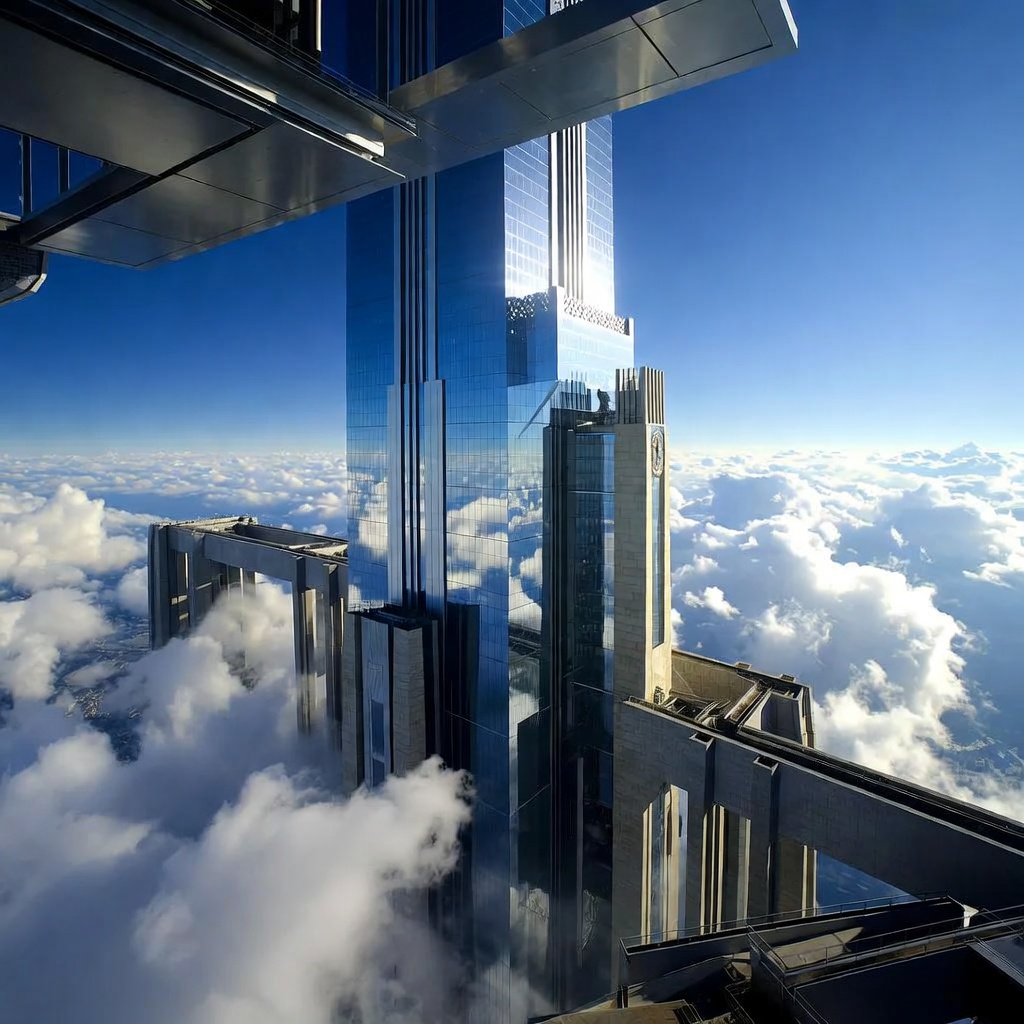
Airships, those majestic behemoths of the sky, have long captured the human imagination, blending engineering prowess with architectural elegance. Once the darlings of early 20th-century travel, they faded into obscurity after the Hindenburg disaster, but a renaissance is underway. Today, airship architecture isn’t just about floating bags of gas; it’s a symphony of innovative design concepts that redefine how we inhabit the skies. From rigid skeletons to modular habitats, these floating fortresses promise sustainable, luxurious alternatives to airplanes and skyscrapers. Let’s soar into the key concepts shaping this aerial architecture.
At the heart of any airship is the envelope, the massive, gas-filled skin that provides lift. Traditional designs, like the rigid Zeppelins of the 1930s, used a lattice of duralumin girders to form an internal framework, allowing for a spacious, multi-deck interior. Imagine a flying cathedral: passengers strolled through promenades with panoramic windows, dined in opulent lounges, and slept in private cabins suspended amid the clouds. Modern concepts evolve this with lightweight composites and nanomaterials. For instance, hybrid airships like the Airlander 10 incorporate helium and aerodynamic lift, reducing reliance on scarce helium while enabling envelope shapes that mimic organic forms—think elongated teardrops or even modular pods that detach for urban docking.
Gondola design takes airship architecture to the next level, transforming the underbelly into a functional living space. In semi-rigid airships, the gondola serves as the structural backbone, often crafted from aluminum or carbon fiber for strength without bulk. Pioneering firms like Hybrid Air Vehicles envision gondolas as self-contained ecosystems: solar-paneled exteriors powering internal LED-lit habitats, with hydroponic gardens recycling air and water. These aren’t cramped cockpits; they’re architectural marvels with flexible interiors. Picture swiveling partitions that convert a conference room into sleeping quarters, or observation decks with retractable floors offering vertigo-inducing views. Sustainability drives innovation here—biodegradable fabrics for interiors and regenerative braking systems that harness wind for energy, making airships carbon-neutral sky hotels.
Internal architecture pushes boundaries further, especially in non-rigid blimps, where the envelope relies on internal pressure. Concepts like the HAV 304 propose inflatable habitats within the envelope, using tensegrity structures—inspired by Buckminster Fuller’s geodesic domes—to create stable, expansive volumes. These could house research labs, eco-resorts, or even cargo bays with automated drones for delivery. Ventilation systems mimic natural airflow, with smart vents adjusting to altitude changes, ensuring comfort at 20,000 feet. And for the adventurous, vertical architecture emerges: multi-level atriums with helical staircases, fostering a sense of vertical community in the horizontal drift of flight.
Looking ahead, airship architecture could revolutionize urban mobility. Envision cargo zeppelins as floating warehouses, docking at rooftop ports, or luxury liners as airborne villas circumnavigating the globe without jet lag. Challenges remain—weather resilience, regulatory hurdles—but advancements in AI navigation and durable fabrics herald a buoyant future. Airships aren’t relics; they’re the next canvas for architectural dreams, where gravity bows to ingenuity. As we design for the skies, we redefine home, one lofty blueprint at a time.
(Word count: 478)
Comments are closed