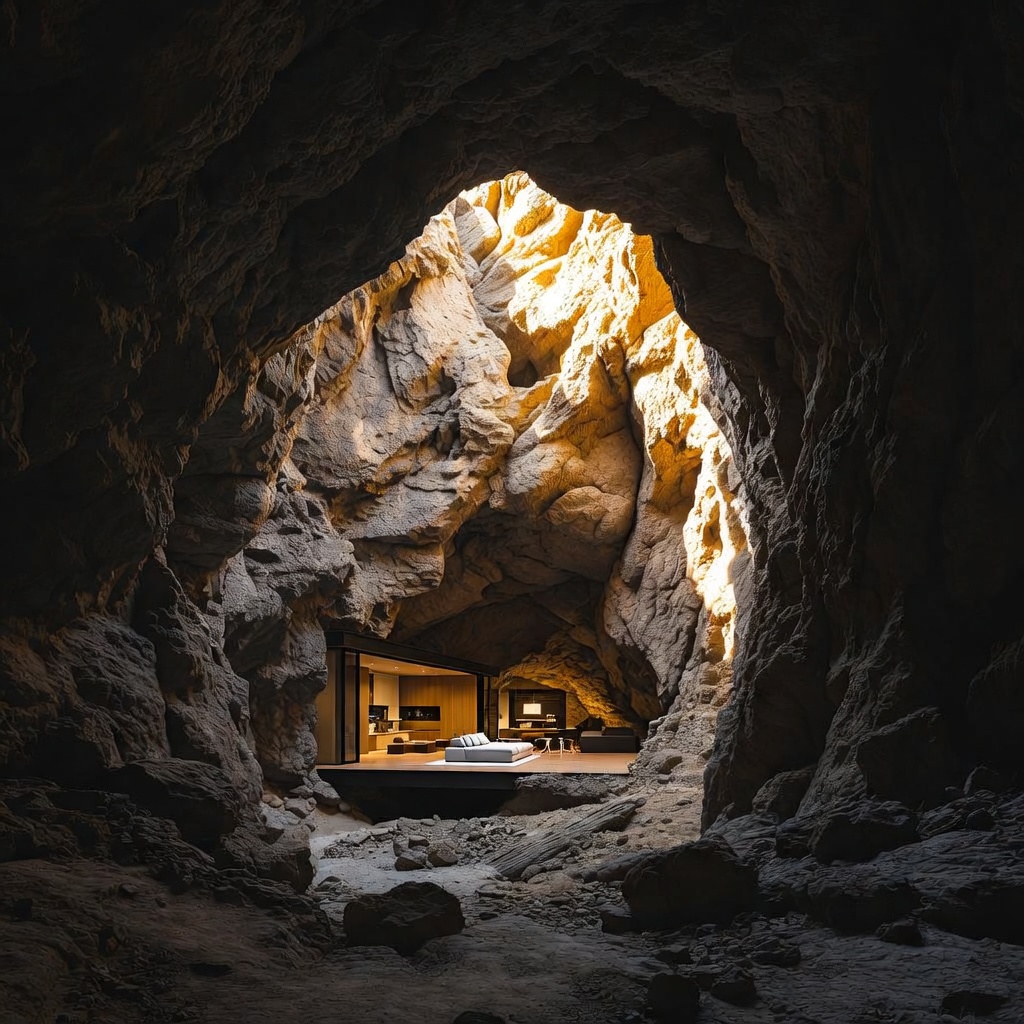
Imagine trading your drafty apartment for a cool, quiet sanctuary carved into the earth—sounds like a prehistoric fantasy, right? But in pockets around the world, modern cave dwellers are turning this ancient concept into a high-tech reality. Far from the damp, torch-lit grottos of our ancestors, today’s cave modernizations blend sustainability, innovation, and sheer ingenuity to create eco-luxury homes that challenge our notions of “going back to basics.”
Cave dwelling isn’t just a quirky relic; it’s making a comeback driven by climate concerns and a desire for energy-efficient living. Take Coober Pedy, the opal-mining town in Australia’s outback, where over half the population lives underground. These “dugouts” started as practical shelters from scorching 120°F (49°C) summers, but now they’re outfitted with all the comforts of suburban life. Solar panels crown the desert landscape, powering LED lights, air conditioning, and even home theaters. Insulation from the natural rock keeps interiors a steady 68-72°F (20-22°C) year-round, slashing energy bills by up to 80% compared to surface homes. Residents like retiree Sarah Wilkins rave about the peace: “No neighbors arguing at 2 a.m., just the whisper of the wind outside.”
Across the globe in Turkey’s Cappadocia region, fairy-chimney caves—those iconic cone-shaped rock formations—have been transformed into boutique hotels and private residences. Architects are retrofitting these spaces with geothermal heating systems that tap into the earth’s stable temperatures, reducing reliance on fossil fuels. Smart home tech is the real game-changer: voice-activated lights flicker on as you enter a chamber once home to Byzantine monks, while Wi-Fi routers hidden in alcoves stream Netflix to wall-mounted screens. One innovative project, the Yunak Evleri Cavesuites, integrates rainwater harvesting and greywater recycling, turning what was a humble troglodyte dwelling into a zero-waste haven.
But it’s not all about luxury—modern cave living addresses pressing global issues. Caves naturally regulate humidity and temperature, making them ideal for off-grid living amid rising energy costs and extreme weather. In Spain’s Andalusia, eco-developers are excavating new cave communities with earthquake-resistant reinforcements and passive solar design, where windows carved into rock faces maximize daylight without compromising structural integrity. These homes boast carbon footprints 50-70% lower than traditional builds, per studies from the European Green Building Council. Plus, the aesthetic? Unbeatable. Exposed stone walls paired with minimalist furniture create a rustic-chic vibe that’s Instagram gold.
Of course, challenges remain: ventilation must be engineered to prevent mold, and zoning laws can be a hurdle. Yet, as urban sprawl pushes us toward sustainable alternatives, cave modernizations offer a poetic solution—living lightly on the planet while rooted in history. Whether you’re a minimalist dreamer or an eco-enthusiast, these underground upgrades prove that the future of housing might just be digging deeper. Who knows? Your next home tour could be a subterranean stroll.
Comments are closed