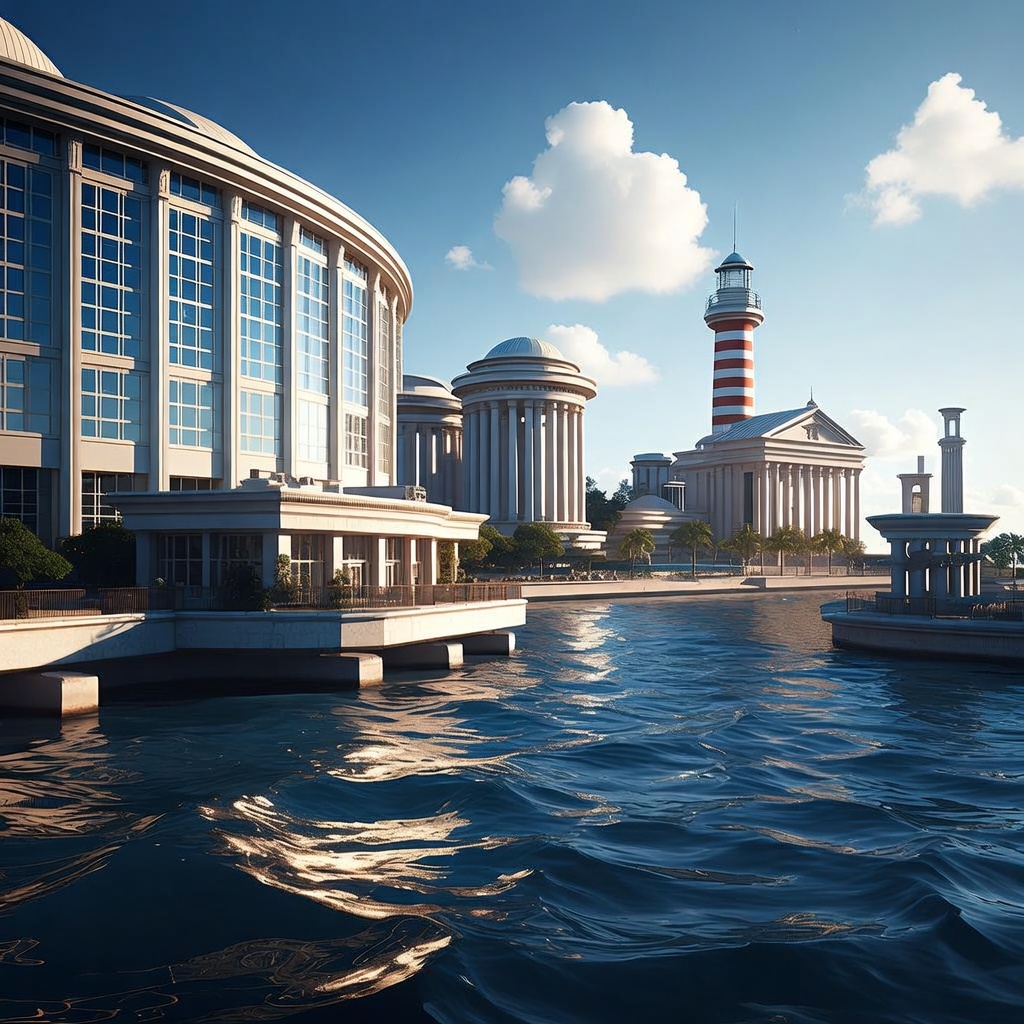
Imagine waking up to the gentle lap of waves against your bedroom wall, your home swaying ever so slightly like a cradle on the sea. This isn’t a dream reserved for luxury yachts—it’s the reality of floating architecture, a innovative building trend that’s transforming how we live with water. From ancient reed huts on Mesopotamian marshes to cutting-edge eco-villages in the Netherlands, these buoyant structures are more than novelties; they’re a smart response to rising sea levels, urban sprawl, and our evolving relationship with the planet.
The roots of floating architecture stretch back millennia. The Uru people of Lake Titicaca in Peru and Bolivia have crafted reed islands and homes for centuries, using totora reeds to build floating villages that adapt to the lake’s fluctuations. These ingenious designs weren’t just survival tactics; they were sustainable marvels, with homes that could be rearranged like puzzle pieces. Fast-forward to the modern era, and the concept has evolved dramatically. Post-World War II, houseboats proliferated in places like London’s Chelsea Reach, offering affordable waterfront living amid housing shortages. Today, with climate change accelerating coastal erosion and flooding, floating architecture is booming as a resilient alternative.
What makes these structures so appealing? For starters, they’re incredibly adaptable. Amphibious homes, like those in the Dutch village of IJburg, rest on pillars or pontoons that allow them to rise with floodwaters, then settle back down. This buoyancy isn’t gimmicky—it’s engineered precision. Materials like lightweight concrete, recycled plastics, and even modular steel frames ensure stability without anchoring permanently to the seabed. In Singapore, the floating solar farms on reservoirs generate clean energy while conserving land, proving that floating designs can multitask for environmental good.
Take the Maldives’ floating city project as a prime example. This ambitious development features over 20,000 residential units on water, complete with schools, hospitals, and green spaces—all elevated to combat the nation’s vulnerability to sea-level rise. Each module is a self-contained ecosystem, with rainwater harvesting, solar panels, and vertical gardens that filter wastewater. It’s not just housing; it’s a blueprint for climate-proof urbanism. Closer to home, in the U.S., communities like those in Norfolk, Virginia, are retrofitting neighborhoods with floating homes to mitigate hurricane damage, turning potential disaster zones into thriving aquatic enclaves.
Of course, challenges persist. High initial costs, regulatory hurdles, and the need for specialized maintenance can deter widespread adoption. Navigating maritime laws and ensuring seaworthiness requires expertise, and not every coastline is suitable. Yet, advancements in 3D printing and AI-driven design are slashing expenses and speeding construction. Companies like Archi-Float are pioneering modular kits that homeowners can assemble like LEGO, democratizing access.
As our world warms and waters rise, floating architecture isn’t a fringe idea—it’s a necessity. It invites us to rethink permanence, embracing fluidity in how we build and live. Whether you’re picturing a cozy houseboat retreat or a sprawling oceanic metropolis, these designs remind us that innovation floats on the tides of necessity. The future? It’s already adrift, waiting for us to hop aboard.
Comments are closed