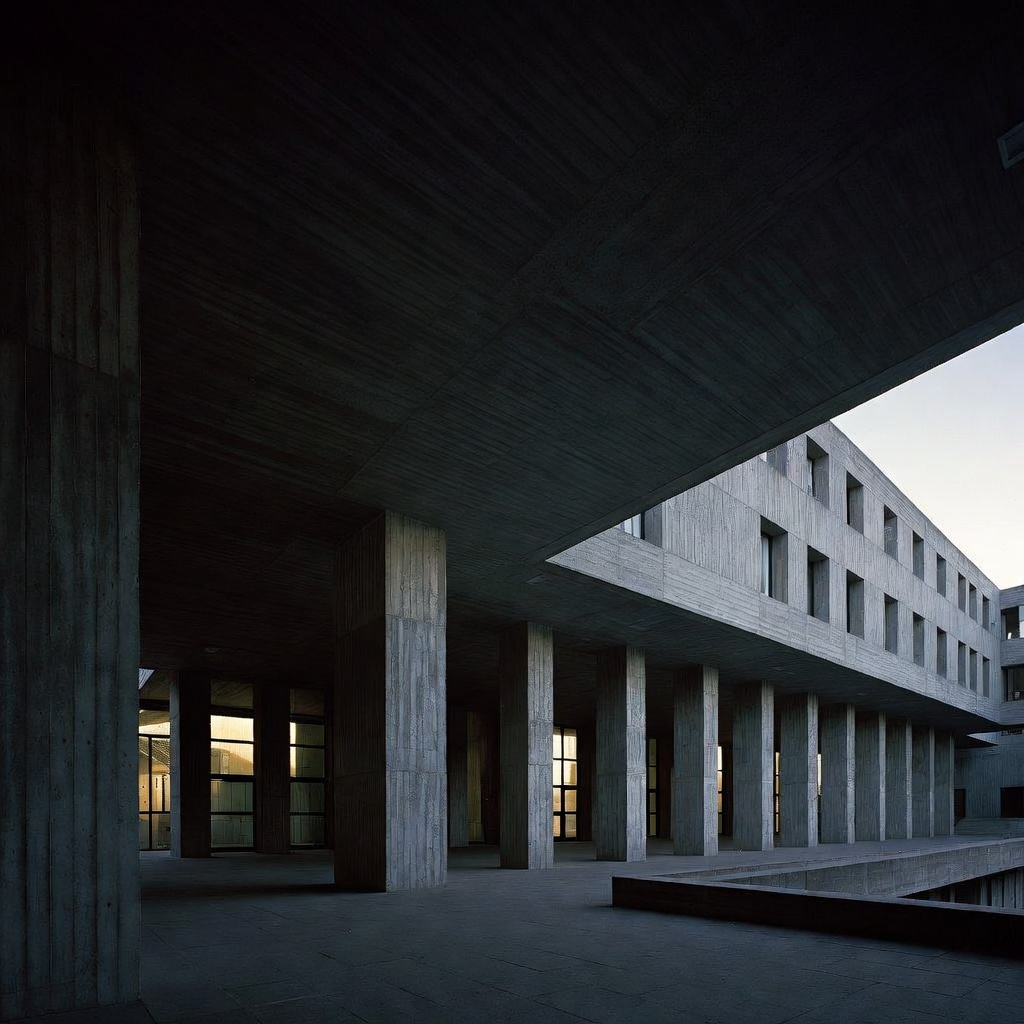
In a world obsessed with sleek glass towers and minimalist vibes, something raw and unapologetic is clawing its way back into the spotlight: brutalism. This mid-20th-century architectural style, born from post-war grit and concrete ambition, was once dismissed as cold and monolithic. But today, it’s experiencing a full-throated revival, popping up in everything from luxury apartments to Instagram aesthetics. Why now? And what does it say about our fractured modern psyche? Let’s pour some concrete on the facts.
Brutalism emerged in the 1950s, coined from the French “béton brut” – raw concrete. Architects like Le Corbusier and Alison and Peter Smithson championed it as a democratic force, using affordable, honest materials to build bold public spaces. Think London’s Barbican Estate or Boston’s City Hall: massive, sculptural forms that scream functionality over frills. It was the architecture of rebuilding – sturdy, socialist, and unpretentious. By the 1970s, though, it fell out of favor. Critics called it ugly, oppressive; many brutalist icons were demolished in the name of progress. Fast-forward to the 21st century, and a wave of nostalgia has flipped the script.
The revival kicked off around 2010, fueled by digital rediscovery. Platforms like Instagram turned forgotten concrete behemoths into viral photo ops, their textured surfaces and geometric drama perfect for the #architectureporn crowd. Architects are now nodding to brutalism in new builds, blending its heft with contemporary tweaks. Take the redevelopment of London’s Trellick Tower, a Paul Rudolph-inspired high-rise that’s been lovingly restored, or the angular, concrete-clad additions to Toronto’s waterfront by firms like RAW Design. Even in smaller scales, brutalist echoes appear in furniture – chunky, poured-concrete tables from brands like BDDW – and fashion, with designers like Rick Owens channeling its monolithic edge in oversized silhouettes.
But this isn’t just aesthetic hipsterism. There’s substance here. In an era of climate anxiety, brutalism’s raw materials align with sustainability pushes. Concrete, when sourced locally and reinforced with recycled aggregates, cuts carbon footprints compared to imported marble or steel. Its modular designs promote longevity; these buildings aren’t disposable. Plus, in a hyper-polished digital age, brutalism offers authenticity – a rebellion against the glossy sameness of corporate modernism. As architect Owen Hatherley notes in his book *A Guide to the New Ruins of Great Britain*, brutalism’s “honest ugliness” critiques consumer excess, reminding us of architecture’s social roots.
Of course, it’s not all smooth sailing. Detractors argue that brutalism can feel intimidating, its scale alienating in diverse urban fabrics. Maintenance is a beast – concrete weathers poorly without care, leading to those infamous stains. Yet proponents counter that thoughtful revival, like the adaptive reuse of Chicago’s Marquette Park Fieldhouse, honors history while evolving it.
As we hurtle toward denser, greener cities, brutalism’s revival feels timely. It’s a call to build with intention, embracing imperfection in a filtered world. Whether you’re touring a restored icon or spotting its influence in your next coffee shop, this concrete comeback proves: sometimes, the boldest statements are the ones that endure.
Comments are closed