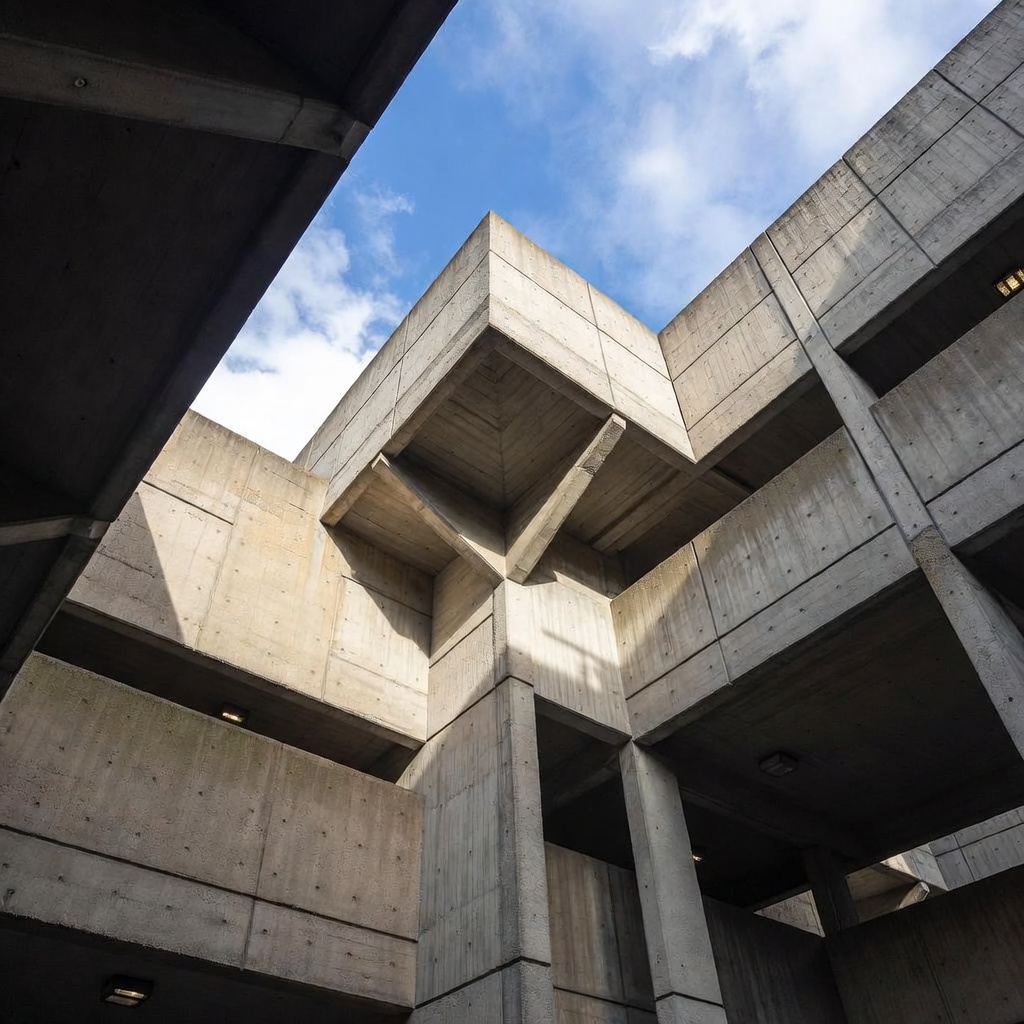
In the shadow of towering concrete monoliths, where urban sprawl meets childhood whimsy, brutalist playgrounds stand as forgotten fortresses of fun. Picture this: jagged slabs of raw concrete twisting into serpentine slides, hulking climbing frames that resemble abstract sculptures, and sandpits framed by unyielding geometric barriers. These aren’t your candy-colored plastic paradises of today—they’re relics of a bolder era, where play was as rugged as the post-war world that birthed them.
Brutalism, that mid-20th-century architectural movement, emerged in the 1950s and ’60s amid Europe’s reconstruction frenzy. Architects like Le Corbusier and Alison and Peter Smithson championed “truth to materials,” favoring exposed béton brut (raw concrete) for its honesty and affordability. Playgrounds followed suit, transforming public spaces into experimental playgrounds that embodied the era’s optimism and grit. In Britain, the “adventure playground” concept—pioneered by figures like Lady Marjory Allen—blended with brutalism to create environments that encouraged risk and creativity. No hand-holding here; these spaces were designed to toughen kids up, mirroring the resilient spirit of a war-torn generation.
What sets brutalist playgrounds apart? Their stark, monolithic forms prioritize form and function in equal measure. Think of the massive, labyrinthine structures at London’s Mile End Park or the eerie, fortress-like setups in Sweden’s modernist suburbs. Materials were king: weathered concrete resisted the elements, while modular designs allowed for endless reconfiguration—climbing walls that doubled as abstract art, tunnels burrowing through hulking blocks, and swings suspended from brutal beams. Safety? A secondary concern. These playgrounds embraced danger as a teacher, fostering independence in an age before helicopter parenting. Yet, their durability was legendary; many have outlasted decades of rowdy play, standing as weathered testaments to engineering prowess.
Globally, brutalist playgrounds dotted the landscape like concrete confetti. In the Soviet Union, they symbolized communal joy amid ideological rigidity—vast, egalitarian spaces for the proletariat’s young. Yugoslavia’s post-war designs, like those in Belgrade, fused Eastern Bloc austerity with Mediterranean flair, creating playgrounds that felt like mini-utopias. Even in the U.S., amid the concrete jungles of New York and Chicago, isolated examples popped up, though the style never fully took root against America’s love for softer, suburban vibes.
Today, these playgrounds evoke a mix of nostalgia and controversy. Fans rave about their aesthetic edge—Instagram-worthy backdrops for urban explorers and architects alike. Preservation efforts, like the UK’s campaign to save the Smithsons’ Robin Hood Gardens playground elements, highlight their cultural value. But critics decry them as cold and intimidating, with slippery surfaces and sharp edges posing real hazards in our litigious world. Modern revivals, however, nod to their legacy: think updated versions in Berlin’s Tempelhof or eco-brutalist hybrids using recycled concrete.
Ultimately, brutalist playgrounds remind us that play isn’t always pretty—it’s primal, adventurous, and unapologetically bold. In an era of sanitized swingsets, they whisper a challenge: dare to climb the concrete mountain, and rediscover the wild heart of childhood. Whether you’re a design aficionado or a parent seeking something beyond the ordinary, these gritty gems deserve a second look. Who knows? Your next urban hike might lead to a slide that slides right into history.
Comments are closed