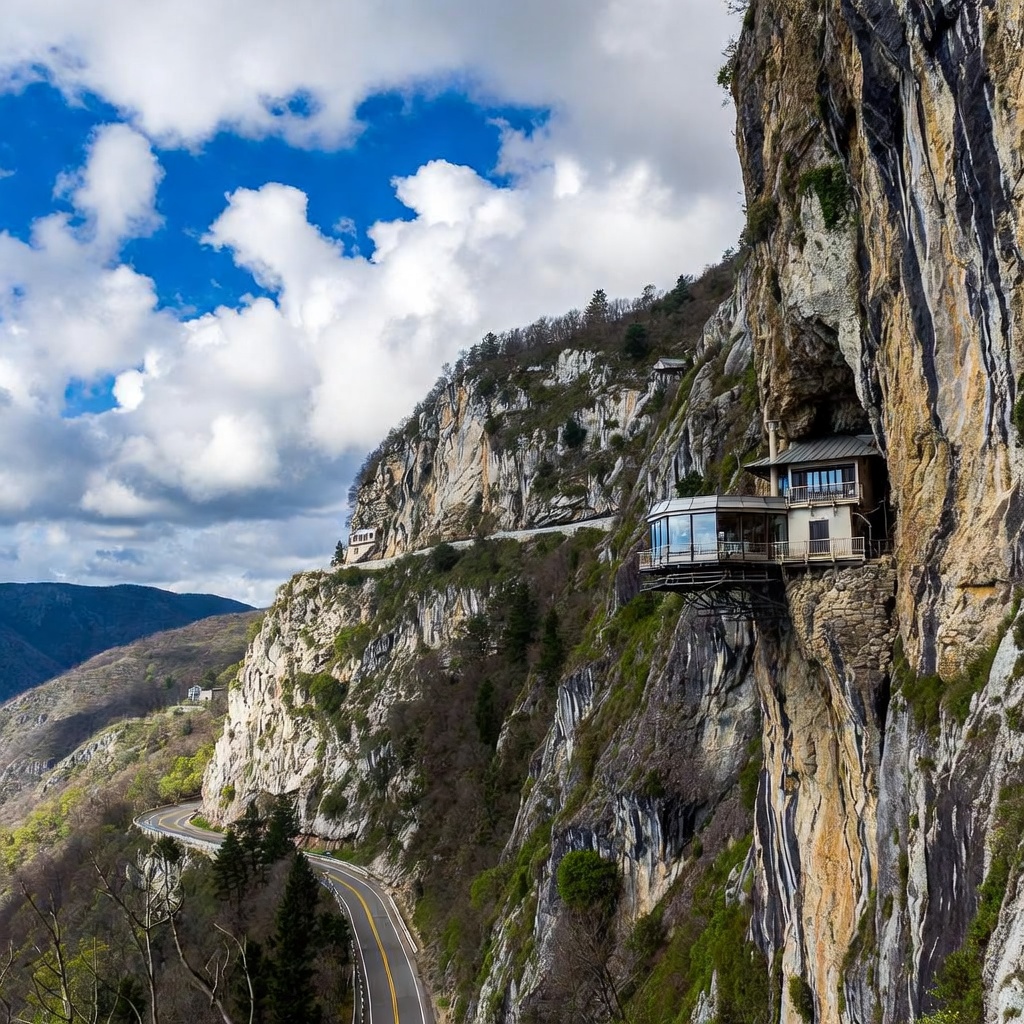
Imagine waking up to a sunrise that paints the ocean in fiery hues, your bedroom balcony dangling precariously over a sheer drop of hundreds of feet. No, this isn’t a scene from an action movie—it’s everyday life for residents of the world’s most audacious cliffside hanging homes. These architectural marvels, perched on the edges of cliffs like eagles’ nests, blend human ingenuity with nature’s raw drama, offering breathtaking views and a thrilling reminder of our planet’s vertical wonders.
The undisputed poster child is the Cliff Palace in Mesa Verde National Park, Colorado. Carved into the alcoves of sandstone cliffs by the Ancestral Puebloans around 1200 AD, this isn’t just a home—it’s a thriving village of over 150 rooms suspended 100 feet above the canyon floor. Accessed via narrow ledges and ladders, these dwellings showcase ancient engineering: hand-hewn stones fitted without mortar, T-shaped doors for defense, and kivas (circular ceremonial rooms) that doubled as living spaces. Today, protected as a UNESCO World Heritage site, it draws adventurers eager to ranger-guided tours, evoking the resilience of people who farmed terraced fields below while fending off the elements—and perhaps intruders—from their lofty perch.
Fast-forward to modern marvels, and Peru’s Candelaria Community steals the show. In the Andes near Arequipa, 87 ramshackle homes cling to a 1,300-foot cliff face, inhabited by 412 resilient souls. These “hanging houses” evolved from necessity—land scarcity forced locals to build downward into the rock using salvaged wood, corrugated metal, and sheer grit. Homes teeter on rickety beams, with children scampering along precarious paths to school. Despite erosion risks and isolation, residents cherish the misty views of the Chili River far below and the tight-knit community spirit. Spanish firm GRABCAD’s 2018 renovation proposal aimed to reinforce these with steel cables and eco-materials, but progress is slow, highlighting the tension between preservation and peril.
Then there’s the Hanging Houses of Wuzhen, China—a more luxurious twist. Straddling the Grand Canal in this ancient water town, 14th-century Ming Dynasty homes project over the waterway on wooden cantilevered beams, their undersides exposed like upside-down roofs. Restored for tourism, they now house teahouses and boutiques, but originally served as storage and living quarters for fishermen, blending seamlessly with the misty waterways.
Why do these homes captivate us? Beyond vertigo-inducing vistas, they symbolize defiance against gravity and conformity. Engineering feats like post-tensioned concrete (used in contemporary designs like Portugal’s Casa Brutale concept) or traditional cantilevering prove humans can hug cliffs without tumbling. Yet, they whisper warnings: climate change accelerates erosion, and overtourism strains fragile sites.
Whether ancient ruins or Andean shanties, cliffside hanging homes remind us that the best views demand a leap of faith. Next time you hike a canyon rim, peer down—you might spot the next generation of dwellers, living on the edge in every sense. Dare to dream of your own cliffhanger abode? Just pack a strong stomach.
Comments are closed