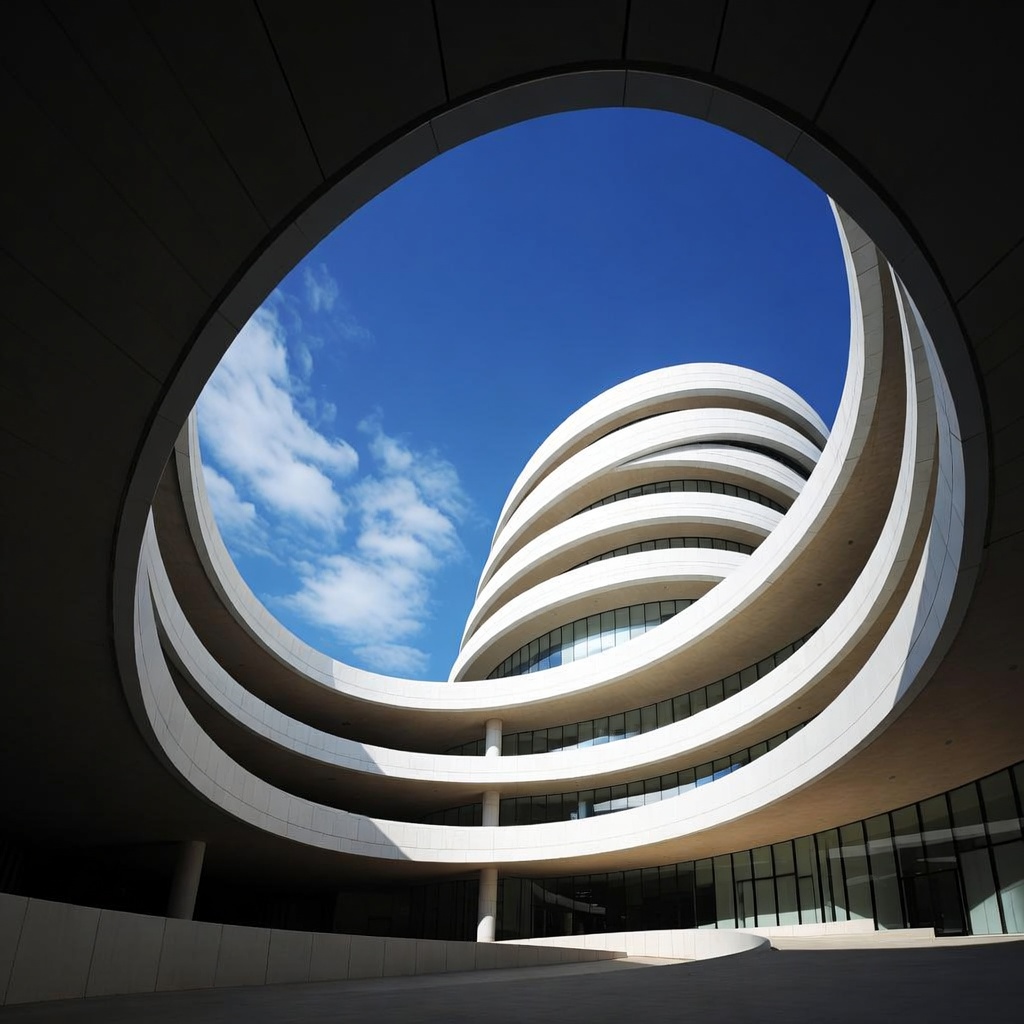
Imagine a building that twists like a dancer’s spine, its form sculpted not by rigid blueprints but by algorithms whispering possibilities into steel and glass. Welcome to the world of parametric architecture, where math meets artistry in a symphony of curves, folds, and fluidity. This isn’t sci-fi—it’s the bleeding edge of design, transforming skylines and redefining how we live, work, and play.
At its core, parametric architecture harnesses computational design tools to create complex geometries that traditional methods could only dream of. “Parametric” simply means using parameters—variables like angles, distances, or environmental data—as inputs for algorithms that generate forms. Architects plug in rules: “This facade must respond to sunlight,” or “Maximize views while minimizing material.” Software like Grasshopper (a plugin for Rhino 3D), Dynamo, or even AI-driven tools like Autodesk’s Project Fractal crunch the numbers, spitting out optimized designs in minutes.
Pioneers like Zaha Hadid kickstarted this revolution. Her Heydar Aliyev Center in Baku, Azerbaijan, flows like molten silk, its seamless waves born from parametric scripts that simulated wind, light, and structural loads. No straight lines here—just pure, organic momentum. Frank Gehry’s Guggenheim Bilbao used early parametric CATIA software to bend titanium into those iconic, ship-like curves, proving the approach could handle real-world chaos like earthquakes and budgets.
Why does it matter? Parametricism isn’t just pretty—it’s smart. It tackles big problems head-on. In sustainability, parametric facades adapt to climates: the Al Bahar Towers in Abu Dhabi deploy sun-tracking “flowers” that bloom open or closed, slashing energy use by 40%. During the pandemic, parametric design enabled rapid prototyping of ventilated hospital pods. And in dense cities, it packs more into less—think voxelated towers that stack irregular volumes like organic Lego.
The magic lies in iteration. Traditional architects sketch, revise, repeat—tediously. Parametrics let you tweak a slider and watch the entire structure morph, testing thousands of variants instantly. Tools now integrate BIM (Building Information Modeling) with machine learning, predicting performance from acoustics to carbon footprints. Emerging stars like Jenny Sabin use biology-inspired params to grow living walls that purify air, blurring lines between building and ecosystem.
Critics grumble: it can look alienating, overly flashy, or reliant on pricey tech. Fair points—early parametric flops strained budgets. But as open-source tools democratize access (hello, free Fusion 360 plugins), it’s exploding. Emerging markets in Asia and the Middle East are parametric playgrounds, with mega-projects like Beijing’s Parametric Snake Tower weaving cultural motifs into algorithmic skins.
Peering ahead, parametric architecture promises responsive cities: buildings that “learn” from occupants, reshaping themselves via sensors and AI. Picture homes that parametricize your morning coffee ritual, optimizing light and layout for peak productivity. It’s not dystopian—it’s evolution.
So next time you gaze at a shimmering, undulating skyline, tip your hat to the code behind the curves. Parametric architecture isn’t reshaping our world—it’s scripting its future, one elegant equation at a time. Dive in; the revolution computes for everyone.
Comments are closed