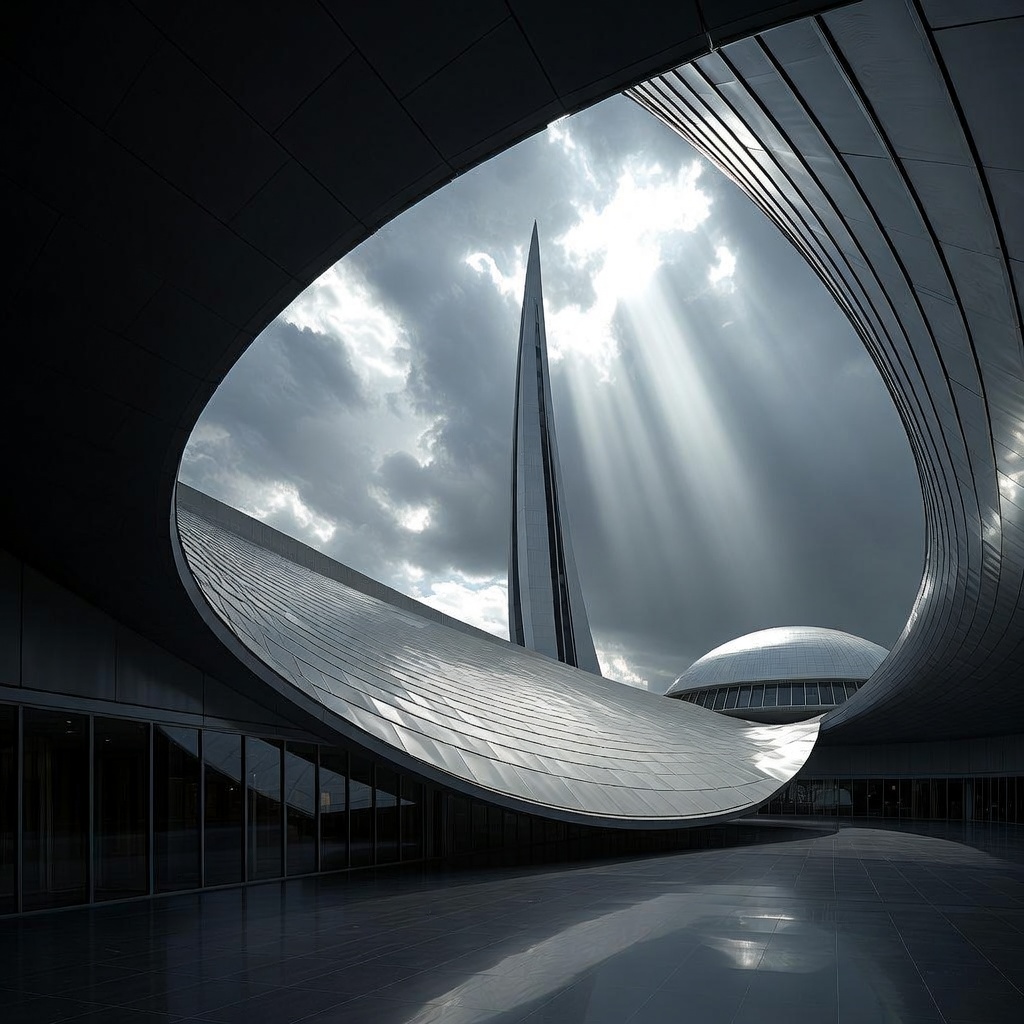
Imagine stepping into a room where the world fades away—not through meditation or darkness, but through deliberate architectural wizardry. Sensory deprivation architecture isn’t about locking yourself in a float tank (though that’s a cousin); it’s the art of crafting built environments that strip away visual clutter, auditory chaos, and even tactile noise to foster profound calm, focus, or introspection. From minimalist monasteries to cutting-edge wellness pods, these designs challenge our sensory-overloaded lives, proving that less can be infinitely more.
At its core, sensory deprivation architecture manipulates the five senses via strategic subtraction. Architects achieve visual deprivation through matte, light-absorbing surfaces like deep charcoal walls or seamless, curved geometries that eliminate sharp edges and reflections. Take Japan’s Azuma House by John Pawson: its stark white interiors and hidden lighting dissolve boundaries, creating a void where the eye wanders nowhere, pulling the mind inward. Sound deprivation follows suit with acoustic engineering—thick, soundproof materials like mass-loaded vinyl or double-glazed voids hush external din to a whisper. The Elbphilharmonie in Hamburg employs similar tactics in its quieter chambers, where resonances are damped to near silence, mimicking an anechoic chamber without the disorientation.
Tactile and olfactory control elevate the experience. Floors might be carpeted in ultra-soft, temperature-regulated materials, or heated to body warmth, erasing the chill of contact. Scents are neutralized with HEPA-filtered air systems, preventing any intrusive aromas. Modern examples include the Snoezelen rooms in therapeutic settings—multi-sensory environments flipped on their head for selective deprivation. These spaces, used in dementia care, feature customizable dimmers, white-noise generators tuned to inaudibility, and vibration-free furniture, helping users achieve a “float” state akin to isolation tanks but grounded in architecture.
Why build this way? Science backs the buzz. Studies from the Journal of Environmental Psychology show sensory-reduced spaces lower cortisol levels by up to 30%, boosting creativity and reducing anxiety. In high-stress arenas like corporate boardrooms or hospitals, firms like Gensler incorporate “deprivation pods”—enclosed nooks with noise-cancelling tech and blackout blinds—for micro-breaks that recharge like a power nap. Wellness tourism amplifies this: Iceland’s Blue Lagoon retreats embed lava-inspired pods with geothermal humps that muffle sound, while Singapore’s Sensory Playground uses modular deprivation cubes for urban escape.
Critics argue it risks isolation overload—prolonged deprivation can spark hallucinations, as NASA learned with astronauts. Yet, when balanced, it’s transformative. Picture your home office reimagined: a corner alcove with felt-lined walls, adjustable LED voids, and a subsonic hum that vibrates stress away. Architects like Peter Zumthor champion this “atmospheric” approach in projects like the Therme Vals baths, where stone and steam conspire to mute the senses, leaving only presence.
Sensory deprivation architecture isn’t escapism; it’s recalibration. In our neon-buzzing world, these silent sanctuaries remind us that true innovation blooms in the quiet. Ready to mute your surroundings? Your senses—and sanity—might thank you.
(Word count: 462)
Comments are closed