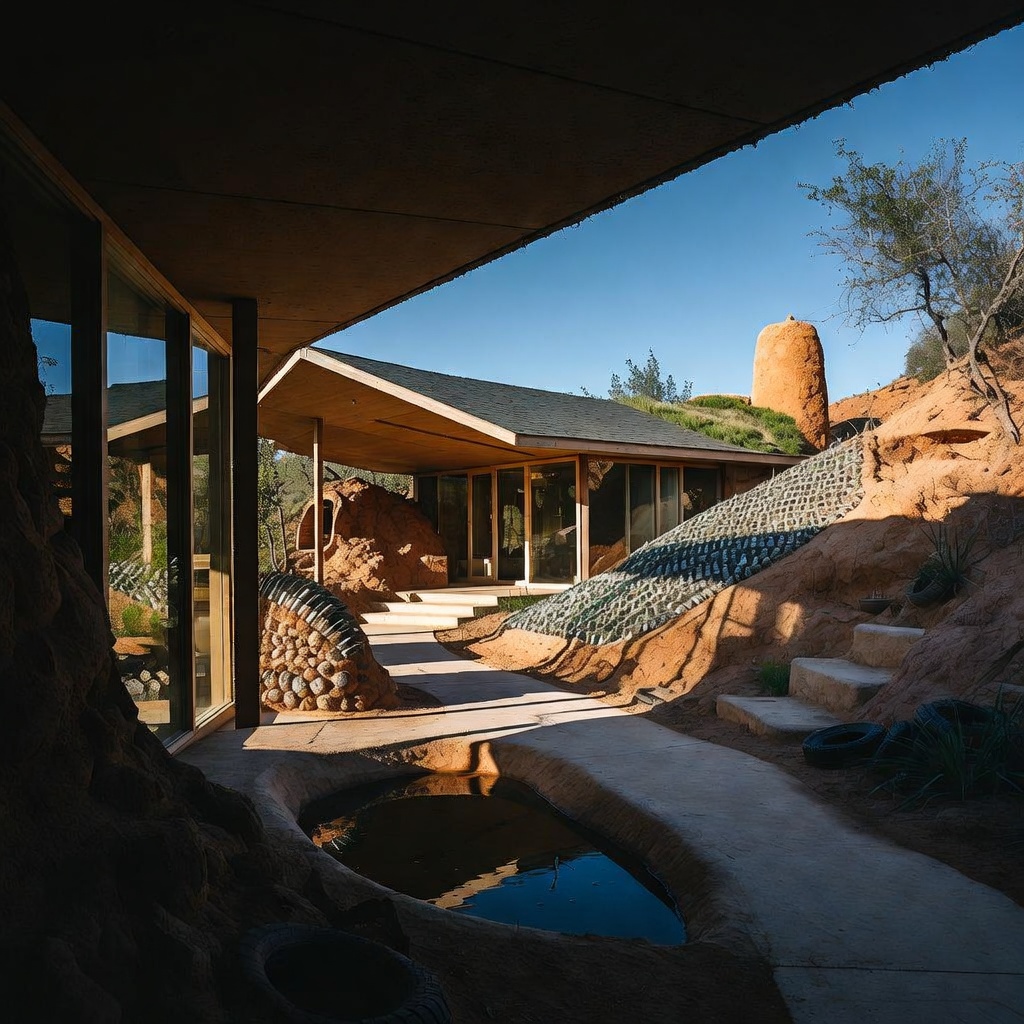
Imagine a home that drinks its own bathwater, grows its own dinner, and shrugs off the power grid like an outdated ex. Welcome to the world of Earthships—off-grid marvels built from tires, cans, and sheer human ingenuity. These aren’t just houses; they’re self-sustaining ecosystems masquerading as cozy domiciles, proving that living lightly on the planet doesn’t mean roughing it.
At their core, Earthships are passive solar homes designed by architect Michael Reynolds, who kicked off the concept in the 1970s amid the oil crises and a rising eco-consciousness. Frustrated with wasteful modern building, Reynolds experimented in Taos, New Mexico, pioneering structures that harness the earth’s own rhythms. The key features? Massive south-facing walls made from rammed-earth tires (yes, old tires packed with dirt for thermal mass) that absorb daytime heat and release it at night. Bottle bricks—recycled glass jammed into walls—let in diffused light while adding a kaleidoscopic flair. Rainwater harvesting systems funnel roof runoff into cisterns, filtering it for drinking, bathing, and even flushing toilets that feed into indoor greenhouses. These greenhouses, often banana groves or veggie patches, thrive on graywater and solar heat, providing fresh produce year-round. Solar panels and wind turbines generate electricity, stored in batteries, making the whole setup gloriously grid-independent. And the best part? They’re built from 80-90% recycled materials, slashing construction costs and waste.
Fast-forward to today, and Earthships have evolved from quirky prototypes to global icons. Reynolds’ Greater World Earthship Community in Taos boasts over 100 homes, a visitor center, and even a birthing center—demonstrating scalability. Modern examples pop up worldwide: in Europe’s harsh climates, like Scotland’s off-grid Earthships battling wind and rain; in hurricane-prone Florida, where reinforced designs withstand Category 5 storms; and in developing nations, such as Malawi, where locals build affordable versions using local trash. Reynolds’ Earthship Biotecture academy trains builders globally, spawning hybrids that incorporate 3D-printed elements or advanced aquaponics.
Why does this matter now, more than ever? Climate chaos, skyrocketing energy bills, and housing crises scream for alternatives to McMansions guzzling fossil fuels. Earthships slash carbon footprints—zero heating bills, minimal water use—and foster resilience against blackouts or supply chain disruptions. In a world where wildfires rage and floods rise, these homes embody radical self-reliance, turning “waste” into wealth. They’re not perfect; upfront costs can hit $200-300 per square foot, and they’re best in sunny, mild climates. Yet, as Reynolds quips, “It’s not about perfection; it’s about direction.”
Earthships challenge us: why settle for fragile fragility when we can build fortresses of the future? They’re a blueprint for harmony with the planet, reminding us that home can be a verb—actively sustaining life. Ready to ditch the utility bill? Your tires await.
(Word count: 462)
Comments are closed