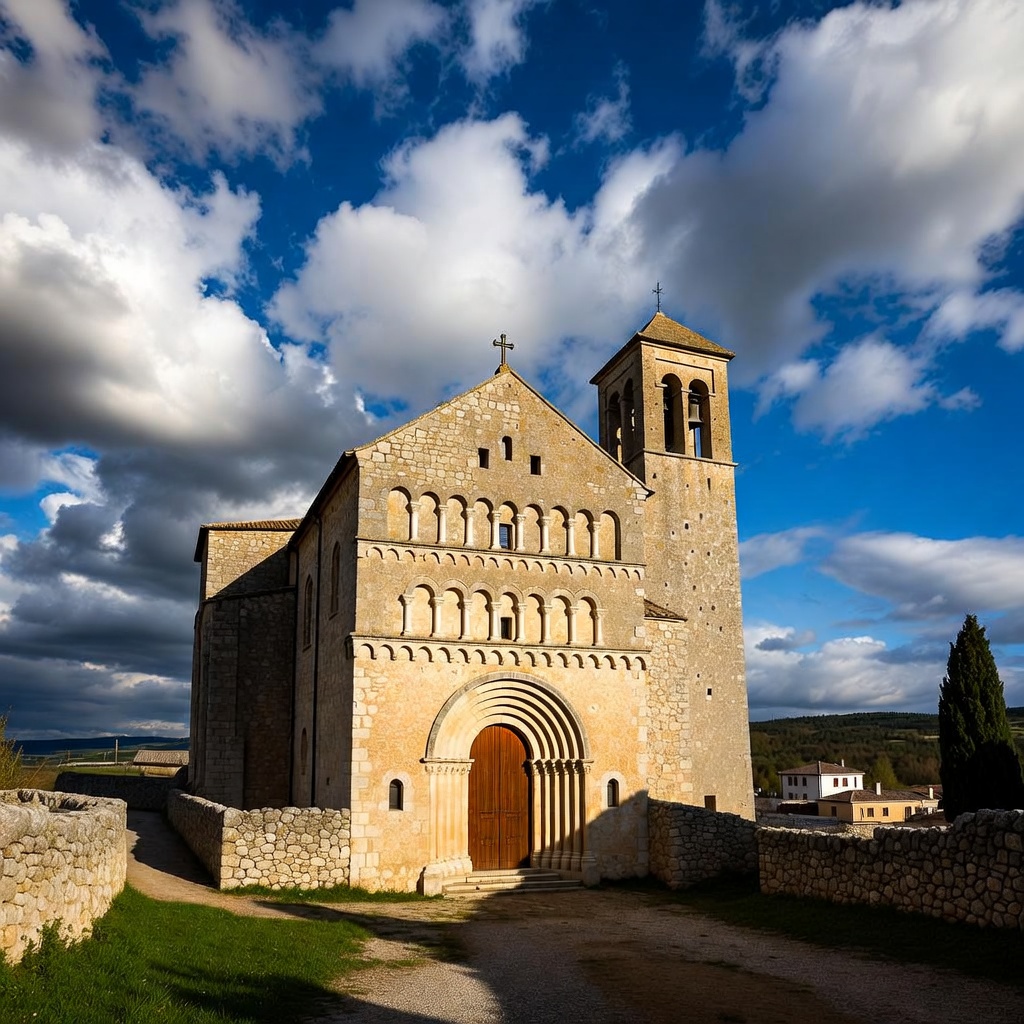
Imagine a world where Sunday mass doubled as a last stand against marauding hordes. Tucked into the rugged landscapes of medieval Europe, Romanesque fortress churches weren’t just places of worship—they were bulwarks of faith, community, and survival. From the 10th to 12th centuries, as Europe clawed its way out of the Viking raids, Magyar incursions, and feudal chaos following the Carolingian collapse, these stone behemoths rose like divine sentinels. Builders fused the rounded arches and barrel vaults of Romanesque architecture with defensive might, creating hybrid structures that whispered prayers while roaring defiance.
At their core, these churches boast unmistakable features. Thick, sheer walls—often 2 meters thick—repelled sieges, pierced only by narrow windows to minimize weak points. Robust towers doubled as watchtowers and belfries, offering panoramic views for spotting enemies. Loopholes for archers flanked entrances, while crenellated parapets crowned the roofs, evoking castles more than cathedrals. Inside, the Romanesque style shines: semi-circular arches support heavy stone vaults, robust pillars divide naves into bays, and facades erupt in sculpted portals teeming with biblical grotesques—dragons, knights, and apostles—to remind the illiterate faithful of divine order amid anarchy. Churches like Saint-Philibert de Tournus in France exemplify this, its multi-story nave and fortified chevet (apse) a textbook blend of piety and paranoia.
Historically, these edifices emerged during the “Peace of God” movements (roughly 975–1050), when bishops and nobles rallied against knightly brigandage. In pilgrimage roads like Santiago de Compostela or the Rhine Valley, they protected travelers and housed relics, turning spiritual hubs into economic fortresses. In Italy’s Apennines or Catalonia’s borderlands, they guarded against Saracen or Norman threats. The architecture symbolized the Church’s ascendant power, as abbots became de facto warlords, their monasteries self-sustaining citadels with granaries, armories, and refuges for peasants.
Fast-forward to today, and these fortresses endure as living testaments. In the Auvergne region of France, the volcanic basalt churches of the Limagne plain—such as Notre-Dame-des-Tours in Châtelguyon—still host masses, their walls whispering of 11th-century Viking scars. Modern restorations, aided by UNESCO listings (like the Routes of Santiago), blend laser scanning with traditional masonry. In Spain’s Aragón, the Romanesque churches of the Vall de Boí glow under LED lights, drawing eco-tourists who hike trails linking these “hilltop fortresses.”
Why do they matter now? In an era of uncertainty—pandemics, conflicts, climate woes—these churches remind us of resilience. They embody adaptive architecture: sacred spaces that pivoted to survival, much like today’s multifunctional community centers or resilient urban designs. They challenge our sleek modernism, proving that beauty and brute strength can coexist. Visit one, climb a tower at dusk, and feel the centuries: faith isn’t fragile; it’s forged in stone. These Romanesque giants aren’t relics—they’re blueprints for enduring the storm.
Comments are closed