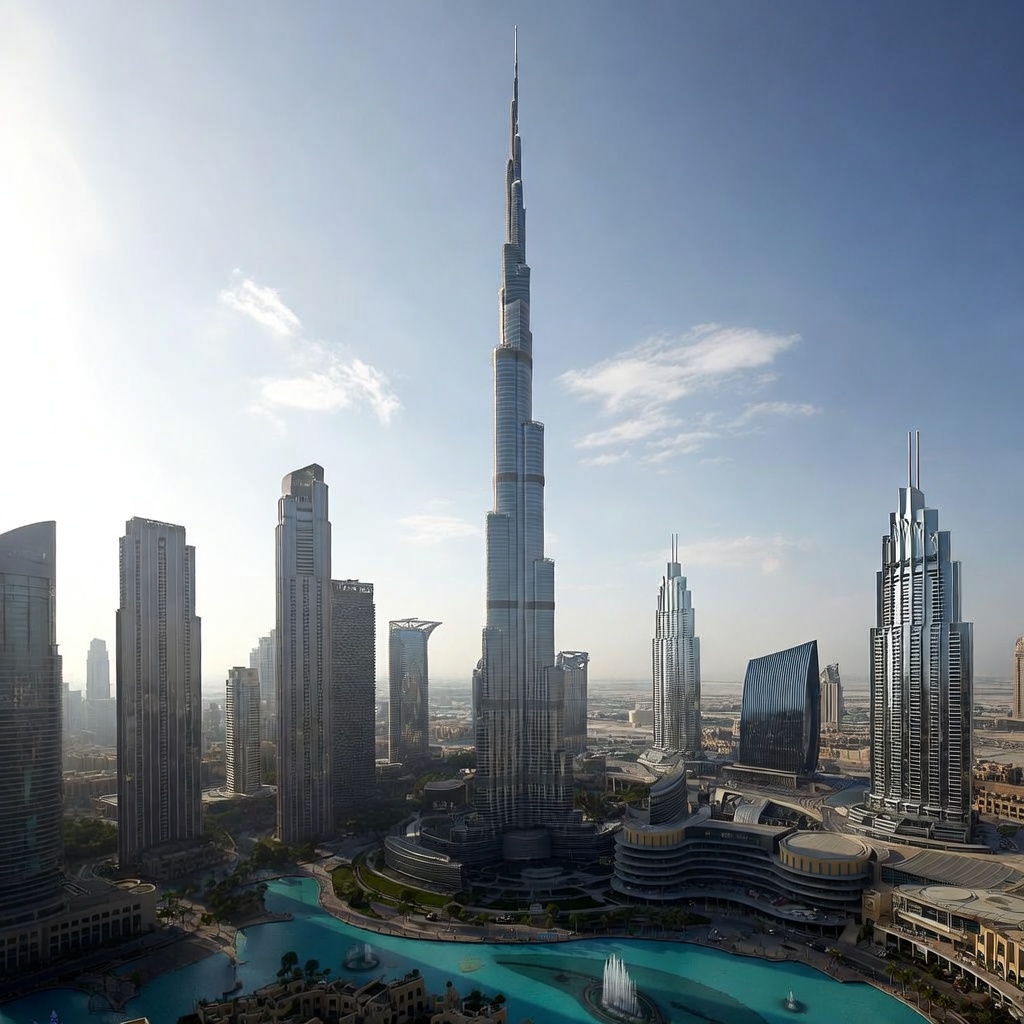
Nestled on the sun-baked shores of the Arabian Gulf, Dubai has transformed from a modest trading post into a skyline of audacious ambition. Its supertall skyscrapers—towers soaring beyond 300 meters—aren’t just buildings; they’re bold declarations of human ingenuity, defying gravity and convention. These architectural marvels redefine urban living, blending cutting-edge engineering with opulent design to create a city that literally reaches for the stars.
Dubai’s vertical obsession traces back to the late 20th century. In the 1980s, oil wealth fueled rapid modernization, but it was the 1990s diversification push that ignited the skyscraper boom. The Burj Al Arab, opened in 1999, set the stage as the world’s first “seven-star” hotel, a sail-shaped icon on an artificial island. But the real explosion came with the 21st century. Sheikh Mohammed bin Rashid Al Maktoum’s vision turned Dubai into a global hub, attracting architects like Adrian Smith and firms like Emaar Properties. The 2000s saw a frenzy: by 2010, Dubai boasted more high-rises than any other city, fueled by tax-free incentives, visionary masterplans like Dubai Creek Harbour, and a relentless pursuit of superlatives.
No discussion of Dubai’s supertalls is complete without the Burj Khalifa, the undisputed king. Completed in 2010, this 828-meter behemoth—over half a kilometer tall—holds the title of the world’s tallest building. Inspired by the Hymenocallis flower and Islamic geometry, its tiered, buttressed design withstands winds up to 240 km/h and desert heat. Inside, 160 floors house residences, the Armani Hotel, offices, and the thrilling “At the Top” observatory, offering views stretching 95 km. Key features include its triple-lobed footprint for stability, high-speed elevators reaching 64 km/h, and sustainable tech like wind-driven turbines and chilled water systems slashing energy use.
Modern examples push boundaries further. The Marina 101 and Princess Tower in Dubai Marina exemplify residential supertalls, with the latter at 414 meters offering luxury apartments amid yacht-filled waters. Emerging stars include the Sobha Hartland tower and the upcoming Dubai Creek Tower, designed by Santiago Calatrava to exceed 1,300 meters with a media-cone spire—potentially the tallest ever. These incorporate AI-driven facades for shade, vertical farms for food security, and earthquake-resistant cores, showcasing adaptive engineering amid climate challenges.
Why does this matter today? Dubai’s supertalls symbolize resilience in a post-oil era, housing 3.5 million residents and drawing 17 million tourists yearly. They drive economic diversification—real estate, tourism, and tech hubs generate billions—while pioneering solutions for dense urbanization. As sea levels rise and populations boom, these towers offer blueprints for vertical cities: efficient land use, green innovations, and communal luxury. Yet, they spark debates on sustainability—massive concrete footprints versus energy savings—and labor ethics, reminders that ambition demands responsibility.
In Dubai, the sky isn’t the limit; it’s just the beginning. These supertalls don’t merely pierce the clouds—they inspire the world to dream bigger, build smarter, and aim higher.
Comments are closed