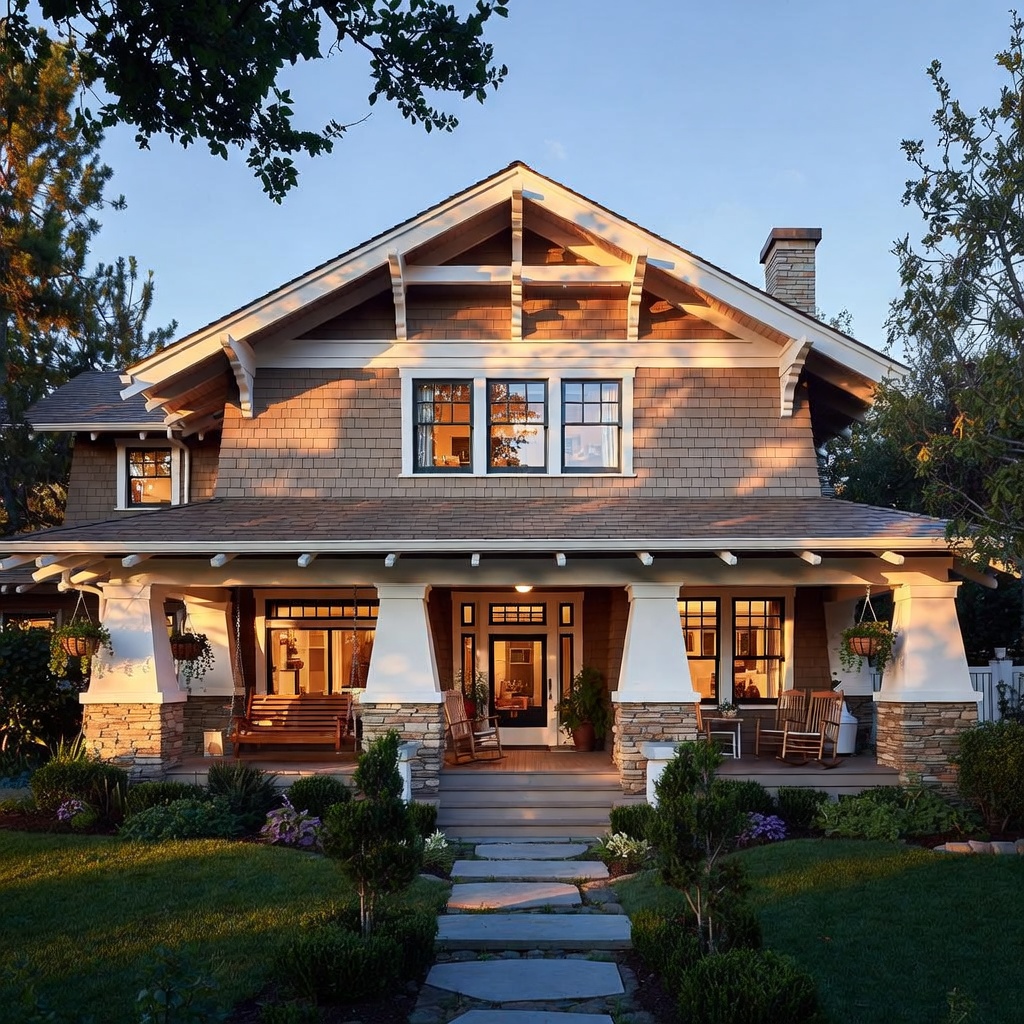
Step into the cozy embrace of a Craftsman bungalow, and you’re not just entering a house—you’re stepping into a love letter to honest craftsmanship. Born in the early 20th century amid the Arts and Crafts movement, these homes rebelled against the ornate excess of Victorian architecture. Architects like Gustav Stickley and the Greene brothers championed simplicity, functionality, and natural beauty, influencing a bungalow boom from 1905 to 1930. Affordable for the growing middle class, they symbolized the American Dream: a humble yet artful dwelling connected to nature and handiwork.
At the heart of Craftsman bungalows are their defining details, each a testament to quality over quantity. Expansive front porches, often supported by thick tapered columns on boulder-like bases, invite neighbors for lemonade chats while framing the home like a welcoming stage. The low-pitched gable roofs with wide overhanging eaves mimic sheltering tree branches, complete with exposed rafter tails that flaunt structural honesty—no hiding the bones here.
Inside, the magic unfolds. Battered (gently sloping) door and window casings, paired with multi-pane upper sashes over single lower ones, create a rhythmic play of light and shadow. Built-in cabinetry—think window seats with hidden storage, plate rails for displaying heirlooms, and inglenook fireplaces with river rock hearths—maximizes space in compact floor plans. Handcrafted elements shine: oak or mahogany trim stained to highlight wood grain, art glass windows glowing with amber and emerald hues, and beamed ceilings that add warmth without overwhelming.
Hardware gets artisanal love too—mission-style strap hinges, thumblatches, and S-shaped pulls evoke blacksmith forges. Exterior accents like wooden knee braces under eaves and cobblestone foundations ground the home in its landscape, blurring indoor-outdoor boundaries.
Fast-forward to today, and Craftsman details endure in modern revivals. Neighborhoods like Pasadena’s Bungalow Heaven preserve originals, while new builds nod to the style in eco-friendly ways—think reclaimed wood beams, energy-efficient double-hung windows mimicking divided lights, and solar-integrated porch roofs. Shows like HGTV’s “Fixer Upper” spotlight bungalow makeovers, blending vintage details with open kitchens and smart tech. Even tract homes borrow the aesthetic, proving its versatility from cozy 1,200-square-foot gems to spacious family nests.
Why does it matter now? In our digital age of sameness, Craftsman bungalows remind us of tactile joy—the creak of a front door, the scent of beeswax on oak, the satisfaction of a home that feels alive. They promote mindful living: durable materials reduce waste, porches foster community, and natural motifs inspire sustainability. Owning or restoring one isn’t just real estate; it’s stewardship of history, a antidote to fleeting trends. Whether you’re touring an Arts and Crafts museum or eyeing a fixer-upper, these details whisper: build well, live deeply. Your bungalow awaits.
Comments are closed