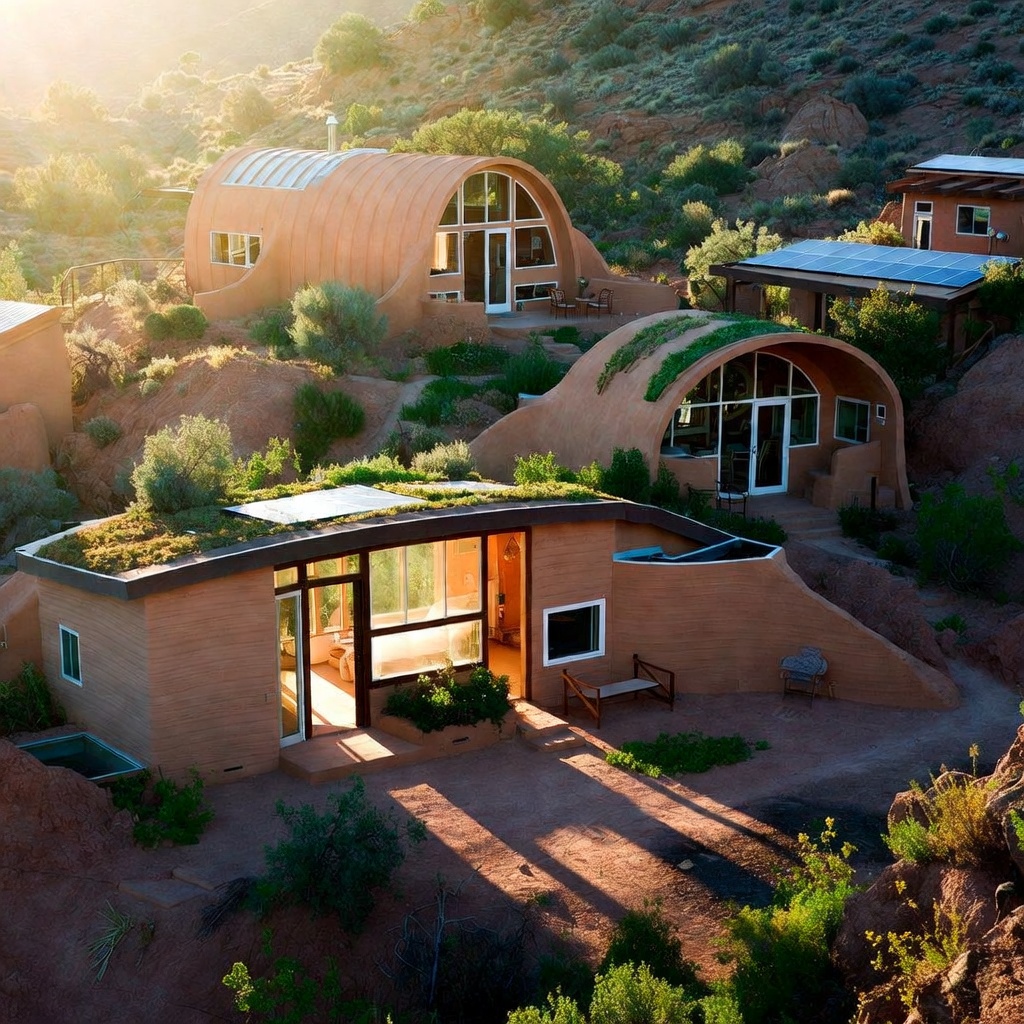
Imagine a house built from beer cans, old tires, and the bones of the earth itself—a fortress against utility bills, blackouts, and the grind of modern life. Welcome to the world of Earthships, off-grid homes that redefine sustainable living. Pioneered by architect Michael Reynolds in the 1970s in Taos, New Mexico, these structures aren’t just quirky experiments; they’re a blueprint for self-reliant habitats thriving in some of the harshest environments on the planet.
At their core, Earthships are passive solar homes bermed into the earth for natural insulation, harnessing the sun’s power through south-facing walls of glass. These “greenhouses” capture daylight and warmth, circulating heated air via convection to keep interiors cozy year-round without central heating. Water autonomy is genius: roofs funnel rainwater into underground cisterns, where it’s filtered for drinking, bathing, and even flushing toilets. Greywater from sinks nourishes indoor gardens—think bananas, papayas, and veggies growing fresh inside your living room—while blackwater gets purified in exterior planters. Solar panels and wind turbines generate electricity, stored in batteries for lights, appliances, and the occasional Netflix binge. Waste? Repurposed. Walls are packed with rammed-earth tires (millions used globally), cans, and bottles creating thermal mass that stabilizes temperatures. The result: zero utility costs, minimal environmental footprint, and resilience against floods, fires, or grid failures.
Reynolds’ journey started amid the oil crises of the ’70s, when he ditched conventional architecture to battle “energy slaves”—our dependence on fossil fuels. Early prototypes faced pushback; codes deemed them illegal. But persistence paid off. The Greater World Earthship Community in Taos now boasts over 100 homes, a visitor center, and a Biotecture Academy teaching builders worldwide. Modern examples shine brighter: In France, Earthships dot vineyards, producing wine without irrigation. South Africa’s projects house communities post-apartheid, blending affordability with dignity. Even in hurricane-prone Florida, owners weathered storms unscathed while neighbors lost power for weeks.
Why do Earthships matter today? Climate chaos demands action—rising seas, wildfires, and energy shortages threaten billions. These homes slash carbon emissions by 80-90% compared to stick-built houses, per Reynolds’ data, and cost $200-300 per square foot to build (DIY slashes that further). In a world of housing crises, they’re affordable sanctuaries: a 1,200 sq ft model runs $150,000-$250,000 using scavenged materials. They empower off-grid freedom, food security via permaculture, and a middle finger to corporate utilities. As Reynolds says, “We’re not waiting for permission to save the planet.”
Skeptics cite upfront costs or learning curves, but global communities prove scalability. With tools like online plans and workshops, anyone can start small—a backyard Earthship greenhouse, perhaps. In an era of uncertainty, Earthships aren’t just homes; they’re a rebellion, proving we can live richly by working with nature, not against it. Ready to pack some tires? Your planet-sized adventure awaits.
Comments are closed