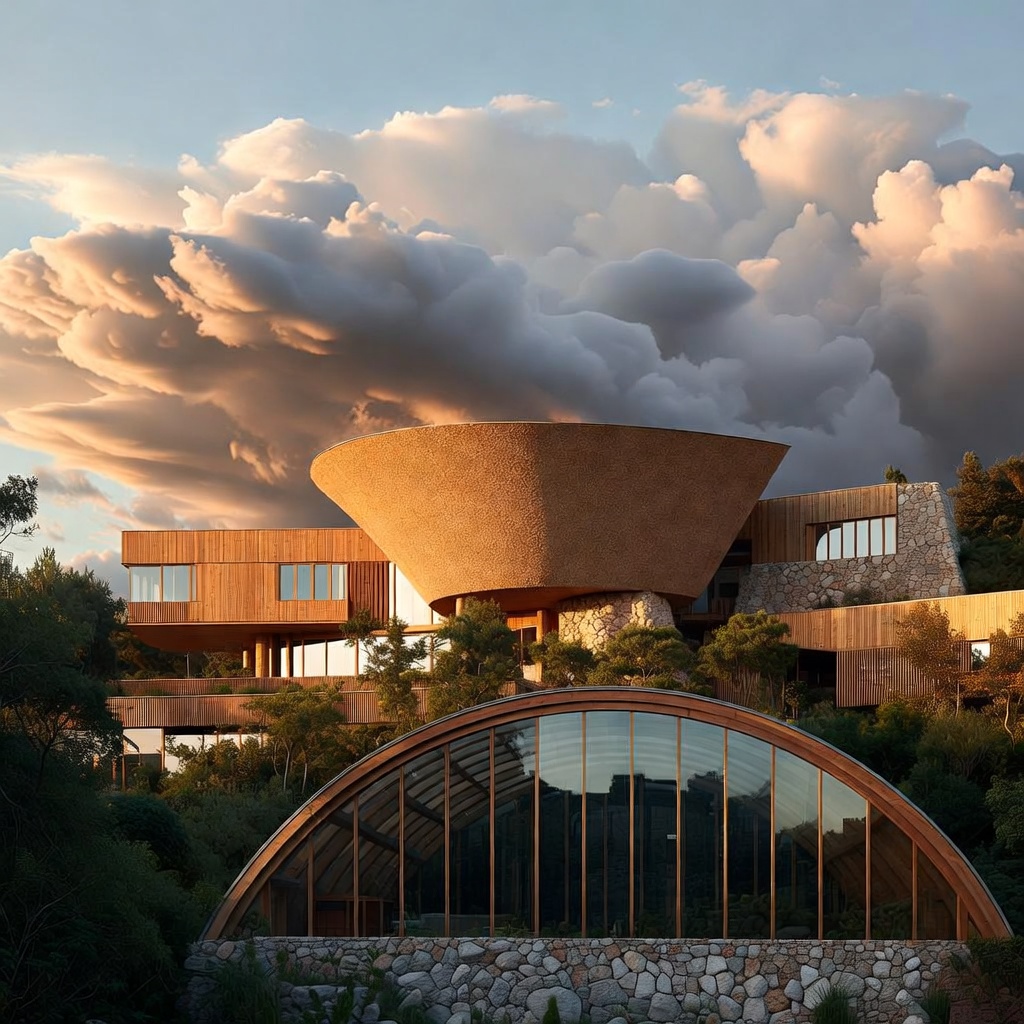
Imagine walls that breathe, insulate like a dream, and sequester carbon while standing strong against time. Welcome to the world of hempcrete, the sustainable building material that’s revolutionizing construction one block at a time. Unlike traditional concrete, which guzzles energy and spews CO2, hempcrete is a lightweight, bio-based wonder made from the woody core of the hemp plant (hurds), lime, and water. It’s not poured like cement; it’s mixed into a runny consistency and packed into molds or timber frames to cure naturally. The result? Walls that are fire-resistant, mold-proof, and naturally regulating humidity—perfect for eco-conscious homes in any climate.
Hempcrete’s story begins in the 17th century, when French farmers stumbled upon its insulating powers while using hemp-lime mixes to chink timber homes. Fast-forward to the 1980s, and the modern revival kicked off in the UK with research by lime expert Tom Leiper. Today, it’s booming globally. In Wales, the Hemp House project showcases a zero-carbon dwelling with hempcrete walls that outperform standard insulation. France leads production, with companies like Juste turning out massive quantities for social housing. In the U.S., Nebraska’s Hempitecture is scaling up prefab hempcrete panels for commercial builds, slashing construction time by 40%. Even high-profile examples like the IsoHemp headquarters in Belgium demonstrate its scalability, blending aesthetics with top-tier performance.
What sets hempcrete apart are its star features. It’s carbon-negative: hemp grows lightning-fast (up to 4 meters in 100 days), absorbing CO2 during cultivation, and the lime in the mix locks it away permanently as it cures—potentially sequestering 100-200 kg of CO2 per cubic meter. Thermally, it boasts an R-value of about 2.4 per inch, beating many synthetics without off-gassing toxins. Acoustically superb, it dampens noise like a pro, and its alkaline nature repels pests and rot. Structurally, it’s non-load-bearing but pairs brilliantly with timber frames, enabling flexible, earthquake-friendly designs.
Why does hempcrete matter today? We’re in a climate crunch—construction accounts for 39% of global emissions, and concrete alone is the planet’s second-largest CO2 culprit after fossil fuels. Hempcrete flips the script: it’s renewable (hemp needs minimal water, no pesticides, and regenerates soil), local (grow it nearby to cut transport emissions), and versatile for new builds or retrofits. In a world racing toward net-zero by 2050, it empowers builders to meet regulations like the EU’s Green Deal without sacrificing durability or style. Affordable too—costs rival conventional methods once scaled, with lifespans exceeding 100 years.
As urban sprawl meets environmental reckoning, hempcrete isn’t just a material; it’s a movement. From cozy cottages to cutting-edge offices, it’s proving we can build sustainably without compromise. Ready to swap steel and cement for something alive? The future’s growing, one hemp stalk at a time.
Comments are closed