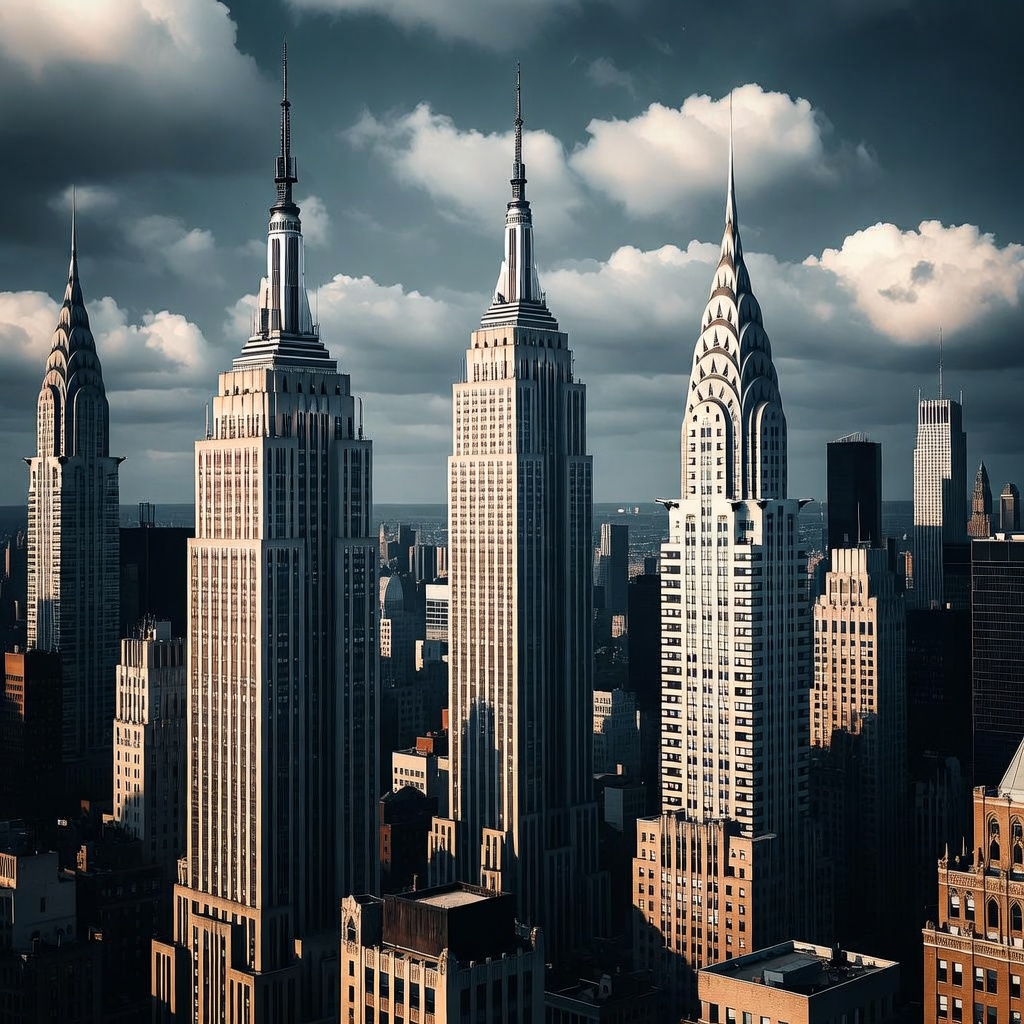
In the heart of Manhattan, where steel skeletons pierce the clouds, New York’s Art Deco spires stand as audacious monuments to human ingenuity and Jazz Age bravado. These slender, ornate pinnacles—often culminating in setbacks, finials, and gleaming antennae—define the skyline’s iconic silhouette. Unlike the boxy monoliths of later eras, Art Deco spires evoke a sense of upward thrust, blending Egyptian ziggurats, Mayan pyramids, and futuristic optimism into a style that’s equal parts elegance and excess.
Born in the 1920s and peaking during the Great Depression, Art Deco arrived in New York amid economic boom and bust. Architects like William Van Alen and Raymond Hood channeled the era’s exuberance into “wedding cake” skyscrapers, mandated by 1916 zoning laws that required buildings to taper as they rose, preventing overshadowing of streets. The spire became the crowning glory: a vertical exclamation point symbolizing progress. The Chrysler Building (1930), with its stainless-steel sunburst crown and layered vertebrae-like tiers, exemplifies this. At 1,046 feet, its 185-foot spire was secretly hoisted overnight to claim temporary title as the world’s tallest. Nearby, the Empire State Building (1931) sports a 200-foot mooring mast disguised as a spire, originally intended for dirigibles—a nod to aviation dreams that never quite landed.
Key features of these spires include geometric motifs—sunbursts, chevrons, and zigzags—rendered in chrome, terracotta, and limestone. They often incorporate setbacks with terraced gardens or observatories, softening the mass while adding drama. The Daily News Building (1930) boasts a lantern-like spire with illuminated clock faces, while 30 Rockefeller Plaza’s (1933) needle-pointed top glows like a beacon. Materials mattered: rust-resistant alloys ensured endurance against harsh winds, a practical flourish amid stylistic flair.
Fast-forward to today, and Art Deco spires remain vital. Modern examples pay homage; One Penn 1 (2021) integrates subtle Deco echoes in its crown, while the supertall 111 West 57th Street (2023) channels Steinway Hall’s historic spire with a twisting, terracotta-clad pinnacle reaching 1,428 feet—the city’s skinniest skyscraper. Preservation efforts, led by groups like the Art Deco Society of New York, underscore their relevance. Amid glass-curtain homogeneity, these spires inject personality, reminding us of resilience: built during the Depression, they symbolized defiance.
Why do they matter now? In an age of sameness, Art Deco’s spires celebrate individuality and aspiration. They anchor New York’s identity, drawing 65 million tourists yearly to gawk at lit-up icons during holidays. Culturally, they’ve starred in films from *King Kong* to *The Wolf of Wall Street*, embedding romance in our collective psyche. As climate challenges loom, their durable designs inspire sustainable retrofits—think LED lighting slashing energy use. Ultimately, these spires aren’t relics; they’re defiant poetry in steel, urging us to dream taller, even from the ground. In a flattening world, they spike the heavens, proving beauty can defy gravity.
Comments are closed