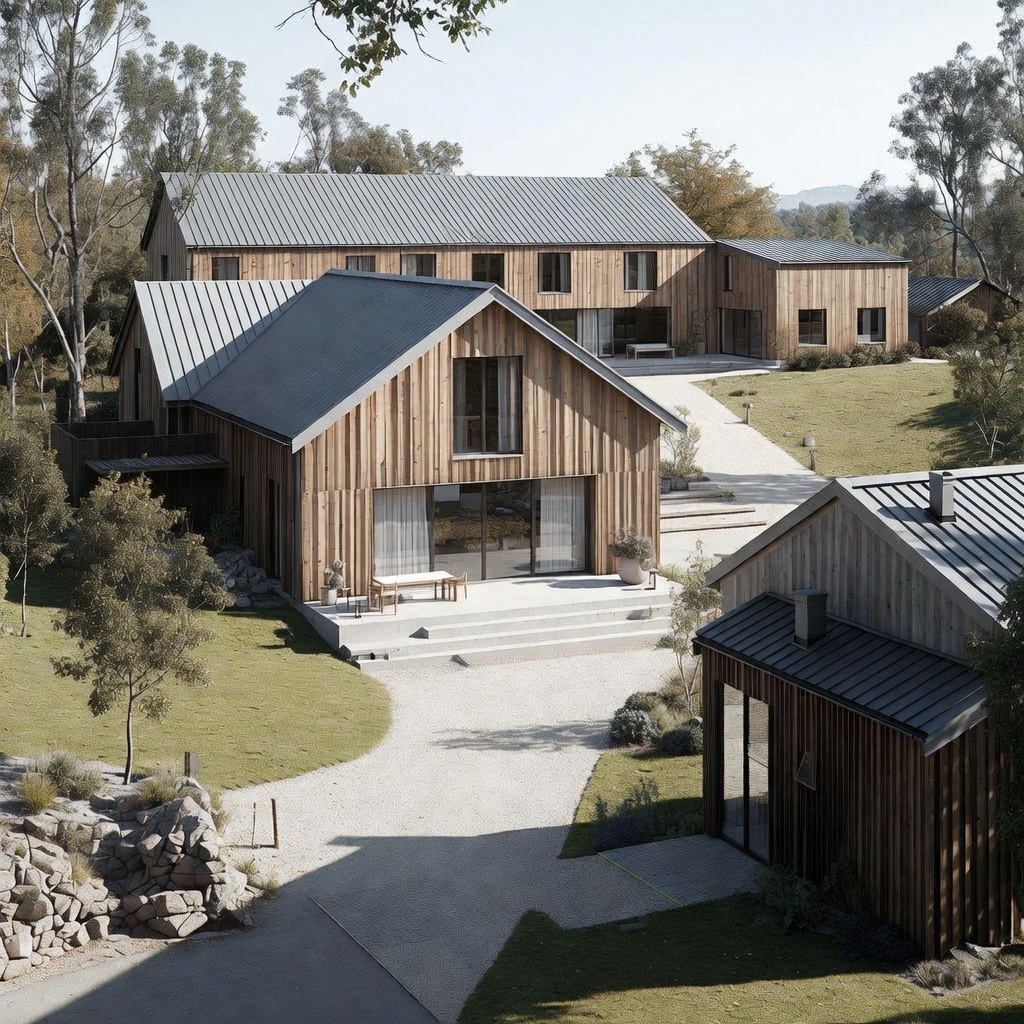
Ever driven past a weathered barn on a country road and wondered what stories those sagging beams could tell? Those hulking structures, once the heartbeat of rural life, are staging a comeback—not as relics of the past, but as sleek, modern residences. Barn conversions blend industrial grit with contemporary comfort, turning forgotten farmhouses into Instagram-worthy havens. Let’s dive into why these transformations are capturing hearts (and real estate markets) worldwide.
Historically, barns were utilitarian powerhouses. Dating back to medieval Europe, they evolved in America during the 19th century as symbols of agricultural might. Think massive timber frames supporting hay lofts, stone foundations, and vast open floors designed for livestock and harvest storage. Post-World War II mechanization doomed many to abandonment, leaving them vulnerable to decay. But preservationists spotted potential: these buildings offered ready-made scale and character that new construction couldn’t match. By the 1970s, savvy homeowners in places like Vermont and the English countryside began converting them, kickstarting a trend fueled by zoning relaxations and a nostalgia for authenticity.
Fast-forward to today, and barn-to-home conversions are a hallmark of adaptive reuse architecture. Key features set them apart. Exposed wooden beams—often centuries-old oak or pine—form dramatic ceilings up to 30 feet high, creating airy great rooms that dwarf urban lofts. Original elements like sliding barn doors, reclaimed shiplap walls, and iron hardware add raw texture, softened by modern touches: underfloor heating, smart home tech, and floor-to-ceiling windows flooding spaces with light. Kitchens boast butcher-block islands amid open-plan layouts, while mezzanine bedrooms overlook living areas below. Sustainability shines through—thick walls provide natural insulation, reducing energy needs, and repurposing cuts demolition waste by up to 90%.
Modern examples abound. In upstate New York, architect Peter Pennoyer transformed a 1840s Dutch barn into a 4,000-square-foot residence with a glass-walled atrium that nods to its agrarian roots while incorporating geothermal systems. Across the pond, London’s Atticus Finch-designed conversions feature rooftop terraces on former hay barns. In California wine country, tech moguls snap up converted structures blending solar panels with vintage silos turned wine cellars. These aren’t cheap—expect $300-$500 per square foot—but they hold value, appreciating 15-20% faster than standard homes in rural markets, per Zillow data.
Why does this matter now? In an era of cookie-cutter suburbs and climate anxiety, barn homes offer soulful sustainability. They preserve cultural heritage, combat urban sprawl by revitalizing rural areas, and appeal to millennials craving “lived-in” vibes over sterile new builds. More practically, they sidestep supply chain woes plaguing new construction. As cities densify, these conversions prove that old bones can house tomorrow’s dreams—efficiently, beautifully, and with a story worth telling around the farmhouse table. Whether you’re a dreamer or a doer, the barn renaissance invites us to rethink home as history reborn.
Comments are closed