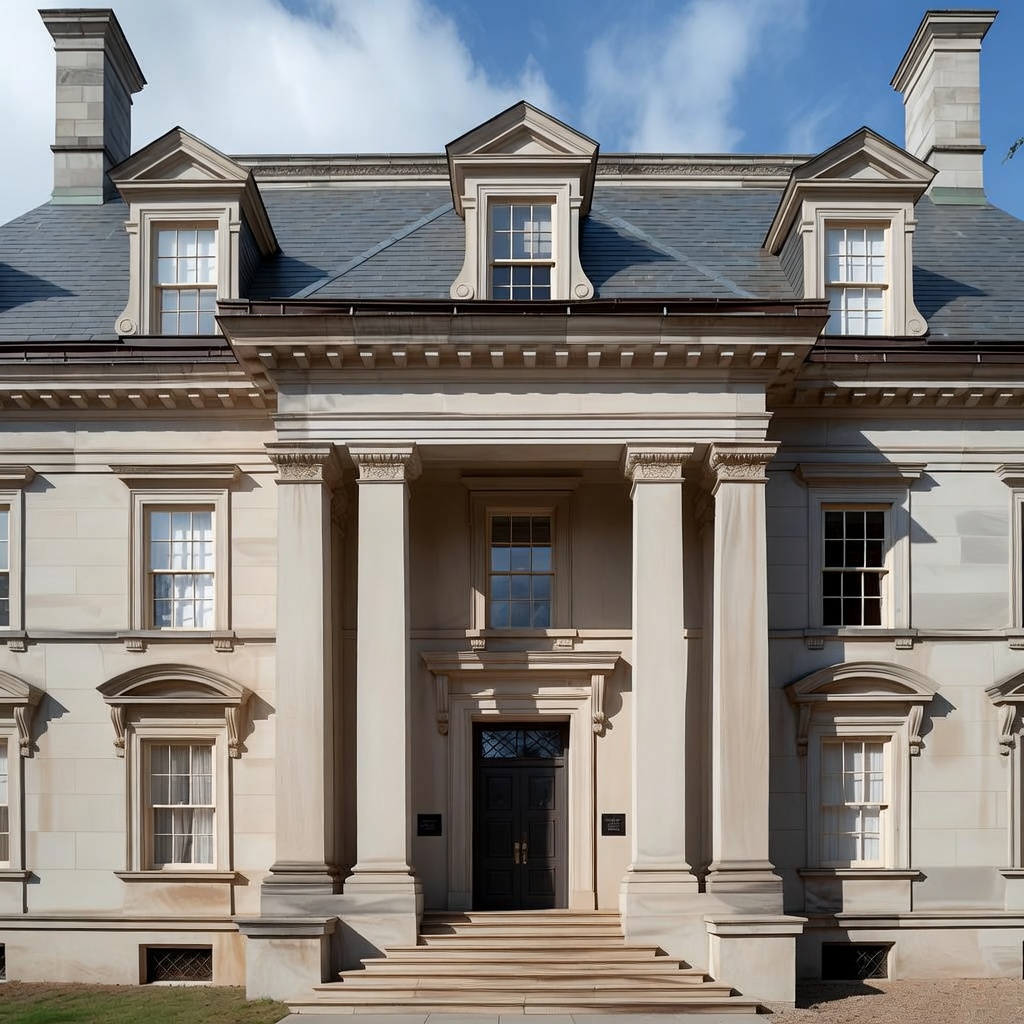
Step into the drawing rooms of early American history, and you’ll encounter Federal style—a sophisticated architectural and decorative movement that traded colonial rusticity for urbane polish. Emerging in the late 18th century, this style embodied the young United States’ ambition to rival Europe’s grandeur while asserting a distinctly republican identity. Named after the Federal period (1789-1801) following the Constitution’s ratification, it flourished until the 1820s, blending neoclassical restraint with subtle opulence.
At its core, Federal style draws from ancient Rome and Greece, filtered through British architect Robert Adam’s lens. Symmetry reigns supreme: think balanced facades with pedimented porticos, fanlights crowning doorways, and elliptical arches framing interiors. Exterior hallmarks include slender columns, quoins accentuating corners, and pale palettes of white, cream, or soft pastels that evoke purity and order. Inside, rooms unfold in geometric precision—oval or octagonal parlors, delicate plasterwork with motifs like wheat sheaves, urns, and eagles symbolizing prosperity and patriotism.
Furniture mirrors this elegance: Duncan Phyfe’s klismos chairs with sabre legs, Hepplewhite sideboards boasting inlaid bellflowers, and Sheraton secretaries with reeded columns. Wood finishes in mahogany or satinwood gleam under candlelight, accented by silver hardware and brass inlays. Textiles favor sheer silks and toiles in stripes or florals, while wallpapers from firms like Zuber depict scenic vignettes, transporting occupants to imagined idylls.
Historically, Federal style was the elite’s statement of enlightenment. Presidents George Washington and John Adams championed it; Thomas Jefferson’s Monticello exemplifies the aesthetic with its octagonal dome and gadget-filled cabinet. Samuel McIntire’s Salem homes and Charles Bulfinch’s Massachusetts State House showcase regional mastery. Born amid post-Revolutionary fervor, it rejected Baroque excess for rational harmony, aligning with democratic ideals—grand yet accessible, imperial yet innovative.
Today, Federal elegance endures, revived in neoclassical revivals and modern interpretations. Walk Capitol Hill, and Asher Benjamin’s influence persists in the U.S. Capitol’s expansions. Contemporary architects like Peter Pennoyer nod to it in luxury residences, pairing original millwork with smart tech. Interior designers such as Alexa Hampton layer Federal pieces with mid-century accents for timeless appeal. Brands like Century Furniture reproduce authentic sideboards, while apps like Morpholio Trace let enthusiasts sketch Federal plans digitally.
Why does it matter now? In an era of maximalist clutter and fleeting trends, Federal style offers ballast—elegant minimalism that prioritizes proportion over flash. It teaches restraint as strength, reminding us that true sophistication whispers. Amid sustainability pushes, its durable craftsmanship outlasts disposable decor, promoting heirloom quality. Culturally, it reconnects us to foundational American optimism, a visual manifesto of unity and aspiration. Whether restoring a Federal-era gem or infusing your space with its poised lines, embracing this style elevates everyday living into something nobly enduring.
(Word count: 448)
Comments are closed