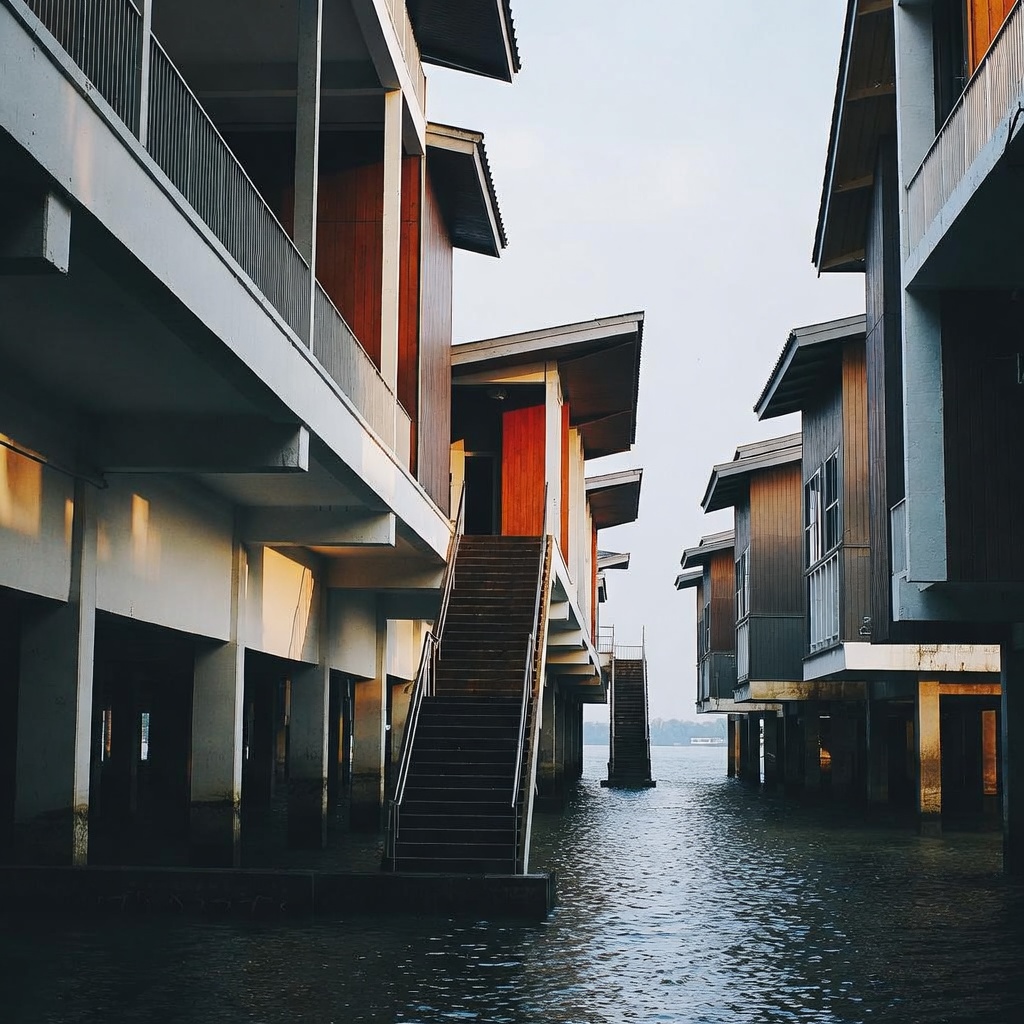
Nestled along America’s watery edges, from Louisiana bayous to Florida shorelines, flood-elevated structures stand as quiet rebels against nature’s wrath. These aren’t your grandma’s beach bungalows; they’re engineered fortresses lifted high above surging tides, blending practicality with a dash of architectural flair. At their core, elevation means business: homes perched on sturdy pilings, concrete piers, or steel columns that keep living spaces dry when waters rise.
Key features make these builds resilient standouts. Pilings—deep-driven posts akin to tree roots—anchor structures against erosion and waves. Open foundations with breakaway walls allow floodwaters to flow through harmlessly, reducing destructive pressure. Modern twists include breakaway enclosures for parking or storage below, plus elevators or outdoor stairs for access. Materials matter too: corrosion-resistant composites and treated lumber shrug off saltwater assaults. FEMA guidelines dictate heights based on Base Flood Elevation (BFE), often 1-3 feet above the 100-year flood mark, ensuring insurance discounts and peace of mind.
History offers gripping lessons. Post-Hurricane Katrina in 2005, New Orleans rebuilt with elevation mandates, transforming flooded neighborhoods into elevated enclaves. Oak Island, North Carolina, mandates new homes rise 12-18 feet on pilings after repeated storm batterings. Globally, Bangladesh’s floating villages and the Netherlands’ dike-elevated polders echo ancient adaptations, proving humanity’s long fight against floods.
Fast-forward to today: climate change amps up the stakes. Sea levels have risen 8-9 inches since 1880, with projections of 1-4 feet by 2100. Supercharged storms like Harvey (2017) and Ian (2022) dumped trillions in damages, hitting coastal populations hardest—over 60 million Americans live in flood-prone zones. Elevated structures slash risks: a raised home in Houston avoided $100,000+ in losses during Harvey. They cut flood insurance premiums by 60-80% via NFIP credits, making them economically savvy. Innovations shine brighter—3D-printed elevated modules in Miami trials, or solar-powered “amphibious” homes that float up during floods.
Why does this matter now? As wildfires rage inland, floods claim the costliest U.S. disasters, totaling $170 billion yearly. Elevated designs foster resilient communities, preserving homes, histories, and habitats. They challenge the build-low-cheap mindset, urging planners toward elevation zoning and subsidies. For homeowners eyeing waterfront dreams, it’s simple: elevate or evacuate. These sky-high sanctuaries aren’t just survival tools—they’re blueprints for a wetter world, proving we can live with floods, not just fear them.
Comments are closed