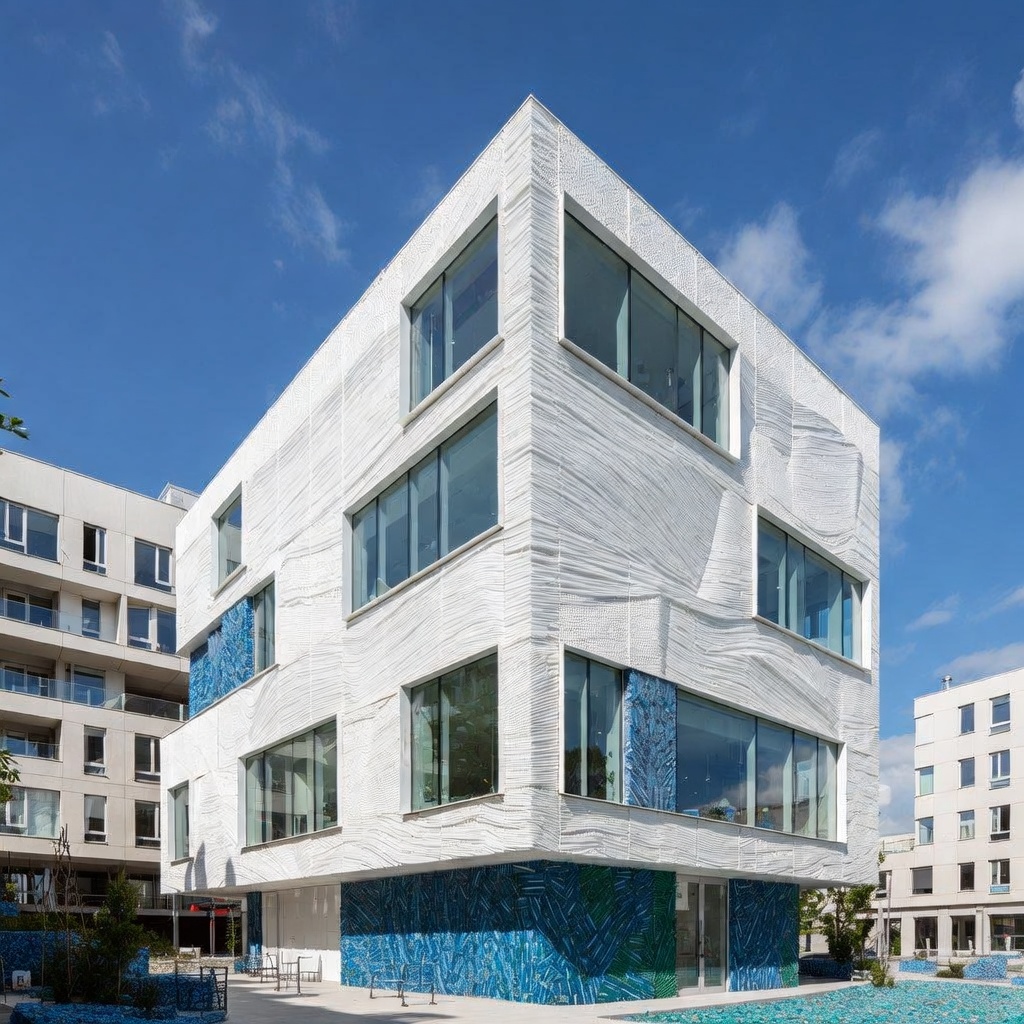
Plastic pollution chokes our oceans, with 14 million tons dumped annually, forming vast garbage patches that threaten marine life. Yet, architects are flipping the script, harvesting this debris to craft building facades that blend sustainability with striking design. These recycled ocean plastic panels aren’t just green—they’re tough, lightweight, and visually dynamic, transforming eyesores into assets.
Key features make these facades stand out. Made from high-density polyethylene (HDPE) collected from beaches and gyres, the plastic is cleaned, shredded, and molded into interlocking tiles or sheets. They’re UV-resistant, enduring harsh sun without fading, and thermally efficient, reducing energy costs by up to 30% through better insulation. Unlike traditional materials like aluminum or glass, they’re non-corrosive in salty coastal air, moldable into custom shapes for artistic flair, and fully recyclable again at end-of-life. Weight-wise, they’re a boon: 50% lighter than concrete cladding, easing structural loads and installation.
History traces back to grassroots efforts in the early 2010s. Initiatives like The Plastic Bank in Haiti began incentivizing coastal communities to collect waste for cash, feeding it into manufacturing. By 2016, Bureo in El Salvador pioneered surfboards from recycled nets, proving scalability. Architecture caught on with projects like the 2018 Oceanix floating city prototype, featuring plastic facades from Parley for the Oceans’ collaborations with Adidas.
Modern examples dazzle. In Miami, the 2022 “Plastic Reef” pavilion by architect Mary Beth Heffernan uses 10 tons of upcycled fishing nets for a porous, wave-inspired exterior that filters air and hosts bioluminescent algae displays. Rotterdam’s Marker building integrates 65,000 recycled plastic bricks from ocean waste, creating a shimmering, multicolored skin that shifts with light. In Bali, the Bamboo U office sports facades from BhuSana, blending plastic flakes with bamboo for a tropical vibe that’s 100% circular.
Why does this matter today? With climate goals demanding net-zero buildings by 2050, these facades tackle dual crises: ocean cleanup and construction’s 39% share of global emissions. Each ton diverted prevents microplastics from entering food chains, protecting biodiversity. Economically, they cut material costs by 20-40% versus virgin synthetics, spurring jobs in collection hubs across Indonesia, Ghana, and beyond. As regulations like the EU’s plastic ban tighten, adoption surges—projects like Singapore’s 2024 coastal resorts signal mainstreaming.
These facades prove innovation thrives at waste’s edge. By turning tragedy into texture, they invite us to rethink building not as consumption, but conservation. The ocean’s refuse is now our resilient future.
Comments are closed