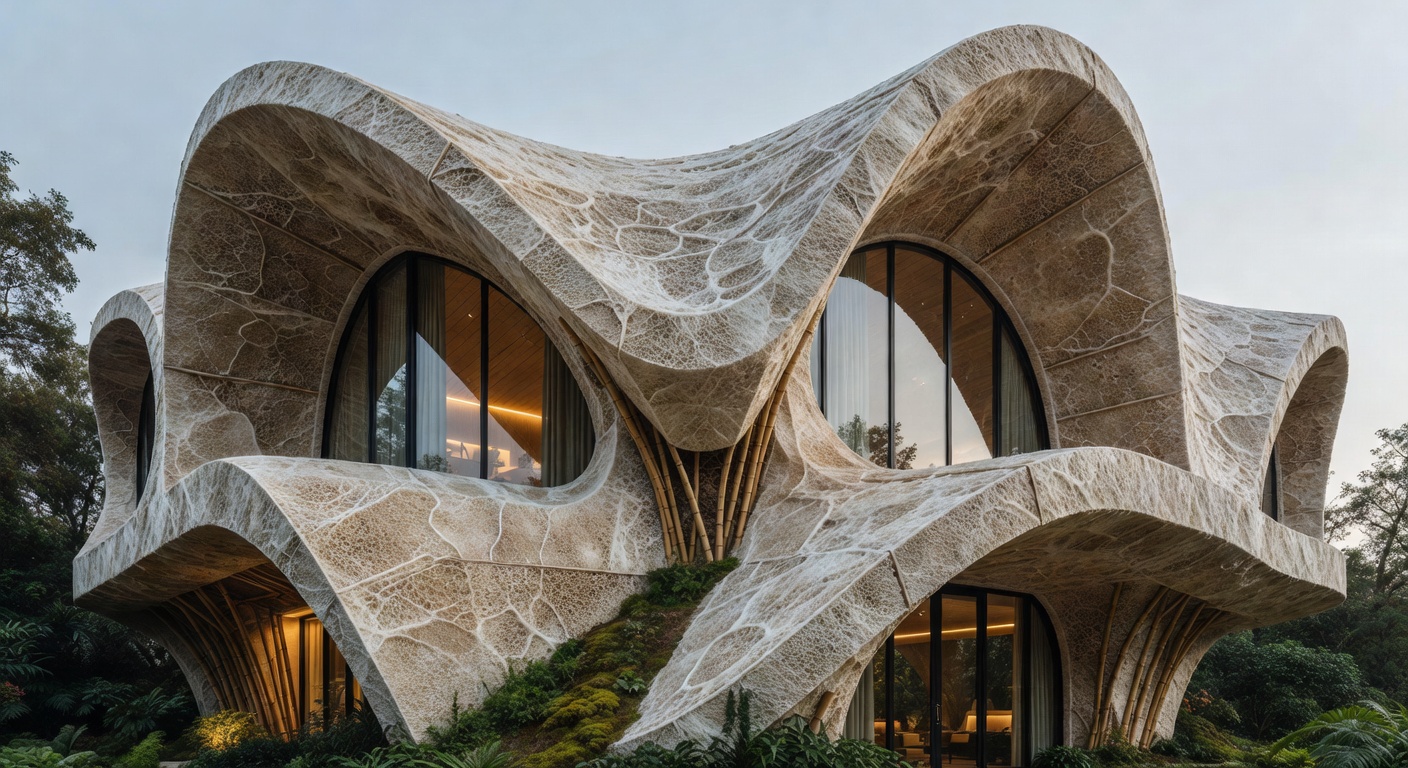
Mycelium, the root-like network of fungi, isn’t just nature’s underground internet—it’s emerging as a game-changer in construction. Grow it in a mold with agricultural waste like hemp hurds or corn stalks, let it bind the substrate over days, and bake it dry. Voilà: lightweight, insulating panels stronger than many foams and far kinder to the planet. Unlike concrete’s carbon-heavy footprint or plastic’s persistence, mycelium composites decompose naturally, offering a biodegradable alternative that’s moldable into custom shapes.
This isn’t sci-fi; it’s rooted in practical innovation. Dutch designer Eric Klarenbeek kickstarted the buzz in 2014 with his “Golden Mycelium” project, 3D-printing furniture from fungal growths that rivaled traditional materials in durability. Fast-forward to today: companies like Ecovative Design in New York produce MycoComposite boards used for packaging (think IKEA’s mushroom-based alternatives to Styrofoam) and now architectural elements. In 2021, The Mycelium Foundry in the UK erected a fully mycelium-based pavilion at London Design Festival—a curved, load-bearing structure grown in weeks, showcasing fire resistance up to 2,000°F after treatment.
Historically, humans have leaned on fungi indirectly—think ancient molds for fermentation or medicinal molds—but mycelium’s building debut traces to the 2000s. Artists and biohackers experimented first, inspired by nature’s own designs: termite mounds and bird nests mimic mycelium’s self-assembling strength. A pivotal moment came in 2015 when SUNY researchers tested mycelium bricks for tensile strength, finding them competitive with particleboard while sequestering carbon during growth.
Key features make mycelium stand out. It’s thermally insulating (R-value around 2.5 per inch, beating some woods), acoustic-dampening, and naturally flame-retardant when dehydrated—fungi don’t burn easily. Production slashes energy use: no kilns, no mining, just room-temperature fermentation. Costs? Dropping fast—from $25 per square foot experimentally to under $10 at scale, per industry reports. Plus, it’s customizable: dye it, infuse with resins for waterproofing, or engineer strains for specific strengths.
Why does this matter now? Construction guzzles 40% of global energy and emits 39% of CO2, per UN data. With climate deadlines looming and urban density rising, mycelium offers scalable sustainability. Projects like Mogu in Italy floor high-end spaces with mycelium tiles that biodegrade harmlessly. It’s not perfect—current versions need coatings for outdoor longevity, and scaling farms requires expertise—but pilots in disaster relief (quick-deploy shelters) and space habitats (NASA’s interest in lunar regolith-binding fungi) hint at broader impact.
As mycelium scales from labs to lots, it challenges us to rethink “building materials” as living processes, not mined products. Fungi have networked Earth’s ecosystems for eons; now, they’re wiring our future homes.
Comments are closed