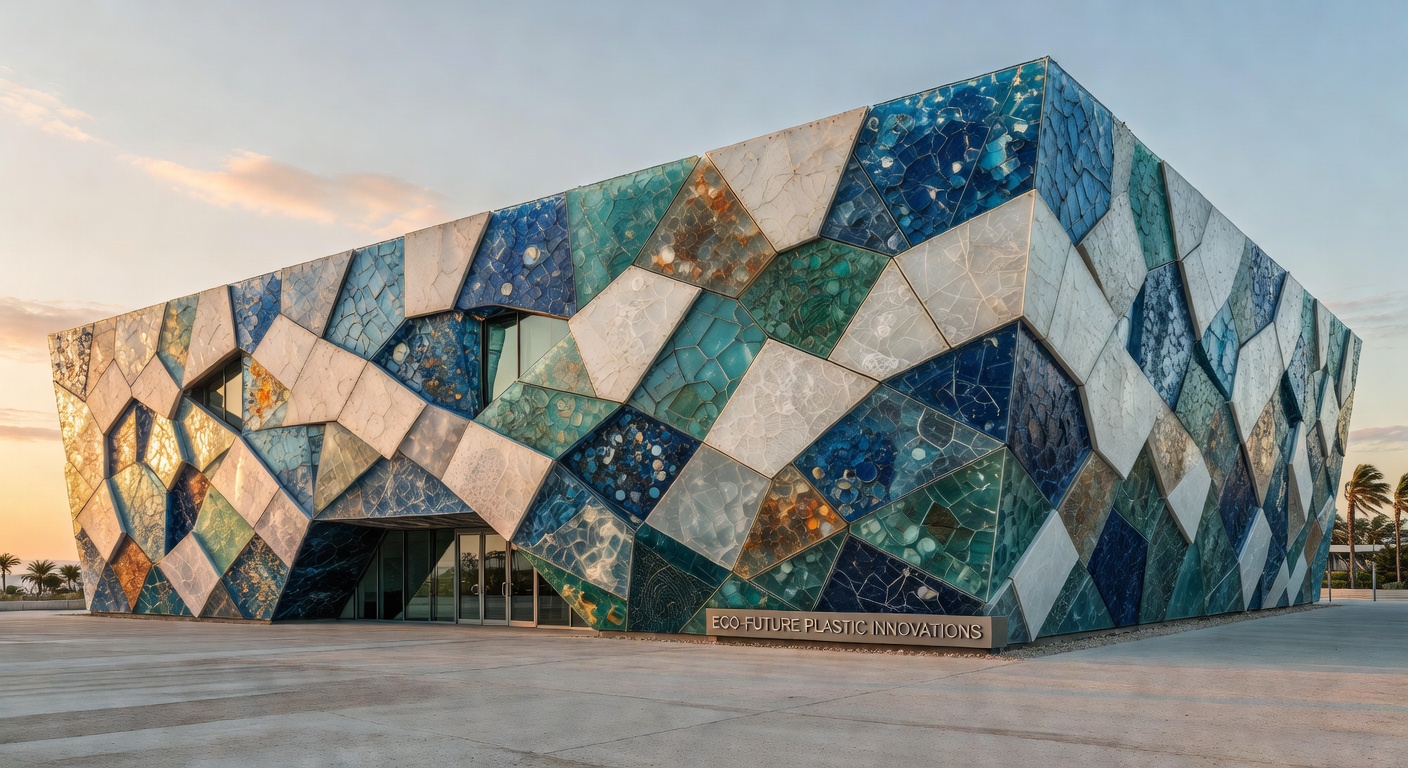
Ocean plastic pollution has long been a scourge, with 11 million metric tons dumped annually into our seas. But architects are flipping the script, transforming this debris into striking building facades that blend sustainability with bold aesthetics. Recycled ocean plastic facades—panels, tiles, and cladding made from collected marine waste—offer a practical way to repurpose plastic that’s notoriously hard to recycle. These materials aren’t just eco-friendly; they’re durable, weather-resistant, and visually dynamic, turning eyesores into showstoppers.
At their core, these facades leverage advanced processing techniques. Collected plastics, often PET bottles and fishing nets tangled in gyres like the Great Pacific Garbage Patch, are sorted, shredded, and melted into uniform pellets. Extrusion or compression molding then shapes them into interlocking panels. Key features include UV stabilization to prevent fading, high impact resistance rivaling aluminum, and thermal insulation properties that cut energy costs. Unlike traditional materials, they require no painting or sealing, slashing maintenance by up to 70%. Brands like ByFusion and Oceanworks pioneer this space: ByFusion’s ByBlocks interlock like Lego, made from 80% ocean-bound plastic, while Oceanworks’ RePlast creates terrazzo-like tiles mimicking stone.
The concept gained traction in the 2010s amid rising plastic awareness. Early adopters drew from historical precedents, like the 20th-century use of recycled rubber in playgrounds, but ocean plastic marked a leap. A pivotal moment came in 2016 when the Ocean Plastic Declaration united brands to use 10,000 tons by 2020. Modern examples shine brightest. In Miami, the FAO headquarters extension sports facades from Bureo’s Net Positive program, where discarded fishing nets become vibrant blue-green panels that ripple like waves. Rotterdam’s Marker building integrates 65,000 recycled plastic bricks, each embedding visible flecks of ocean debris for a textured, storytelling surface. In Hawaii, the Plastic Beach Project clad a community center with modular panels, diverting 20 tons from landfills.
Why does this matter today? Beyond aesthetics, these facades combat the plastic crisis head-on. By 2050, plastics could outweigh fish in the ocean if unchecked, per OECD projections. Facades create demand, funding cleanup ops in coastal communities—often employing locals in Indonesia or the Philippines. Economically, they reduce virgin plastic use by 90% in production, curbing emissions equivalent to removing 1,000 cars yearly per project. Aesthetically, they normalize circular design, inspiring urban renewal. Challenges remain: scaling collection and ensuring purity to avoid microplastic leaching. Yet innovations like blockchain-tracked supply chains are addressing them.
As cities race to net-zero, recycled ocean plastic facades prove waste can be wealth. They’re not a silver bullet, but a tidal shift—proving architecture can heal the planet it adorns. Next time you spot a shimmering building skin, look closer: it might just be the sea’s revenge, beautifully rendered.
(Word count: 448)
Comments are closed