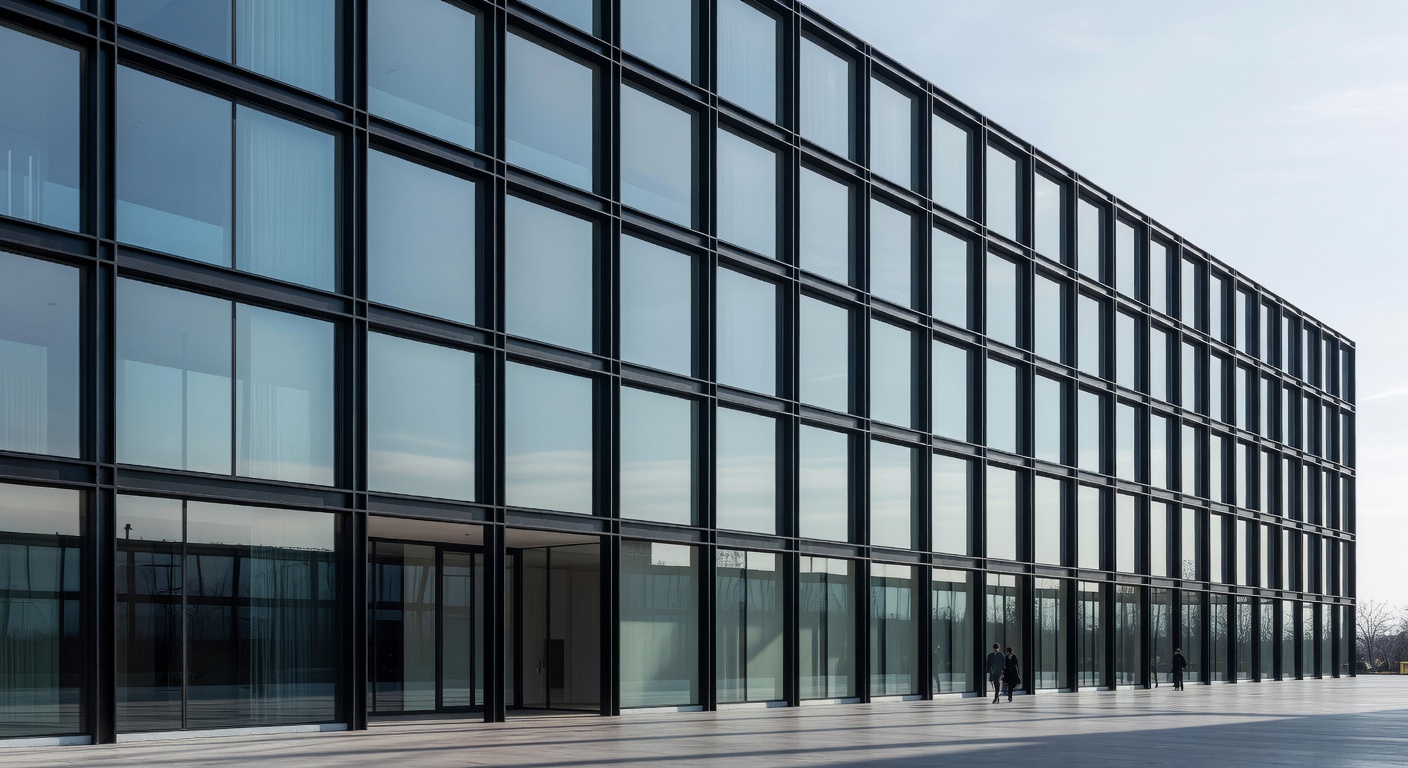
Ludwig Mies van der Rohe didn’t just design buildings; he redefined how we experience space itself. Born in 1886 in Germany, the architect famously distilled his philosophy into three words: “Less is more.” This mantra, coined in the 1940s amid the chaos of post-war reconstruction, challenged the ornate excesses of previous eras. Minimalism, as Mies embodied it, strips away the superfluous to reveal essential truths—pure forms, open expanses, and unadorned materials that let light and air breathe freely.
At its core, Miesian minimalism hinges on a few radical principles. Universal space dominates: no walls boxing in rooms, but fluid interiors flowing seamlessly into the outdoors. Think floor-to-ceiling glass walls that dissolve boundaries, as in his iconic Barcelona Pavilion of 1929. Structural honesty is paramount—steel I-beams and concrete columns exposed, not hidden behind facades. Materials like travertine, marble, and glass gleam with industrial precision, polished to perfection yet never flashy. Symmetry and proportion rule, creating a serene geometry that feels almost mathematical. Scale matters too; Mies favored monumental gestures that dwarf the human figure, prompting quiet awe rather than cozy intimacy.
Historically, Mies emerged from the Bauhaus movement, where he served as the final director from 1930 to 1932. Fleeing Nazi Germany in 1937, he transplanted his vision to America, becoming dean of architecture at the Illinois Institute of Technology (IIT). There, he rebuilt the campus with pavilions of glass and steel, like Crown Hall (1956), a temple to open-plan learning where students float amid vast, column-free expanses. The Seagram Building (1958) in New York epitomized his “corporate cathedral”—a sleek bronze-and-glass tower on Park Avenue, setting the standard for modern skyscrapers. These weren’t mere shelters; they were manifestos against Victorian clutter, aligning with modernism’s push for efficiency in an industrial age.
Today, Mies’s influence pulses through contemporary design. Apple’s flagship stores echo his glass-box transparency, with minimalist retail spaces that prioritize product over decoration. The Neue Nationalgalerie in Berlin, his 1968 masterpiece reopened after meticulous restoration, draws millions to its stark crown of steel and glass. Even luxury homes in places like Miami nod to Farnsworth House (1951), Mies’s glass-walled retreat suspended above Illinois floodplains—a private pavilion that’s become a pilgrimage site. Architects like Norman Foster and Richard Meier channel his ethos in projects blending tech with restraint.
Why does Mies matter now? In our cluttered digital age of endless notifications and maximalist aesthetics, his minimalism offers clarity. It teaches restraint amid abundance, sustainability through simplicity—fewer materials mean less waste. Psychologically, it fosters mindfulness; those vast, empty spaces invite reflection, countering our frenzy. As climate crises demand efficient builds, Mies’s modular, adaptable designs prove timelessly relevant. He didn’t eliminate beauty; he purified it. In a world screaming for attention, “less is more” whispers a profound truth: elegance endures.
Comments are closed