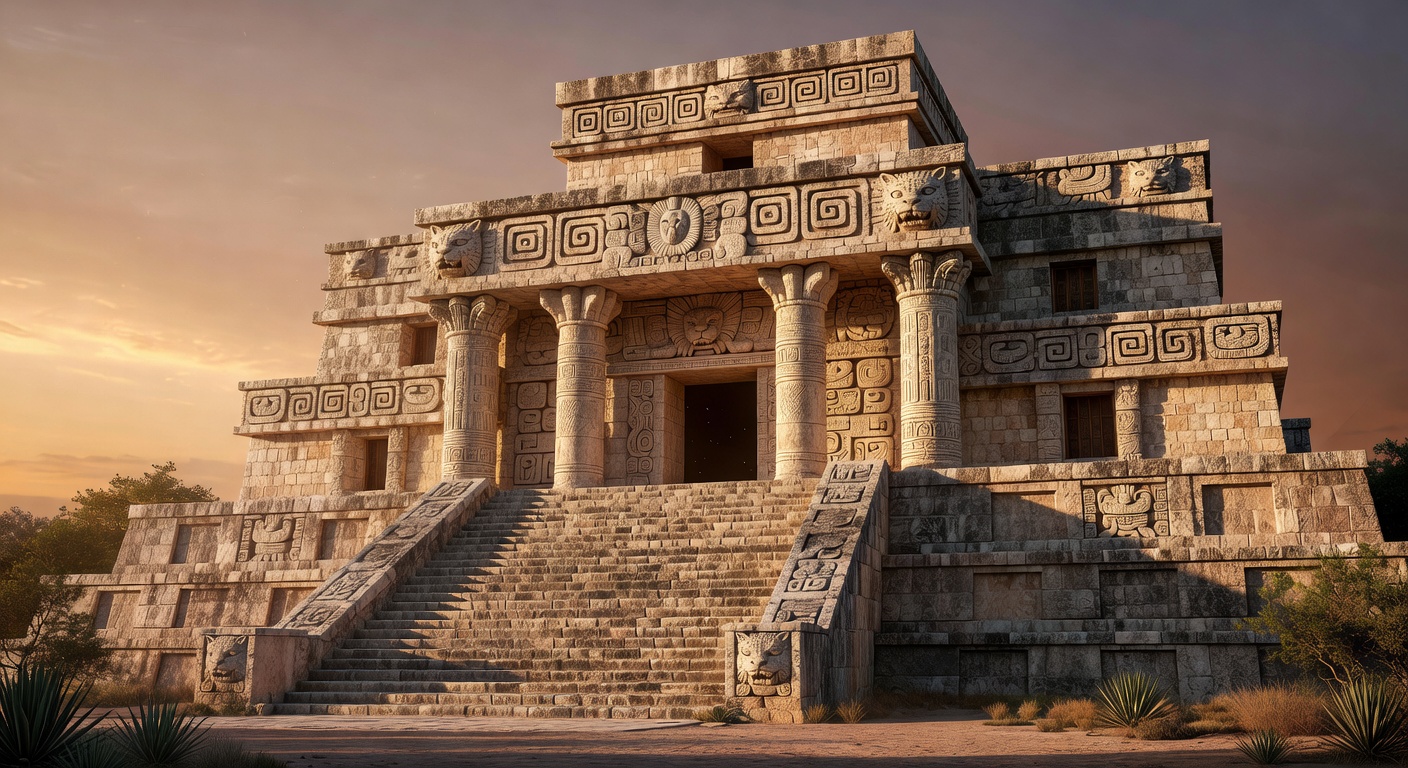
Stepping into the grand lobbies of Miami’s Art Deco Historic District, you’re struck by stepped pyramids rising from stucco facades, flanked by vibrant masks and serpentine carvings. These aren’t ancient relics shipped from Yucatán—they’re Mayan Revival motifs, a bold architectural style that fused pre-Columbian aesthetics with 20th-century ambition. Born in the 1920s and peaking through the 1940s, this revival captured the imagination of architects hungry for exotic flair amid America’s fascination with archaeology.
The style emerged from a perfect storm of historical curiosity and cultural momentum. Post-World War I excavations, like those at Chichén Itzá by the Carnegie Institution, flooded popular media with images of towering temples and intricate glyphs. Hollywood amplified the allure: films like *The Lost World* (1925) romanticized Mesoamerica, inspiring builders to borrow from Maya iconography. Key features define its unmistakable look—stepped ziggurat forms echoing pyramids like El Castillo, with recessed panels creating dramatic shadows. Carved stone or terracotta friezes depict feathered serpents (Kukulkan’s emblem), snarling masks, and lattice patterns mimicking woven reed mats. Low-relief sculptures of gods like the long-nosed Chaac adorn entrances, while interiors boast geometric mosaics in bold reds, blues, and golds, evoking temple codices.
Prominent examples dot the U.S. landscape, especially Florida’s Mayan Revival heyday. The 1926 Mayan Theatre in Denver, Colorado, exemplifies the genre with its 1,600-pound rooftop pyramid and lobby murals of jungle rituals. In Los Angeles, the Pantages Theatre (now Hollywood Pantages) sports feathered-serpent corbels and hieroglyphic panels. Miami Beach’s Carlton Hotel features a facade straight out of Palenque, complete with Chac masks spewing water from faux fountains. Even gas stations got the treatment—San Francisco’s Mayan-inspired Richfield Tower (demolished 1968) mimicked a temple atop its service pumps. These weren’t mere decoration; they symbolized progress, blending indigenous might with Jazz Age optimism.
Today, Mayan Revival motifs pulse in contemporary design, bridging past and present. Architects like Frank Gehry nod to them in projects evoking layered histories, while resorts in Cancún and Tulum integrate motifs sustainably—think eco-lodges with stepped roofs overgrown in native vines. Fashion and interiors revive the look too: Anthropologie stores flaunt glyph-inspired tiles, and jewelry lines craft Kukulkan pendants from recycled metals. Digital artists remix motifs in NFTs and video games, like *Assassin’s Creed*’s Mayan realms.
Why does it matter now? In an era of cultural homogenization, these motifs champion indigenous heritage, sparking dialogue on repatriation and decolonization—much like debates over the British Museum’s Maya artifacts. They remind us architecture isn’t neutral; it’s a storyteller. Reviving Maya forms fosters appreciation for a civilization that mastered astronomy, math, and urban planning without wheels or draft animals. As climate threats loom, their resilient, site-specific designs offer lessons in harmony with nature. Engaging these echoes isn’t nostalgia—it’s a vibrant reclaiming, urging us to build futures as enduring as Tikal’s stones.
Comments are closed