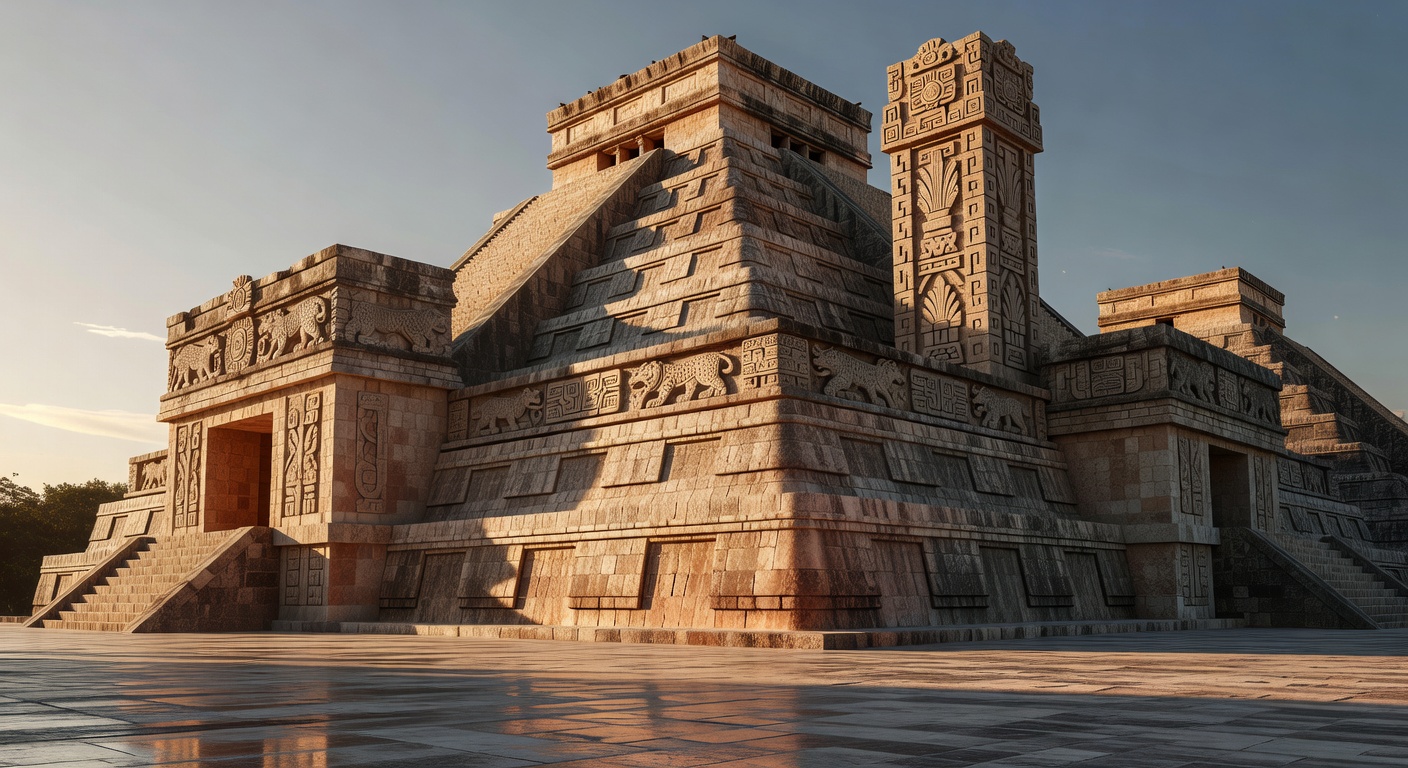
Step into the sun-drenched courtyards of Los Angeles’ Mayan Theater, where stepped pyramids rise from the sidewalk, their surfaces etched with intricate glyphs and masked guardians. This isn’t a portal to Chichen Itza—it’s a 1920s cinema channeling the Mayan Revival, an architectural style that fused Mesoamerican splendor with early 20th-century flair. Born from a fascination with ancient civilizations, this motif revived stylized elements of Maya art and architecture, transforming them into bold statements of exoticism and modernity.
The style emerged in the United States during the 1920s and 1930s, fueled by archaeological discoveries and popular media. Explorers like Sylvanus Morley unearthed Mayan ruins, while films and world’s fairs showcased replicas of temples and codices. Architects seized the moment, adapting features like stepped pyramids (recalling El Mirador), feathered serpent motifs from Kukulkan, and lattice-like friezes mimicking stelae carvings. Key hallmarks include low-relief sculptures of gods like the long-nosed Chaac, rain deity extraordinaire; bold geometric patterns in terra-cotta or concrete; and vibrant color palettes of turquoise, crimson, and gold. Unlike rigid classical revivals, Mayan motifs embraced asymmetry and exuberance—think snarling jaguar heads flanking doorways or towering ziggurat facades piercing urban skylines.
Prime examples dot the American West. Grauman’s Mayan Theater (now the Los Angeles Historic-Cultural Monument) boasts a facade alive with carved masks and hieroglyphs, its interior a ritualistic wonder of faux stone and hanging vines. Bullock’s Wilshire department store in LA featured Mayan-inspired pylons and motifs, blending luxury retail with temple vibes. Further afield, the Mayan Court apartments in San Francisco mimic stepped platforms, while Fresno’s Pacific Southwest Building sports rooftop eagles straight from Palenque. Even outside the U.S., echoes appear in Mexico City’s 1930s structures, nodding to national heritage amid post-revolutionary pride.
Today, Mayan Revival matters as a bridge between past and present, reminding us of architecture’s power to evoke wonder amid concrete jungles. In an era of minimalist glass towers, its ornate motifs inspire sustainable designs—stepped forms optimize natural light and ventilation, echoing ancient engineering ingenuity. Contemporary architects like Teddy Cruz draw from it for border-inspired projects, while graphic designers revive glyphs in branding for tequila labels and streetwear. Amid cultural reckonings, it prompts reflection: these motifs, once exoticized by outsiders, highlight Maya resilience—their calendar and math outshone Europe’s for centuries.
Reviving Mayan elements isn’t mere nostalgia; it’s a call to honor indigenous legacies while innovating for tomorrow. As climate challenges loom, the style’s emphasis on harmony with nature—open courtyards, symbolic water motifs—offers timeless lessons. Next time you spot a feathered serpent on a faded facade, pause: it’s not just decoration. It’s a vibrant thread connecting lost empires to our bustling world, urging us to build with history’s boldest strokes.
Comments are closed