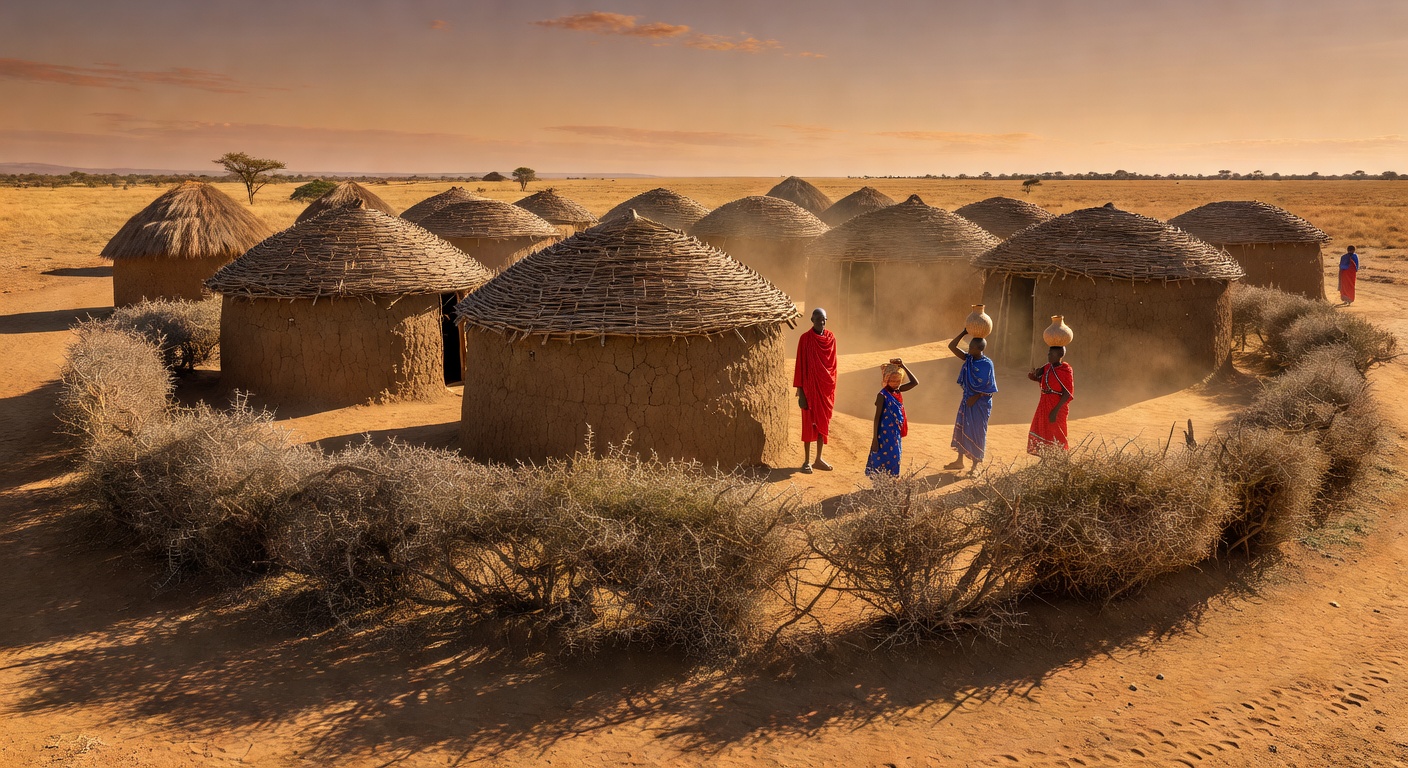
In the sun-baked plains of southern Kenya and northern Tanzania, where acacia trees pierce endless horizons, the Maasai people have crafted living symbols of their warrior spirit: the manyatta. These aren’t just huts—they’re communal strongholds, beehives of family life, livestock protection, and cultural defiance against a modernizing world.
At its core, a manyatta is a circular village enclosure, typically housing an extended family or age-set group of warriors. The design is ingeniously simple yet formidable. Thorny acacia branches form a perimeter boma, a living fence that deters lions, hyenas, and human raiders. Inside, individual homes—called enkangs—are beehive-shaped structures built by women using a mixture of mud, sticks, cow dung, and urine. The process is a communal ritual: women collect materials, mix the dung-based plaster for its waterproofing and insulating properties, and weave grass mats for roofing. A single enkang takes about three days to erect, standing just six feet tall and entered through a low, narrow doorway to keep predators out and warmth in.
Historically, manyattas trace back centuries to the Maasai’s pastoralist migration from the Nile Valley around the 17th century. As semi-nomadic cattle herders, they relocated every 7-10 years when grazing lands depleted or soil eroded, abandoning old villages to the elements. This impermanence reinforced their identity as Maa-speakers (from “ol-Maa,” their language), valuing mobility over permanence. During the colonial era, British administrators viewed manyattas as “primitive,” imposing taxes and sedentarization policies, yet the Maasai adapted, using bomas to hide cattle from confiscation.
Today, manyattas blend tradition with adaptation. Climate change and land loss from tourism and agriculture pressure relocation, but elders like those in Kajiado County maintain core practices. Modern examples include eco-manyattas near Maasai Mara National Reserve, where solar panels power enkangs and tourist homestays generate income—women’s cooperatives like the Talamu group build upgraded versions with improved ventilation to combat respiratory issues from dung smoke. Yet challenges persist: youth migration to cities erodes building knowledge, and wildlife corridors clash with expanding villages.
Why do manyattas matter now? They embody sustainable architecture predating green building trends—zero-waste, locally sourced, climate-responsive. In a world grappling with housing crises and biodiversity loss, the manyatta offers lessons in resilience: its thorn fence inspires natural security designs, while dung plaster sequesters carbon. Culturally, they sustain Maasai autonomy amid globalization, hosting ceremonies like eunoto (warrior-to-elder transitions) that bind generations. Visiting a manyatta, like those at Empakasi near Amboseli, reveals not relics but living heritage—red-ochre-clad warriors herding cattle at dawn, proving that in earthen walls lies enduring strength.
(Word count: 428)
Comments are closed