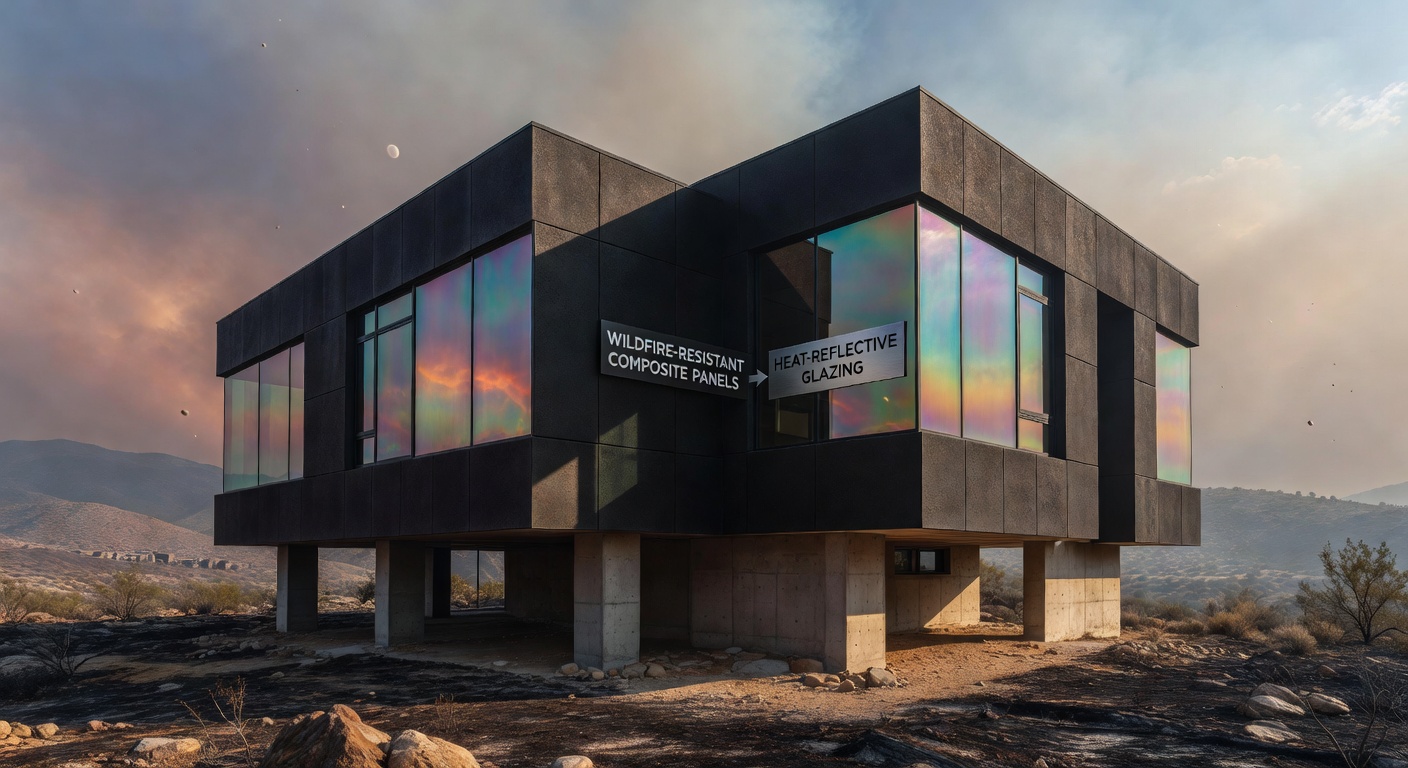
When flames race across parched landscapes, devouring homes in minutes, the difference between survival and loss often boils down to what your walls are made of. Wildfire-resistant materials aren’t just a buzzword in architecture—they’re a frontline defense reshaping how we live amid escalating fire risks. From California’s scorched suburbs to Australia’s bushfire battlegrounds, these innovations turn vulnerable structures into fortresses.
Take fiber-cement siding, a staple in modern fire-prone builds. Unlike traditional wood, which ignites at 400°F, fiber-cement—blended from cement, sand, and cellulose fibers—endures up to 2,000°F without crumbling. Its non-combustible core resists ember attacks, those glowing projectiles that spark 80% of home ignitions during wildfires. Paired with metal roofs, which shed embers like water off a duck’s back, it creates an ember-proof envelope. In the 2018 Camp Fire that razed Paradise, California, homes retrofitted with these materials stood while wooden neighbors vanished.
Historical context adds grit to the story. Post-1940s, as suburbs sprawled into wildland interfaces, fire-resistant tech lagged. The 1964 Alaska earthquake-sparked fires exposed wood-frame frailties, nudging engineers toward steel and concrete. Fast-forward to the 1990s Australian Black Friday bushfires: they scorched 4.8 million acres, prompting mandates for fire-rated glass and intumescent seals that swell in heat to block flames. Today, Class A fire-rated materials, tested to burn for four hours without structural failure, are code in high-risk zones like Colorado’s foothills.
Modern examples dazzle with cutting-edge flair. Iceland’s volcanic-inspired basalt fiber panels, woven from melted lava rock, boast tensile strength rivaling steel and zero flammability. In Malibu’s 2018 Woolsey Fire, luxury homes clad in these emerged unscathed amid $5 billion in damages. Then there’s Aerogel insulation, a ghostly silica aerogel trapping heat like a thermos—up to 10 times more effective than fiberglass, it prevents interior meltdown even if exteriors scorch. Tesla’s Gigafactory in Nevada deploys it alongside spray-on fireproof coatings that expand into insulating foam when kissed by fire.
Why does this matter now? Climate change is supercharging wildfires: the 2023 Canadian blazes torched 45 million acres, double the U.S. annual average. Insurance premiums in fire belts have tripled, and rebuild costs soar—$300,000 per home on average. These materials slash that risk by 50-70%, per Insurance Institute for Business & Home Safety studies. They’re not invincible—no home is—but they buy critical time for firefighters and evacuations. Retrofitting roofs and vents costs $10,000-$30,000, a fraction of replacement.
Beyond survival, they foster resilient communities. California’s Ember Defense Initiative mandates such upgrades for new builds, inspiring global shifts. As fires intensify, embracing these materials isn’t optional—it’s how we reclaim our landscapes from the inferno. The next blaze? Your home might just shrug it off.
Comments are closed