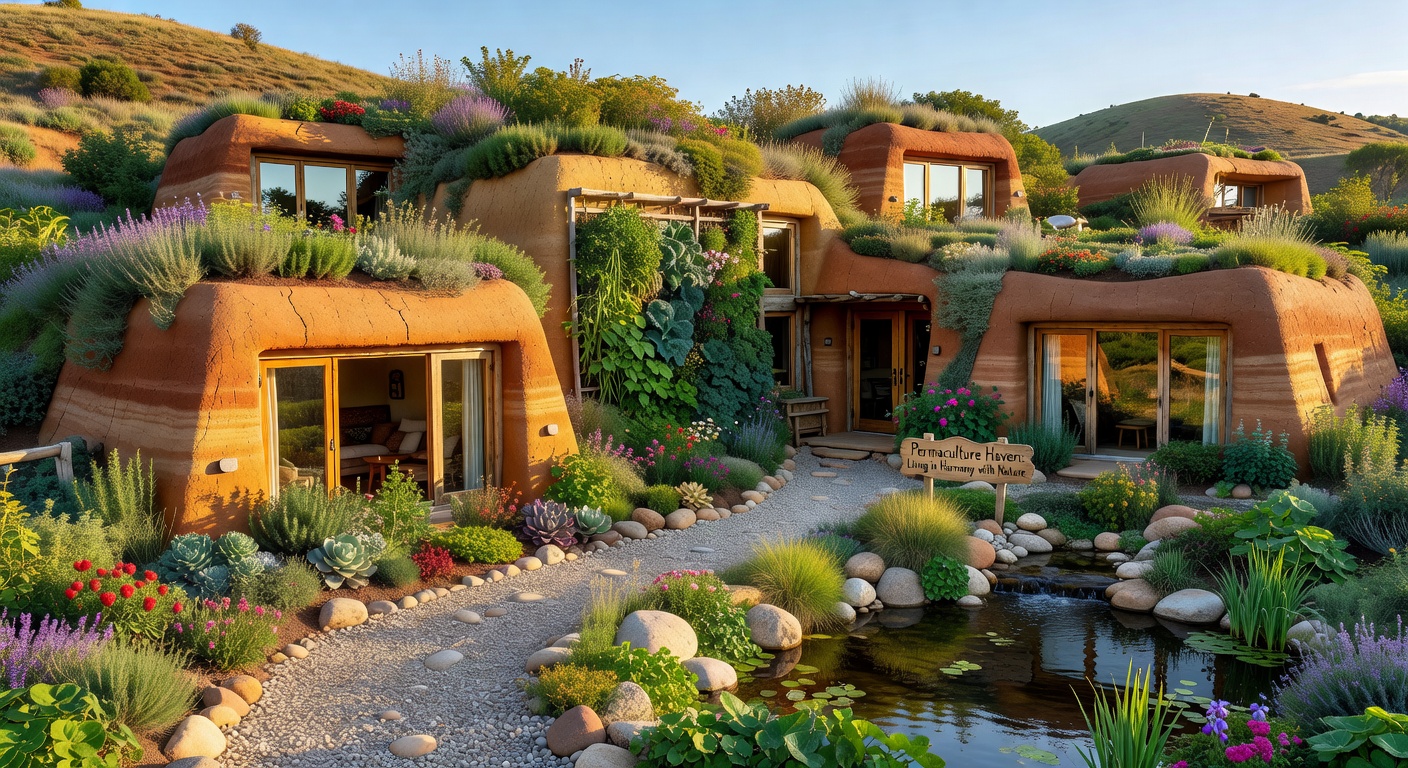
Permaculture integrated buildings fuse human shelter with natural ecosystems, turning homes and structures into living, productive landscapes. This isn’t just eco-friendly design—it’s architecture that mimics nature’s genius, where walls harvest rain, roofs sprout vegetables, and foundations support biodiversity. Rooted in permaculture principles pioneered by Bill Mollison and David Holmgren in the 1970s, these buildings emerged from a backlash against industrial agriculture and urban sprawl. Mollison, an Australian ecologist, coined “permaculture” as permanent agriculture, but it quickly expanded to permanent culture, encompassing settlements that sustain themselves indefinitely.
At its core, the approach layers Zone 1 elements—daily-use gardens, composting toilets, and greywater systems—directly into the building fabric. Key features include living roofs planted with sedums, herbs, or even fruit trees that insulate, reduce stormwater runoff by up to 70%, and provide fresh produce. Walls often incorporate rammed earth or straw bale for thermal mass, paired with passive solar design: south-facing glazing (in the northern hemisphere) captures winter sun while overhangs block summer heat. Rainwater cisterns integrated into foundations feed drip irrigation for vertical food forests climbing the exterior. Solar panels aren’t mere add-ons; they’re woven into productive canopies that shade and generate energy simultaneously.
Modern examples shine globally. The Crystal Waters permaculture village in Queensland, Australia, established in 1987, features homes with integrated aquaculture ponds that filter wastewater while raising fish. In the U.S., the permaculture demonstration site at The Farm in Tennessee showcases earth-sheltered dwellings buried partially into hillsides, blending invisibly with the terrain for energy efficiency. Cutting-edge is the Bullitt Center in Seattle, dubbed the “greenest commercial building,” with a permaculture-inspired living machine wastewater system that purifies sewage on-site using wetlands and plants. In Europe, the Tamera peace research center in Portugal integrates buildings with swales and food forests, where structures serve as trellises for grapes and kiwis.
Why does this matter today? As climate chaos accelerates—wildfires, floods, and heatwaves straining grids—these buildings offer resilience. They slash energy bills by 50-90% through embodied natural systems, cutting reliance on fossil fuels. In a world facing food insecurity for 828 million people (per UN data), they democratize production: a single rooftop garden can yield 20-30 kg of veggies annually per square meter. Economically, initial costs offset via savings; a straw bale home might cost 10-20% more upfront but pays back in five years. Socially, they foster community—shared orchards and tool libraries build interdependence.
Beyond survival, permaculture buildings heal the planet. They boost urban biodiversity, sequester carbon in living materials, and regenerate soil. In an era of throwaway architecture, they remind us: buildings aren’t endpoints but participants in life’s web. Adopting them scales from backyard sheds to city blocks, proving harmony with nature isn’t sacrifice—it’s smart design for a thriving future.
Comments are closed