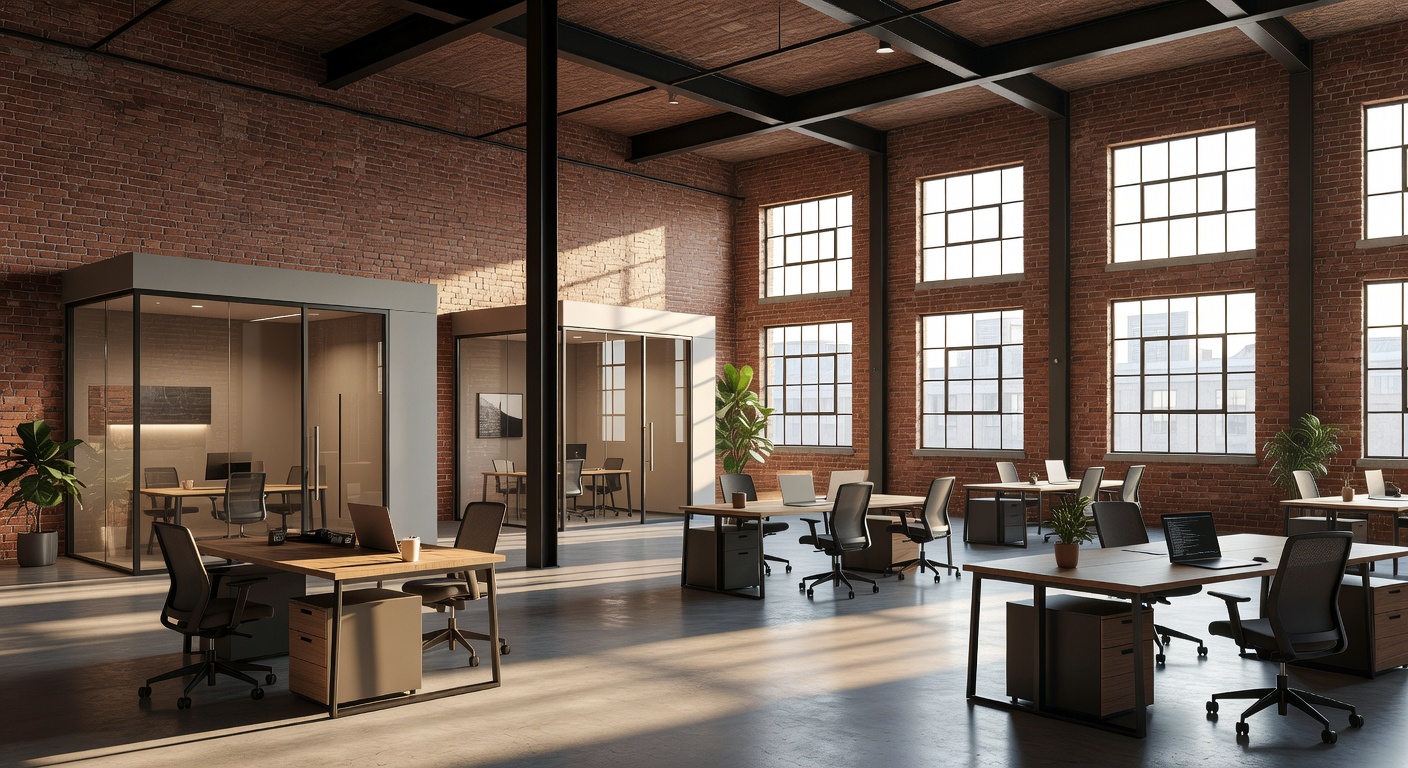
Warehouse conversions have quietly reshaped urban skylines, turning hulking relics of the industrial age into buzzing hubs of modern work life. These adaptive reuse projects blend raw, exposed architecture with sleek functionality, offering offices that feel less like sterile cubicle farms and more like character-driven creative sanctuaries.
At their core, these spaces boast sky-high ceilings—often 20 feet or more—that flood rooms with natural light through oversized windows or clerestory designs. Think polished concrete floors etched with the ghosts of forklift tracks, brick walls stripped to reveal a century’s patina, and massive timber beams that double as statement decor. Open-plan layouts dominate, fostering collaboration without the echo of awkward small talk. Modern upgrades like glass-walled conference rooms, ergonomic lounges, and tech-integrated atriums keep things contemporary. Energy efficiency shines too: original insulation, combined with new HVAC systems and solar panels, slashes operational costs while nodding to sustainability. In cities like New York or London, these features command premium rents, blending grit with green credentials.
Historically, warehouses sprang up during the 19th and early 20th-century manufacturing booms, storing goods from textiles to tobacco in ports and rail yards. Post-World War II deindustrialization left many abandoned—vast, underused shells in prime urban spots. The pivot began in the 1970s with lofts in SoHo, New York, where artists squatted in empty factories, sparking a live-work revolution. By the 1990s, as tech and media firms sought affordable, edgy space amid dot-com hype, full-scale conversions took off. Zoning laws evolved, tax incentives for historic preservation kicked in, and suddenly, these behemoths became goldmines.
Fast-forward to today: standout examples include London’s Tea Building, a former tea-trading warehouse reborn as a vibrant office for fashion brands, complete with rooftop gardens and event spaces. In Brooklyn’s Domino Sugar Factory site, a Joseph Francois Polita-designed behemoth now houses Google offices with public waterfront parks woven in. San Francisco’s Ferry Building repurposed its cavernous halls into mixed-use glory, blending offices with markets. These aren’t just flips; they’re cultural anchors, preserving heritage while injecting economic vitality.
Why does this matter now? Remote work’s hangover has office seekers craving hybrid appeal—spaces that lure talent back with Instagram-worthy vibes over fluorescent drudgery. Amid housing shortages, conversions combat urban blight without sprawling new builds, aligning with net-zero goals. They future-proof cities: resilient, adaptable structures that outlast trends. For businesses, it’s a branding win—occupying a warehouse-office signals innovation rooted in authenticity. As e-commerce surges warehouse demand elsewhere, these urban transformations ensure city cores stay alive, productive, and profoundly cool. In a world racing toward sameness, they remind us: the past holds the blueprint for tomorrow’s best workplaces.
Comments are closed