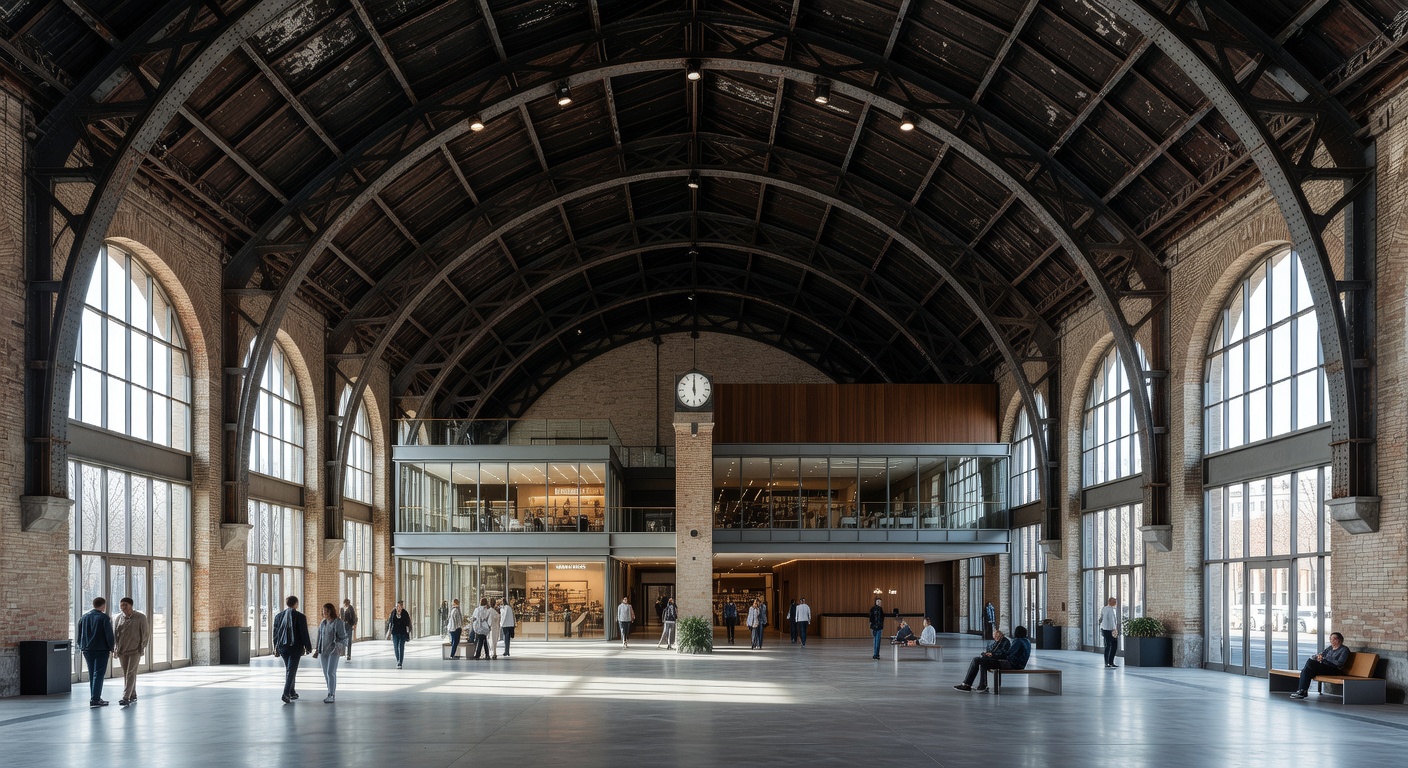
Grand arched vaults echoing with the ghosts of steam whistles, platforms once alive with hurried travelers—train stations have long been cathedrals of transit. But as rail travel wanes in many corners of the world, these architectural gems risk fading into relics. Enter adaptive reuse: the art of transforming disused stations into vibrant hubs for modern life. It’s not just preservation; it’s reinvention, breathing new purpose into structures built for a bygone era.
Historically, train stations embodied the industrial boom. In the 19th and early 20th centuries, they sprang up as symbols of progress. London’s St. Pancras, with its Gothic Revival splendor completed in 1868, was a gateway to Europe, its iron-and-glass train shed an engineering marvel. New York’s Penn Station, before its heartbreaking 1963 demolition, showcased Beaux-Arts grandeur. Many stations fell victim to urban decay post-World War II, as cars and planes dominated. Yet, adaptive reuse gained traction in the late 20th century, spurred by preservation movements. The U.S. National Register of Historic Places began listing stations, incentivizing repurposing over demolition.
Key features make stations prime for adaptation. Their vast interiors—high ceilings, open floor plans, durable materials like cast iron and brick—offer flexibility. Natural light floods through expansive windows, and central locations in city hearts ensure foot traffic. Acoustics suit performances, while platforms convert easily to patios or event spaces. Challenges exist: asbestos remediation, seismic retrofitting, or integrating modern HVAC. But successes abound.
Take modern examples. In Buffalo, New York, the Art Deco Buffalo Central Terminal, abandoned for decades, reopened in 2022 as a mixed-use venue with event spaces, offices, and a food hall. Its 17-story tower now hosts weddings amid restored mosaics. Lisbon’s Oriente Station, designed by Santiago Calatrava in 1998, blends transit with a shopping mall and cultural center, its futuristic steel bones evoking a dinosaur skeleton. In Beijing, the repurposed Beijing Railway Station annex serves as a tech incubator, its platforms now startup offices. Europe’s Chatou Station in France became a trendy co-working space, while Australia’s Mortuary Station in Sydney—once for funeral trains—now dazzles as a pop-up events venue.
Why does this matter today? Adaptive reuse tackles urban crises head-on. It combats housing shortages by converting waiting halls into apartments, as seen in Mumbai’s Victorian stations. Economically, it sparks revitalization: a 2020 Urban Land Institute study found such projects generate 20-30% higher property values nearby. Environmentally, reusing embodied carbon in these structures slashes demolition waste—up to 90% less than new builds. Amid climate urgency, it’s sustainable alchemy, preserving heritage while fostering community. Stations become social anchors: markets, galleries, cafes where strangers connect, echoing their original role.
In an age of fleeting trends, adaptive reuse ensures train stations endure as living history. They remind us that progress needn’t erase the past but can elevate it, turning echoes into new symphonies of urban life. Next time you pass a shuttered platform, envision the possibilities—because the train might have left, but the station’s journey is just beginning.
Comments are closed