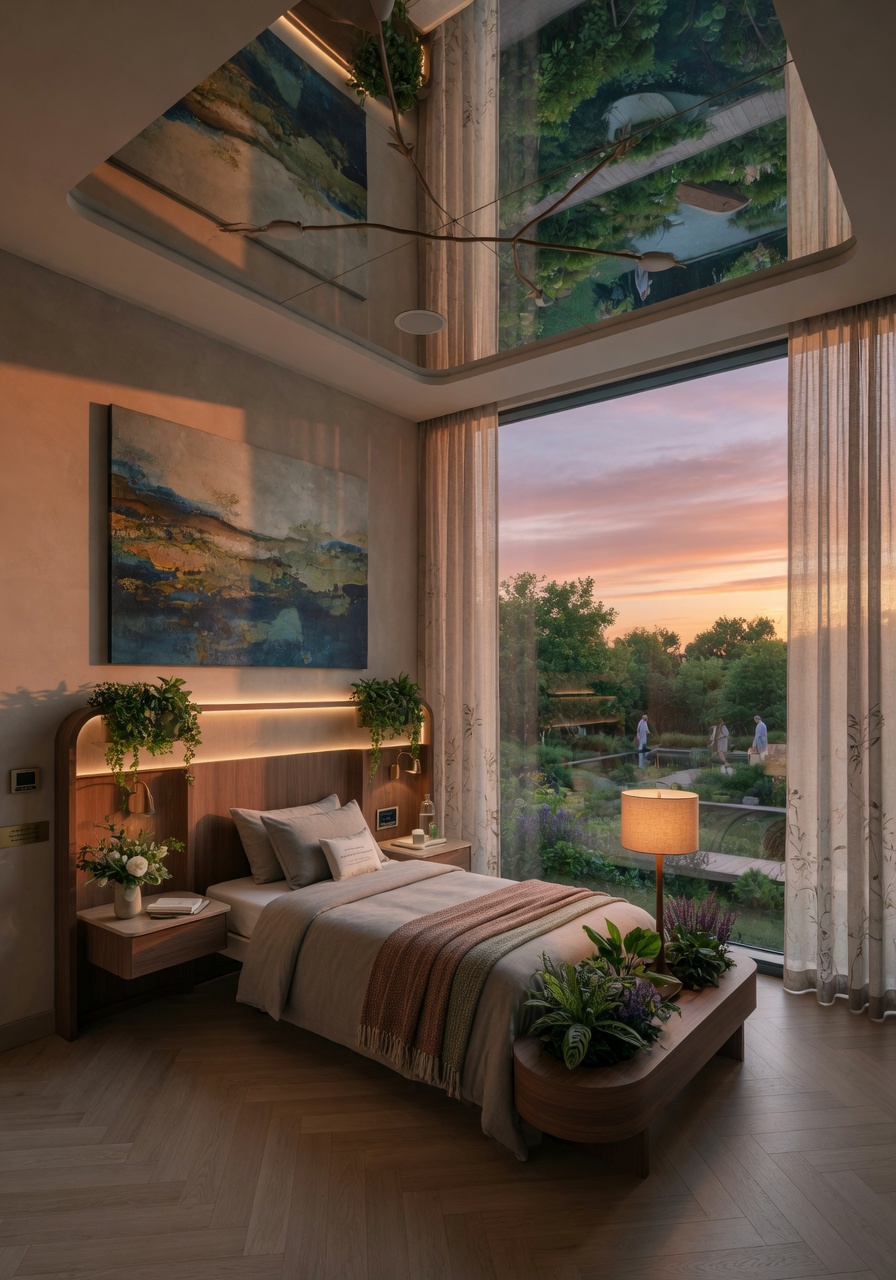
Hospitals once treated recovery as a purely clinical equation, with rooms designed more like laboratories than places where people actually mend. That approach is shifting fast. Designers and medical teams are now weaving in natural elements and human-scale details that measurably ease stress, trim recovery times, and lower the need for heavy medication.
Biophilic principles sit at the center of these changes. Large windows pull daylight deep into patient rooms, while lighting systems shift gradually to match the body’s natural rhythms. Living walls and indoor plants clean the air and soften the visual field. Sound-dampening materials and subtle water features replace the relentless drone of alarms with calmer acoustics. Private rooms give people control over lighting, seating, and artwork, and color choices lean toward muted greens and blues that research links to lower heart rates. Family areas add warmer tones to encourage conversation rather than silence.
The evidence trail reaches back further than most expect. Florence Nightingale’s 1850s writings already stressed fresh air, daylight, and quiet as essential to healing. Decades later, environmental psychologist Roger Ulrich tracked patients recovering from surgery and found those with tree views left the hospital sooner and requested fewer painkillers than those facing a brick wall. Today that insight appears in places like the Maggie Centres scattered across the UK. Architect-designed buildings by Frank Gehry and Zaha Hadid sit beside major cancer hospitals, offering gardens, quiet corners, and simple comforts that help patients and families regroup between treatments.
Similar thinking shows up at Cleveland Clinic’s main campus, where green roofs and corridor art create breathing room amid dense medical activity. Singapore’s Khoo Teck Puat Hospital layers sky gardens, indoor waterfalls, and terrariums across every floor. After the pandemic, demand for these features intensified. A 2023 Planetree International review found anxiety scores dropping 20 to 30 percent in facilities that prioritized daylight and greenery.
The practical case is straightforward. Shorter stays cut costs, calmer surroundings ease staff burnout, and higher satisfaction scores matter when patients choose providers. Sustainable touches such as passive solar shading and natural ventilation also align hospitals with broader climate goals. In short, these spaces treat the whole person instead of isolating symptoms, showing that design choices once dismissed as extras now deliver measurable returns in both health outcomes and operational efficiency.
Comments are closed