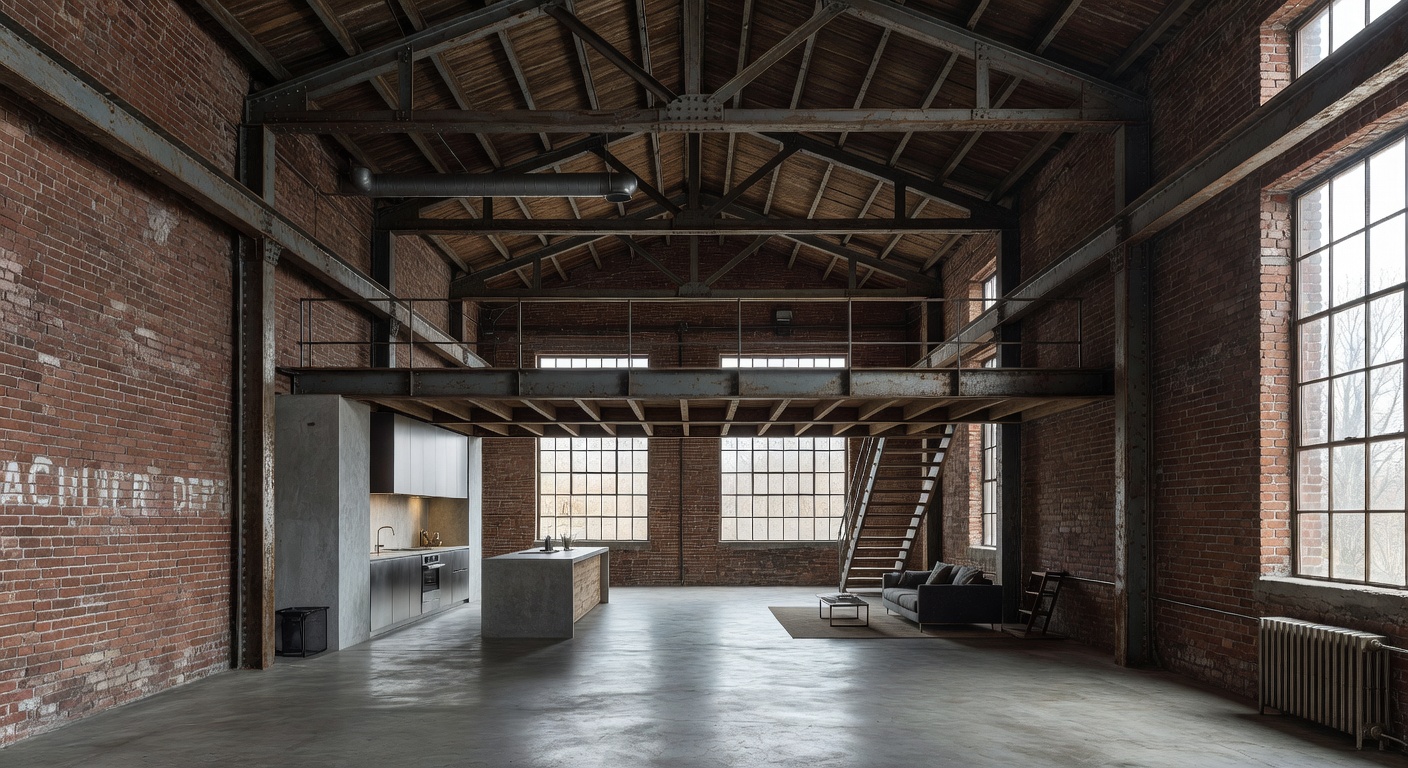
Picture a hulking brick warehouse, once humming with the clatter of assembly lines, now transformed into a sunlit haven of exposed beams and high ceilings. Factory-to-loft conversions have redefined city living, blending raw industrial grit with contemporary comfort. These adaptive reuse projects don’t just repurpose buildings—they resurrect forgotten histories, turning relics of the manufacturing era into coveted homes.
The story begins in the late 19th and early 20th centuries, when factories dotted urban landscapes, powering the Industrial Revolution. Cities like New York, Manchester, and Chicago boomed with textile mills, printing presses, and steelworks. But post-World War II deindustrialization hit hard. Plants shuttered as jobs fled to suburbs or overseas, leaving vast, empty shells. By the 1960s and 1970s, artists and bohemians in places like SoHo, New York, spotted opportunity. They illegally squatted in these abandoned spaces, drawn to the voluminous interiors, durable construction, and dirt-cheap rents. What started as a fringe movement gained traction with zoning changes in the 1970s, legalizing loft living. Pioneers like artists Donald Judd and Agnes Martin turned factories into live-work studios, sparking a cultural renaissance.
Fast-forward to today, and factory conversions are a hallmark of smart urbanism. Key features set them apart: soaring ceilings—often 12 to 20 feet—create airy, gallery-like spaces perfect for modern minimalism or maximalist flair. Exposed brick walls, original hardwood floors (sometimes reclaimed from loading docks), and massive steel-sash windows flood rooms with natural light while nodding to authenticity. Many include industrial perks like oversized doors for art installations or commercial elevators repurposed for residential use. Kitchens might feature salvaged steel counters, and bathrooms boast clawfoot tubs amid concrete pillars. Energy efficiency gets a modern upgrade too: insulation in cavity walls, double-glazed windows, and smart HVAC systems make these old bones surprisingly sustainable.
Modern examples dazzle. In London’s Shoreditch, the Tea Building—a 1930s Art Deco warehouse—now houses luxury lofts with rooftop terraces overlooking the city. Manchester’s Ancoats district revived cotton mills into the epicenter of trendy living, with developments like Cutting Room blending heritage with amenities like gyms and co-working spaces. In the U.S., Chicago’s Fulton Market transformed meatpacking plants into Google offices and high-end residences, while Detroit’s Russell Industrial Center mixes lofts with artist studios in a nod to Motor City revival. These aren’t cookie-cutter condos; each tells a site-specific story.
Why does this matter now? In an era of housing shortages and climate urgency, conversions combat urban sprawl by densifying existing footprints—no new land or materials needed. They preserve architectural patrimony, slashing demolition waste, and boost local economies through gentrification’s double-edged sword: rising property values alongside cultural hubs. For buyers, they offer character absent in new builds—think Instagram-worthy vibes with practical perks like soundproofed walls from thick masonry. Amid remote work’s rise, these versatile spaces double as home offices or creative retreats.
Ultimately, factory-to-loft conversions prove that the past fuels the future. They invite us to live not just in buildings, but within stories—reminders that innovation thrives in reinvention. As cities grapple with legacy infrastructure, these transformations light the way to resilient, soulful urban life.
Comments are closed