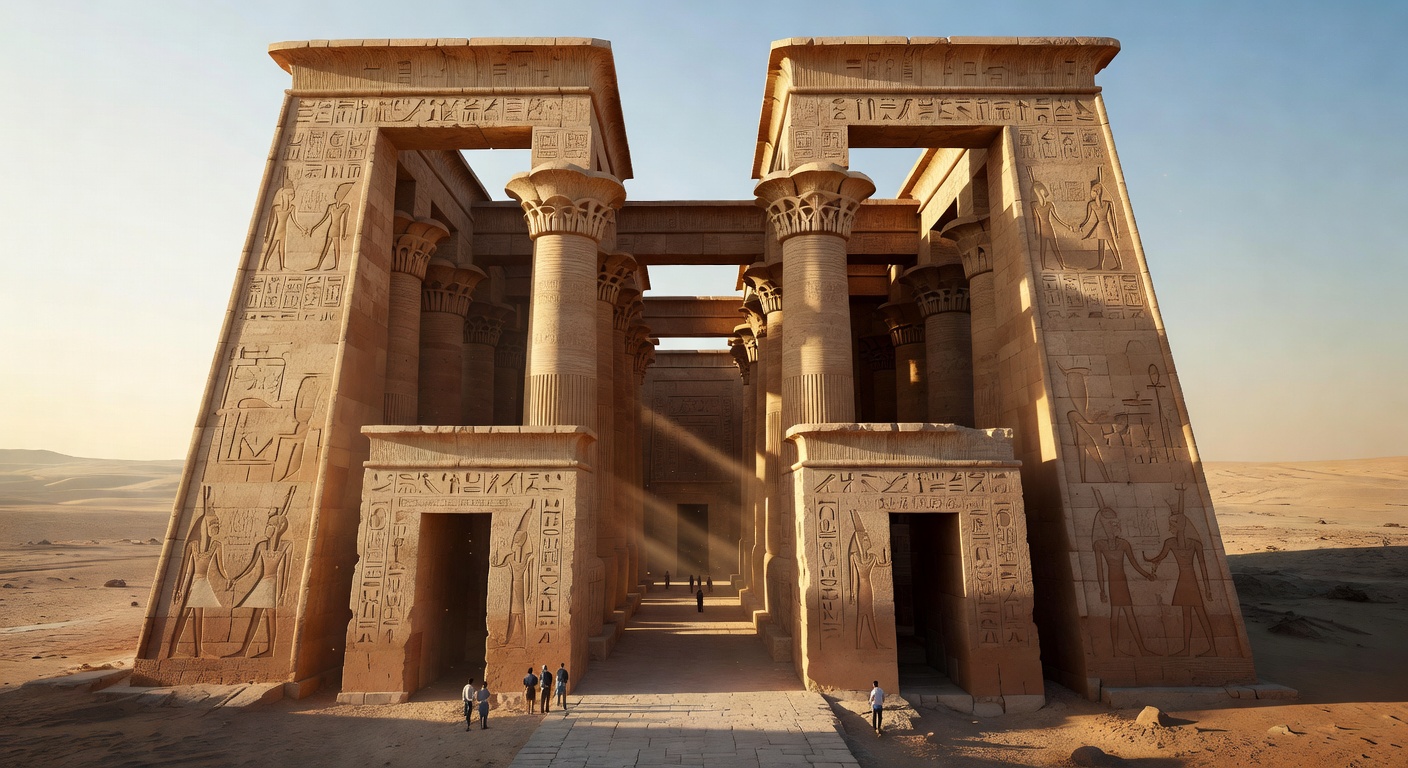
In the shadow of the pyramids, a quiet architectural renaissance is underway. Egyptian Revival temples, born from 19th-century fascination with pharaonic splendor, blend hieroglyphic precision with contemporary purpose. These structures aren’t mere replicas; they’re living bridges between antiquity and today, where obelisks pierce modern skylines and lotus motifs frame sacred spaces.
The style surged during the Napoleonic era, sparked by his 1798 Egyptian campaign and the Rosetta Stone’s decoding in 1822. Architects like Jacques-Germain Soufflot drew from rediscovered temples at Karnak and Luxor, incorporating battered walls—sloping outward at the base for stability and grandeur—papyri-form columns topped with lotus or papyrus capitals, and cavetto cornices mimicking temple roofs. Symbolism ruled: the pyramidion atop obelisks evoked solar rays, while winged sun disks warded off chaos. This neoclassical twist on Egyptomania spread via world’s fairs and Freemasonic lodges, where Egyptian motifs symbolized enlightenment and immortality.
Key features define their allure. Enter a typical temple, and you’re greeted by massive pylons—towering gateways flanked by flagstaffs—leading to hypostyle halls of bundled columns. Reliefs burst with ankhs, scarabs, and gods like Osiris or Hathor, often in vibrant polychrome absent from weathered originals. Interiors feature crypt-like sanctuaries for altars, with ceilings painted starry like the Duat underworld. Modern builders adapt: steel reinforces stone, LED lights illuminate bas-reliefs, and seismic dampers ensure endurance against earthquakes—lessons from ancient quakes that toppled Luxor obelisks.
Historical gems abound. Paris’s Egyptian Institute, with its 1819 sphinx-guarded entrance, nods to Napoleon’s scholars. London’s Freemasons’ Hall (1933) boasts a temple with 23ft columns and a replica Rosetta Stone. America’s Washington Temple (Mormon, 1977) dazzles with gold-leafed interiors and a 288ft tower echoing Heliopolis obelisks. Cincinnati’s Plum Street Temple (1866), a synagogue, fuses Egyptian pylons with Moorish arches, serving Jewish congregants amid Hebrew-Egyptian syncretism.
Today, these temples matter as cultural time capsules. They preserve endangered aesthetics amid globalization, educating via immersive design—visitors trace fingers over faux hieroglyphs, decoding myths firsthand. Architecturally, they inspire sustainable builds: ancient Egyptians’ passive cooling via thick walls influences eco-friendly temples. Spiritually, they fuel revivals like Kemetic paganism, where practitioners honor Ra in columned shrines. In a fractured world, they symbolize resilience—pharaohs built for eternity; we reclaim that ambition against impermanence.
Beyond nostalgia, Egyptian Revival challenges Eurocentrism in design history, spotlighting Africa’s architectural genius. From Paris to Provo, these temples whisper: the Nile’s legacy flows on, inviting us to etch our eternity in stone. As climate change erodes true antiquities, modern revivals safeguard the soul of Egypt for generations. Step inside one, and feel the pulse of 5,000 years.
Comments are closed