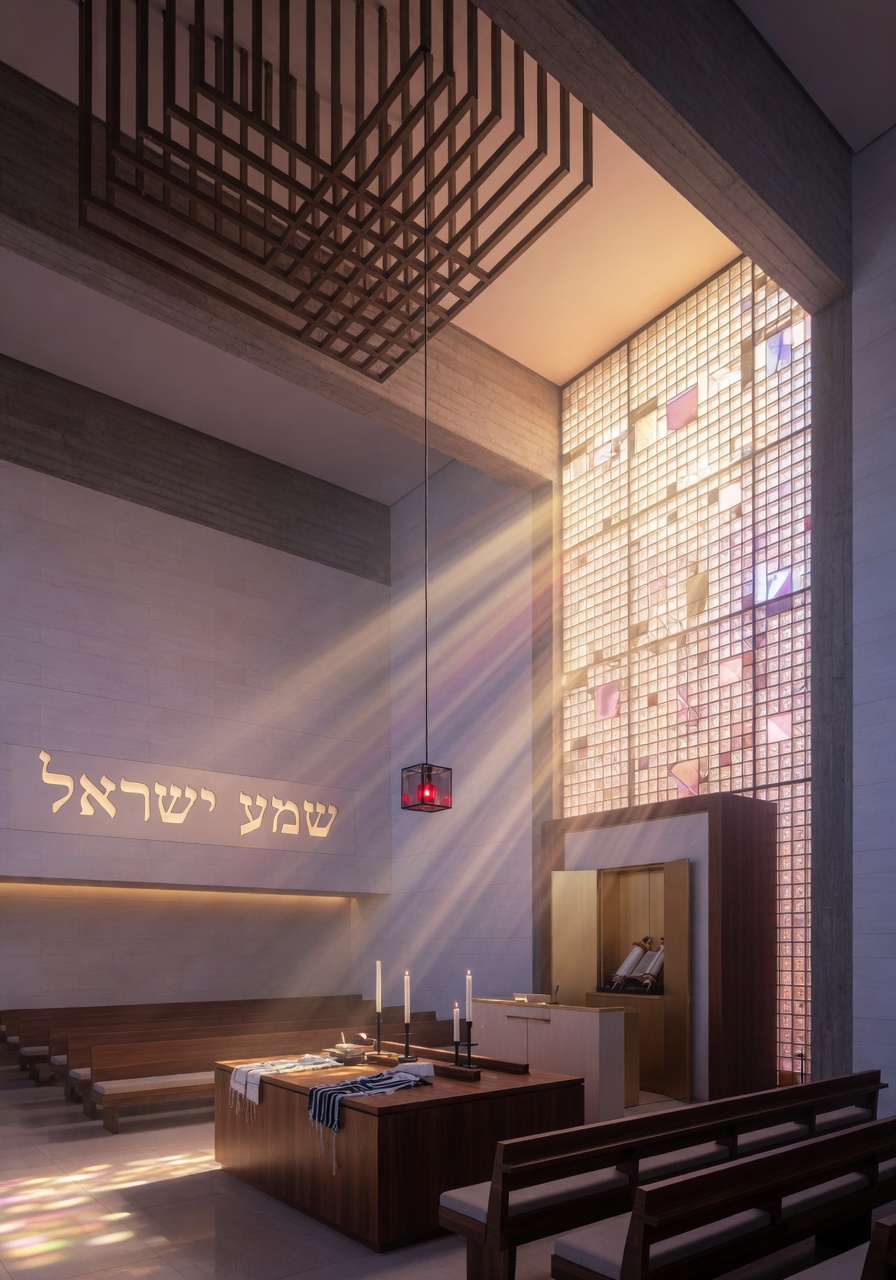
Light has long served as a potent symbol in Jewish tradition, beginning with the menorah’s eternal flame in the ancient Temple and evolving into the carefully orchestrated glow that defines worship today. Architects now integrate illumination as a fundamental design element, blending centuries-old meanings with modern systems that adapt to both ritual needs and environmental goals.
Natural light takes center stage through strategic clerestory windows and skylights that bathe stone floors and wooden furnishings in soft daylight. These openings draw attention toward the ark while reducing harsh contrasts. Layered LED setups add flexibility: warm amber settings encourage quiet reflection during services, brighter cool tones support study groups, and subtle color shifts mark holidays. Reflective surfaces and diffused panels keep glare in check, letting the quality of light change gently with the time of day and mirror the natural rhythms of communal life.
This contemporary approach grows directly from earlier practices. Oil lamps and hanging fixtures once carried the same symbolism across diaspora communities, and the shift to electric lighting in the early twentieth century preserved those references even as technology advanced. Current solutions continue the thread by incorporating energy-efficient materials and automated controls that respect heritage while meeting today’s demands for sustainability and adaptability.
Real-world projects show the results. In Israel, roof apertures are often positioned to follow the sun’s path, marking prayer times through shifting patterns of light. American renovations frequently add motion sensors that welcome mixed congregations efficiently. European restorations combine preserved stained glass with concealed fiber optics, allowing historic details to remain visible alongside new capabilities.
Beyond aesthetics, these choices support practical values. Lower energy consumption aligns with longstanding principles of stewardship, while the thoughtful use of light helps counter digital distraction and fosters shared focus. In this way, synagogue lighting continues to connect past and present, keeping tradition visible through designs that feel both grounded and forward-looking.
Comments are closed