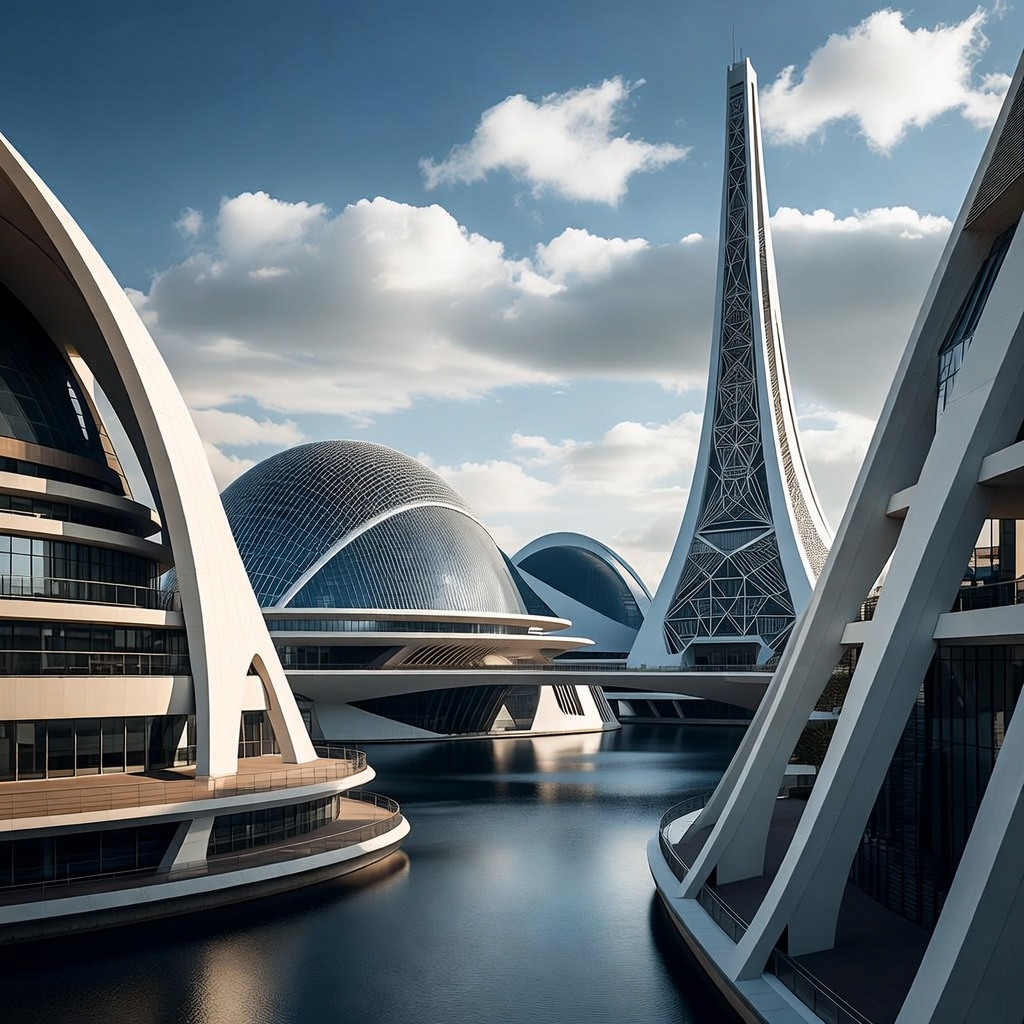
Parametric architecture is like giving a sculptor a magic wand powered by code—suddenly, buildings aren’t just designed; they’re algorithmically choreographed into existence. Imagine twisting a dial to reshape an entire facade, where every curve and angle responds to real-world data like wind patterns or sunlight. This isn’t science fiction; it’s the cutting-edge realm of parametric design, revolutionizing how we build our world.
At its core, parametric architecture relies on parameters—variables fed into computer algorithms—to generate complex, adaptive forms. Unlike traditional methods, where architects draw static blueprints, parametric design uses software like Rhino or Grasshopper to create dynamic models. Think of it as a digital playground where math and creativity collide. For instance, a simple equation can evolve into a spiraling tower that optimizes for energy efficiency, bending and flowing like liquid metal.
The roots of this movement trace back to the late 20th century, with pioneers like Frank Gehry pushing boundaries. His iconic Guggenheim Museum in Bilbao, Spain, with its undulating titanium sheets, hinted at parametric potential, even if it predated widespread digital tools. Then came Zaha Hadid, the queen of fluid forms, whose Heydar Aliyev Center in Baku, Azerbaijan, exemplifies parametric mastery. This structure’s seamless waves were born from algorithms that mimicked natural landscapes, making it feel almost alive.
What makes parametric architecture so thrilling is its problem-solving prowess. In an era of climate change and urbanization, it allows for sustainable innovation. Buildings can be programmed to adapt: a parametric facade might open and close like a flower to regulate temperature, reducing energy use by up to 30%. Or consider the Khan Shatyr Entertainment Center in Kazakhstan, a colossal tent-like structure that uses parametric design to maximize internal space while minimizing material waste. It’s not just about aesthetics; it’s about intelligent efficiency.
But let’s not forget the human element. Parametric design democratizes architecture, enabling collaborations between architects, engineers, and even artists. Tools like generative algorithms let designers iterate thousands of options in minutes, fostering creativity that traditional methods could only dream of. However, it’s not without challenges. The reliance on sophisticated software means a steep learning curve, and not every project justifies the complexity. Critics argue that some parametric creations prioritize form over function, resulting in structures that dazzle but might overlook practical needs.
Looking ahead, parametric architecture is poised to integrate with emerging technologies like AI and 3D printing. Imagine cities where buildings evolve in real-time, responding to environmental shifts or population demands. Projects like the Al Bahar Towers in Abu Dhabi, with their sun-tracking shades, are just the beginning. As we embrace this fusion of art and algorithm, we’re not merely constructing buildings—we’re crafting responsive ecosystems that harmonize with our planet.
In a world craving innovation, parametric architecture stands as a testament to human ingenuity. It’s a reminder that when we let numbers dance with imagination, the results can be nothing short of extraordinary. So, next time you gaze at a twisting skyscraper, remember: it’s not just steel and glass—it’s a symphony of code.
Comments are closed