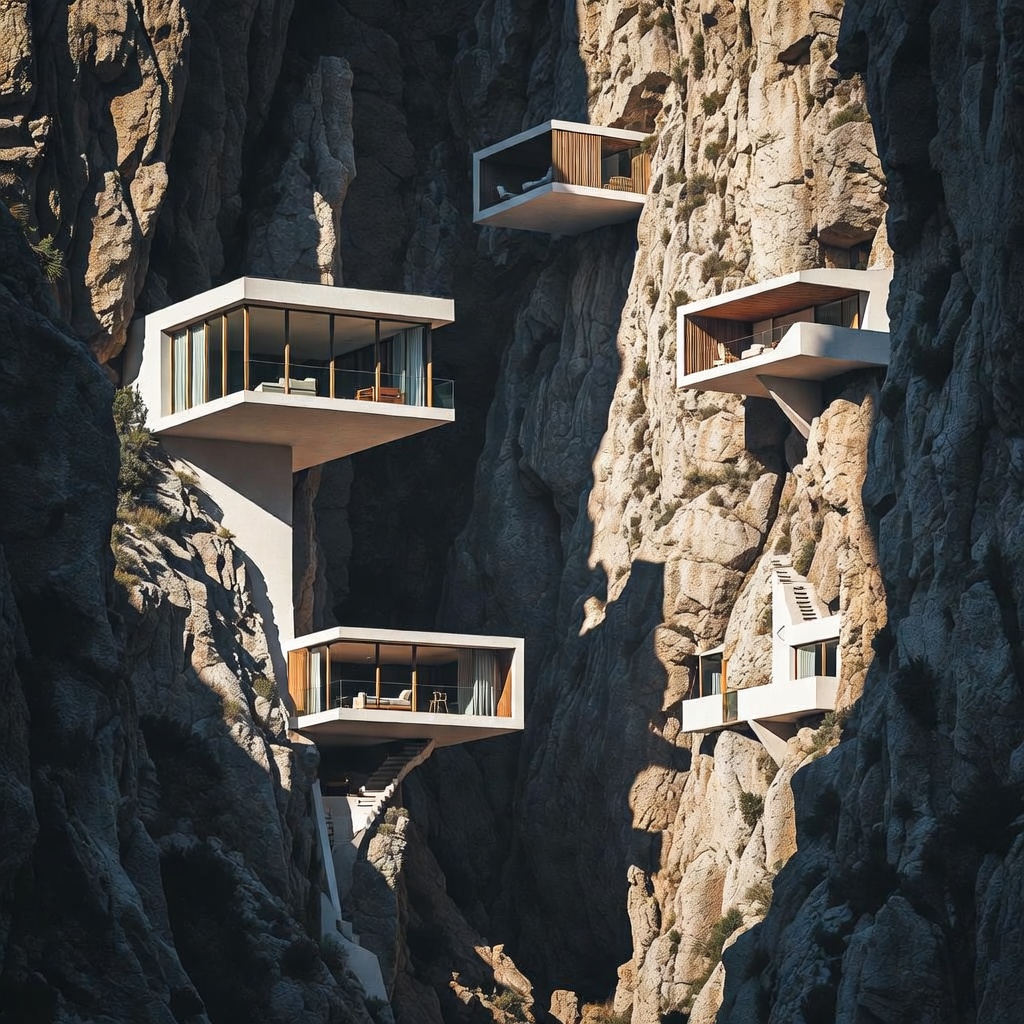
Imagine waking up to a panoramic vista where the horizon kisses the sky, and your morning coffee is sipped mere feet from a sheer drop. Cliffside hanging homes aren’t just architectural oddities—they’re bold statements of human ingenuity, clinging to rocky faces like eagles’ nests. These vertigo-inducing abodes have captivated adventurers and dreamers for centuries, blending peril with paradise in ways that make conventional houses seem downright pedestrian.
At their core, cliffside hanging homes are structures built into or suspended from vertical rock faces, often in mountainous or coastal terrains. Unlike typical hillside builds, these defy the pull of gravity, protruding outward to maximize views and minimize land use. The concept dates back millennia. The ancient Anasazi people of the American Southwest constructed the iconic Cliff Palace in Mesa Verde, Colorado, around 1200 AD—a complex of 150 rooms tucked into alcoves high above the valley floor. These weren’t mere shelters; they were fortresses against invaders and elements, showcasing early mastery of stone masonry and natural ledges.
Fast-forward to modern times, and the allure persists. In Peru’s Colca Canyon, the Uyo Uyo community features homes etched into cliffs, a testament to Andean resilience. Europe boasts feats like the Hanging Houses of Cuenca in Spain, 15th-century timber-framed residences dangling from a cantilevered balcony over a river gorge. Today, innovative architects push boundaries further. Take the Cliff House in Malibu, California, a contemporary cantilevered marvel by Marmol Radziner that juts 220 feet over the Pacific, or the Zhangjiajie Grand Canyon Glass Bridge in China, inspiring residential echoes. These homes often employ steel cables, reinforced concrete, and seismic engineering to ensure stability—think suspension bridges meets luxury lofts.
What draws people to these edge-of-the-world living spaces? The views are unparalleled: sunrises painting canyon walls in gold, or ocean waves crashing far below. Ecologically, they harmonize with the landscape, reducing sprawl and preserving fragile ecosystems. Privacy is another perk; few neighbors can scale a cliff to borrow sugar. Yet, the glamour comes with grit. Construction is a logistical nightmare—cranes dangle materials from helicopters, and builders work harnessed like mountaineers. Maintenance demands vigilance: erosion, earthquakes, and storms test every bolt. Insurance? Sky-high, pun intended. And daily life? Forget casual barbecues; accessing your home might involve a funicular or cliffside stairs that would make acrophobes weep.
Despite the challenges, cliffside homes symbolize our quest to conquer nature without conquering it. They’re not for the faint of heart, but for those who crave a life suspended between earth and sky. As climate change reshapes coastlines and populations seek sustainable escapes, these daring dwellings might just become the blueprint for tomorrow’s housing revolution. If you’ve ever felt the tug of the wild calling, a cliffside home whispers back: why settle for solid ground when the edge offers eternity?
Comments are closed