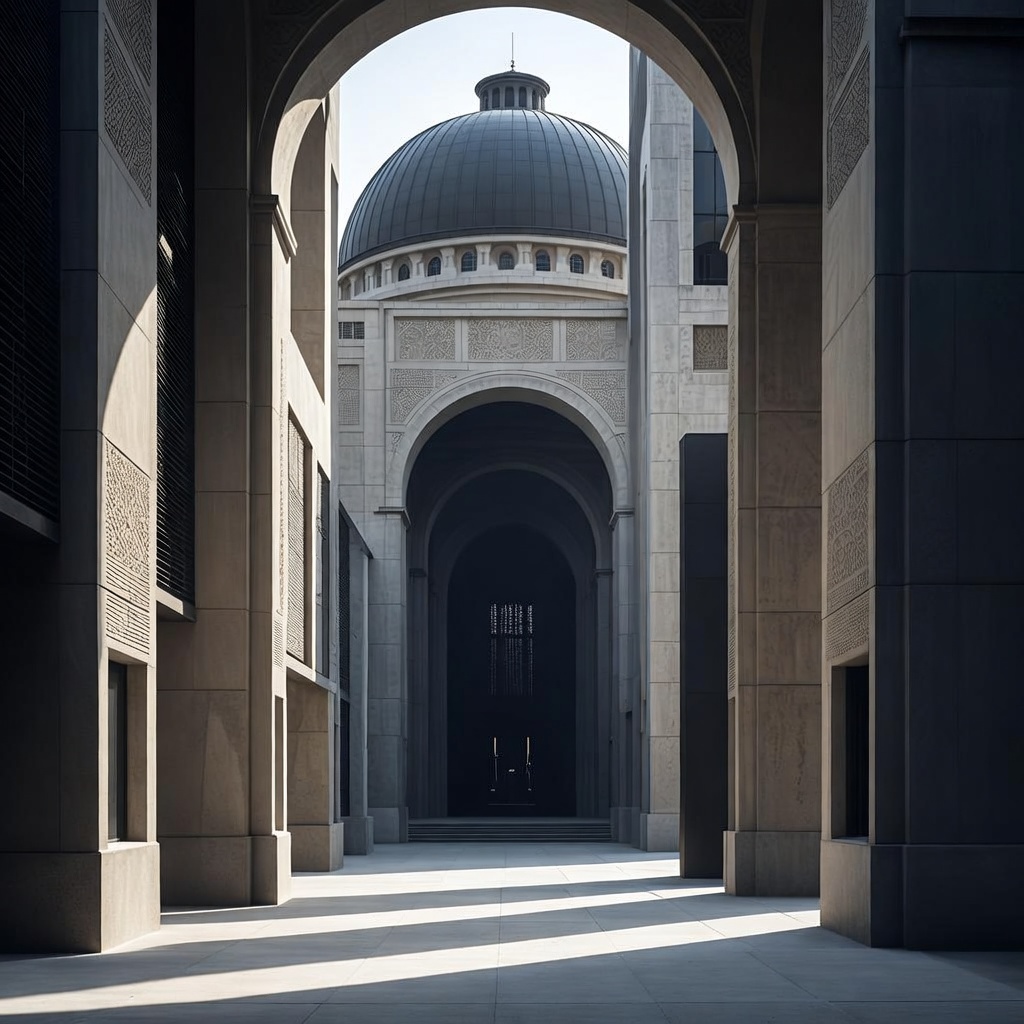
Imagine stepping into a space where the world fades away—no buzzing traffic, no glaring lights, no textures brushing against your skin. Just you, suspended in a deliberate void. This isn’t science fiction; it’s the essence of sensory deprivation architecture, a fascinating niche in design that strips away external stimuli to foster introspection, healing, and even creativity. As urban life bombards us with constant sensory overload, architects are turning to these minimalist havens to offer a counterbalance, redefining how we experience space.
At its core, sensory deprivation architecture draws from the principles of sensory deprivation therapy, popularized in the 1950s by neuroscientist John C. Lilly with his invention of the isolation tank—a floatation pod filled with saltwater in a lightless, soundproof chamber. But architecture elevates this concept to built environments. These designs minimize visual, auditory, tactile, and even olfactory inputs, creating immersive voids that encourage the mind to turn inward. Think of it as architectural meditation: walls that absorb sound, floors that muffle footsteps, and lighting that’s either absent or diffused to near-invisibility.
Historically, the roots trace back further than Lilly’s tanks. Ancient practices like Japanese Zen gardens or monastic cells in medieval Europe embodied similar ideas, using sparse layouts to promote contemplation. In the 20th century, modernist architects like Le Corbusier flirted with sensory reduction in projects like the Chapel of Notre-Dame du Haut, where rough concrete and stark forms force a confrontation with silence and shadow. More explicitly, the Rothko Chapel in Houston, completed in 1971, stands as a pinnacle. Mark Rothko’s dark, abstract murals in an octagonal room with no windows create an almost tangible absence of light, designed to overwhelm the senses into submission, evoking profound emotional responses.
Today, sensory deprivation architecture is evolving beyond galleries and retreats. Wellness centers incorporate float rooms with seamless, padded walls that eliminate echoes and edges. Architects like John Pawson champion “calm technology,” using materials like polished concrete and wool felts to dampen noise and touch. In urban settings, projects like the Therme Vals spa in Switzerland by Peter Zumthor use thermal waters and cavernous stone spaces to blur sensory boundaries, offering respite from the city’s clamor. Even tech giants are experimenting; Google’s mindfulness pods in offices provide brief sensory timeouts amid the digital din.
The benefits are compelling. Studies from institutions like the Laureate Institute for Brain Research show that such environments reduce anxiety, alleviate chronic pain, and boost problem-solving by quieting the brain’s default mode network—the part that fuels rumination. For artists and thinkers, it’s a creativity catalyst; without distractions, ideas bubble up unfiltered. Yet, it’s not without caveats: prolonged deprivation can induce hallucinations or unease, so designs often include subtle controls, like dimmable lights, to ease users in.
As we hurtle toward a hyper-connected future, sensory deprivation architecture feels like a quiet rebellion. It’s a reminder that sometimes, the most powerful spaces are those that say the least—inviting us to listen to the silence within. Whether for therapy or tranquility, these voids challenge us to rebuild our sensory world, one empty room at a time.
Comments are closed