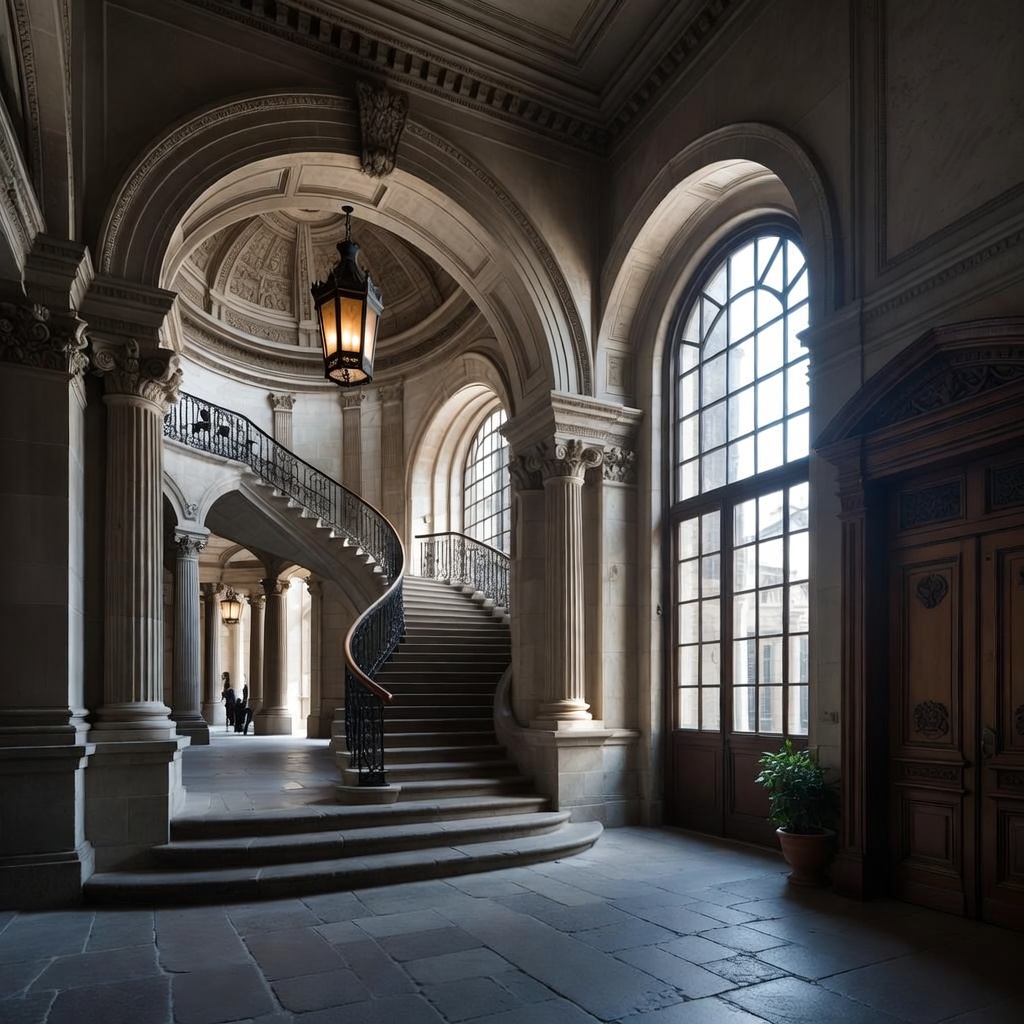
Imagine stepping into a home where walls shimmer like possibilities, furniture shifts with your mood, and spaces entangle like lovers in a cosmic dance. This isn’t science fiction—it’s the dawn of quantum-inspired spatial design, where the bizarre principles of quantum mechanics are bleeding into the architecture of our everyday lives. As an avid explorer of how science sparks creativity, I’m thrilled to dive into this mind-bending fusion that’s turning static rooms into dynamic universes.
At its core, quantum physics challenges our classical intuitions. Particles exist in superposition—being in multiple states at once—until observed. They’re entangled, meaning the state of one instantly influences another, no matter the distance. And Heisenberg’s uncertainty principle reminds us that precision in one aspect often blurs another. Designers are borrowing these ideas not to build particle colliders, but to craft environments that feel alive, adaptive, and profoundly human.
Take superposition as inspiration. Traditional spaces are fixed: a kitchen is a kitchen, period. Quantum-inspired designs flip this with modular, multifunctional elements. Picture walls made of smart panels that reconfigure via AI algorithms, mimicking a particle’s multiple potentials. In a Tokyo prototype by architect firm Quantum Spaces Ltd., living rooms morph from cozy nooks to expansive studios at the touch of an app. These aren’t gimmicks; they’re responses to modern nomadism, where remote workers need fluidity. The result? Homes that superposition work, play, and rest, reducing the need for oversized builds and promoting sustainability—fewer square feet, more smart usage.
Entanglement takes this further, weaving interconnectedness into the fabric of design. In quantum terms, linked particles defy space; in spatial design, this means rooms that “communicate.” Imagine a lighting system where the glow in your bedroom subtly syncs with the kitchen’s activity, fostering emotional harmony. Or urban planners creating “entangled parks” in cities like Singapore, where green spaces link via augmented reality overlays, making distant benches feel like neighbors. This isn’t just aesthetic—it’s therapeutic. Studies from the Journal of Environmental Psychology suggest such designs reduce isolation, echoing quantum’s non-local bonds to build community in fragmented urban jungles.
Of course, uncertainty adds a poetic twist. Why demand perfect symmetry when life’s beautifully unpredictable? Quantum-inspired architects embrace ambiguity with organic forms: curved partitions that suggest rather than define boundaries, or probabilistic layouts where pathways branch like quantum wave functions. A Berlin exhibition, “Uncertain Dwellings,” showcased furniture with adjustable geometries—chairs that wobble invitingly, encouraging movement and mindfulness. This counters the rigidity of modernism, inviting users to co-create their space, much like observing a quantum event collapses its waveform.
The beauty lies in accessibility. You don’t need a PhD to live quantum-style; affordable tech like 3D-printed adaptive tiles is democratizing it. Forward-thinkers predict it’ll revolutionize co-working hubs, hospitals, and even schools, where flexible designs boost creativity and well-being.
As we quantum-leap into this era, spatial design isn’t just about shelter—it’s about mirroring the universe’s wild creativity. Next time you rearrange your living room, ask: What if my space could entangle with my dreams? The possibilities are, quite literally, superposed.
Comments are closed