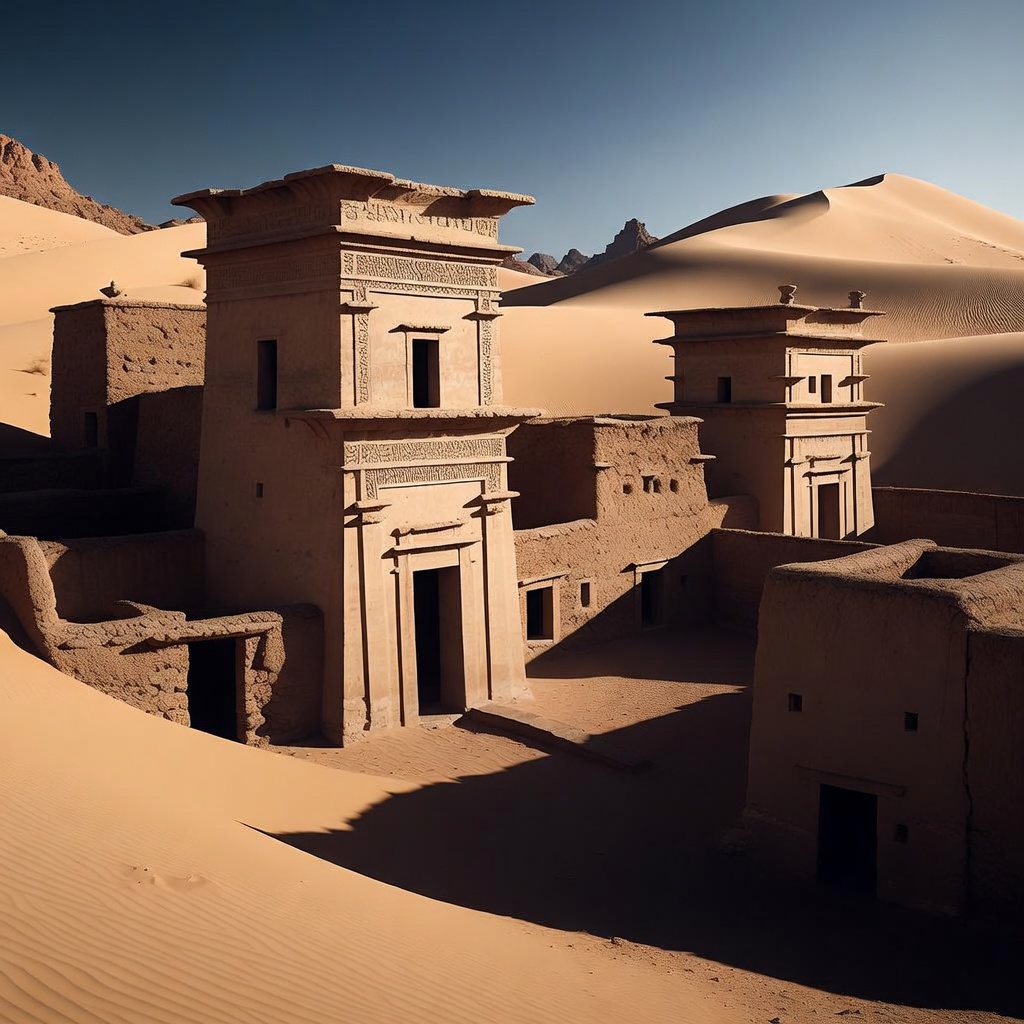
Imagine standing amid endless dunes, where the sun scorches the earth by day and stars pierce the velvet night sky. This is Desert Earth—a harsh yet hauntingly beautiful world where human ingenuity has carved homes from the very sand that threatens to swallow them. Far from the concrete jungles of our planet, desert earth architecture thrives on adaptation, blending ancient wisdom with modern sustainability. These structures aren’t just shelters; they’re symphonies of survival, whispering secrets of harmony with one of the universe’s most unforgiving environments.
At the heart of desert earth architecture lies adobe, a humble hero made from sun-baked earth mixed with straw, water, and sometimes animal dung for binding. Picture the iconic pueblos of the American Southwest or the ksars of North Africa’s Sahara—multi-story fortresses rising like mud-brick mirages. Thick walls, often two feet deep, absorb the day’s blistering heat (up to 130°F/54°C) and radiate it away after sunset, keeping interiors a cool 70°F (21°C). No air conditioning needed; nature’s thermostat at work. In Yemen’s Shibam, the “Manhattan of the Desert,” 500-year-old skyscrapers of adobe tower 30 stories high, their foundations sunk deep into silt to defy erosion and earthquakes.
But it’s not just about mud. Enter rammed earth, where moist soil is pounded into wooden forms, creating ultra-durable walls that last centuries. China’s Loess Plateau showcases hanxu homes, rammed earth dugouts that burrow into cliffsides, harnessing geothermal stability. Temperatures fluctuate by mere degrees year-round, and these homes sip energy—perfect for a planet where resources are scarcer than oasis water. Modern twists amplify this: architects like Egypt’s Hassan Fathy pioneered “New Gourna,” using vaulted roofs and wind-catching badgirs (towers) to funnel breezes through narrow streets, cooling entire villages naturally.
Sustainability is the soul of it all. Desert earth builds recycle 100%—walls dissolve back into soil without landfills. Low embodied energy means minimal carbon footprint; producing one cubic meter of adobe emits just 1% of the CO2 from fired brick. Water scarcity? Solved with qanats, ancient Persian underground channels that tap aquifers miles away, feeding courtyard gardens that humidify homes via evaporative cooling. In Morocco’s Todgha Oasis, palm-frond roofs over mud walls create shaded riads, where trickling fountains turn arid plots into verdant retreats.
Challenges persist—flash floods erode bases, sandstorms scour surfaces—but solutions evolve. Stabilizers like lime or cement reinforce adobe without sacrificing eco-credentials. Today’s innovators, from Dubai’s Masdar City to Australia’s outback eco-lodges, fuse 3D-printed earth with solar tech, proving desert architecture scales to futuristic cities.
Desert earth’s lesson? Less is more. In a warming world, these timeless designs beckon us to rethink building: embrace the ground beneath our feet, let the desert teach resilience. Next time you battle your AC bill, dream of dunes—and build like the ancients. Who knows? Your home could outlast empires.
Comments are closed