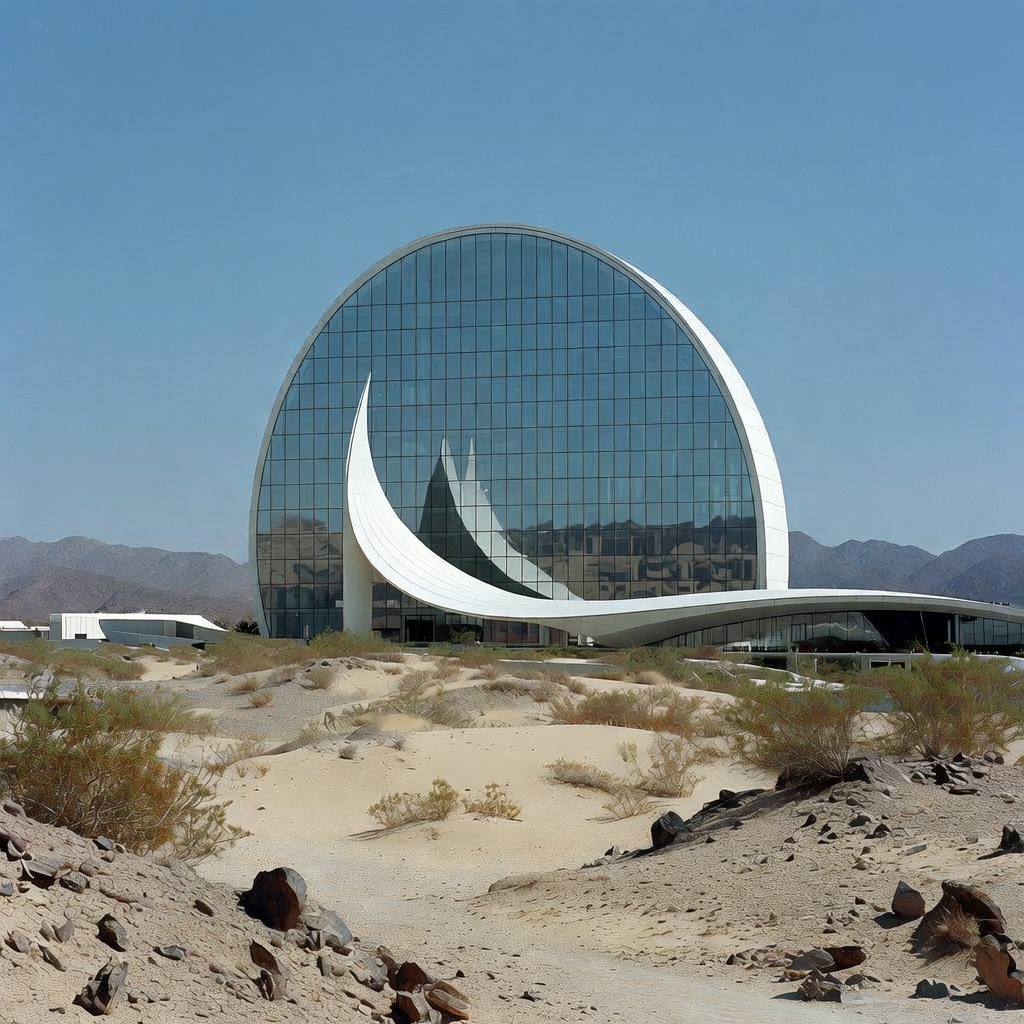
In the scorching embrace of the American Southwest, where relentless sun meets endless sand, a revolutionary style of architecture emerged like a mirage made real: desert modernism. Born in the mid-20th century amid the palm-fringed suburbs of Palm Springs, California, this aesthetic fused the clean lines of International Style modernism with the raw poetry of the desert landscape. It’s not just buildings; it’s a defiant harmony between human ingenuity and nature’s austerity—a style that whispers “cool” in the heat.
Picture this: It’s the 1940s and 1950s. Hollywood’s elite flee Tinseltown for weekend retreats in the Coachella Valley. Architects like Richard Neutra, Albert Frey, and John Lautner seize the moment, designing homes that embrace the desert’s extremes. No fussy ornamentation here—these structures prioritize flat roofs, expansive glass walls, and cantilevered overhangs that shield against the brutal sun. Materials like concrete, steel, and glass reflect heat and light, turning potential adversaries into allies. Neutra’s Kaufmann House (1946), with its sliding glass panels dissolving boundaries between indoor pools and outdoor sands, exemplifies this. It’s a machine for living, optimized for 110°F days.
What sets desert modernism apart? Adaptation. Traditional modernism, think Le Corbusier’s villas in lush Europe, ignored climate. Here, architects innovated: deep eaves for shade, cross-ventilation via strategic clerestory windows, and earth-toned palettes that camouflage into the terrain. Frey’s Aluminaire House (1936, relocated to Palm Springs) used lightweight aluminum for quick assembly and heat resistance—prefab genius for a boomtown. Lautner’s Chemosphere (1960), a flying saucer perched on poles above Sunset Boulevard (wait, that’s LA—but its desert siblings like the Garcia House echo the ethos), defies gravity while grounding itself in rocky outcrops.
This wasn’t just elite escapism. Post-WWII prosperity brought tract developments like Twin Palms by William Krisel, where butterfly roofs and kidney-shaped pools democratized the look for middle-class dreamers. Iconic spots like the Palm Springs Visitor Center (Frey, 1965) showcase folded plate roofs resembling wings, blending civic pride with futuristic flair. Today, these mid-century gems face threats from demolition and dated renos, but preservationists rally. The Palm Springs Modernism Week draws thousands annually, celebrating restored icons like the Alexander Houses.
Desert modernism endures because it’s timelessly practical. In our climate-crisis era, its passive cooling—relying on shade, breeze, and thermal mass—offers lessons for sustainable design worldwide. Visit Palm Springs, hike the neighborhoods, and feel the vibe: open-plan living that invites the desert in, not as foe, but as muse. It’s architecture that doesn’t conquer the wild; it dances with it. Next time you’re poolside under a vast blue sky, raise a glass (margarita optional) to the pioneers who built oases in the void.
Comments are closed