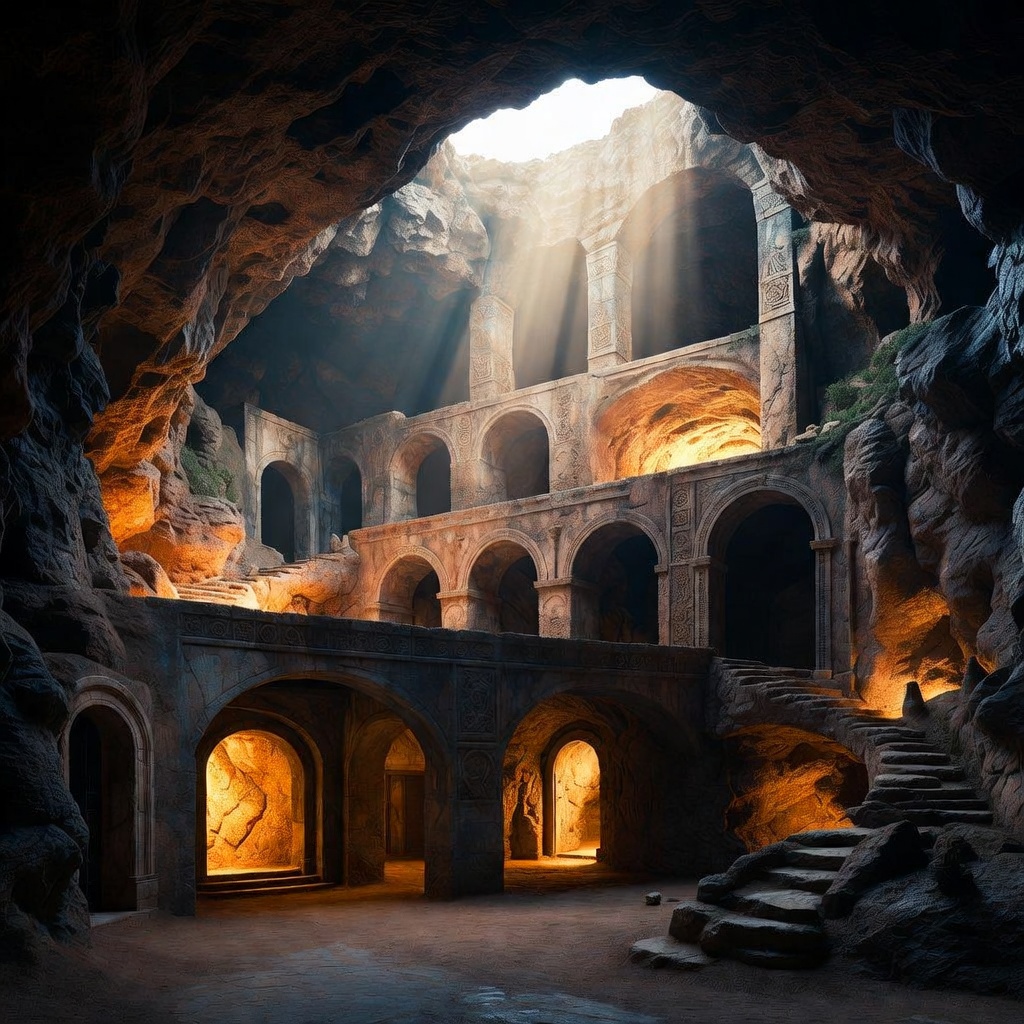
Imagine waking up to the gentle hum of the earth cradling your home, sunlight filtering through strategically placed skylights, and zero neighbors peering over your fence. Underground dwellings aren’t just the stuff of hobbit tales or post-apocalyptic fantasies—they’re a real, thriving architectural niche that’s as practical as it is poetic. From ancient troglodytes to modern eco-mansions, these subterranean sanctuaries challenge our skyward obsession with living and invite us to dig deeper into sustainable, resilient habitats.
The roots of underground living stretch back millennia. In China’s Loess Plateau, the Yaodong cave dwellings have housed millions for over 4,000 years. Carved into soft loess soil, these homes stay naturally cool in scorching summers (around 60°F/15°C) and toasty in winter, thanks to the earth’s thermal mass acting like a giant thermostat. Similarly, Matmata in Tunisia boasts Star Wars-famous underground homes—multi-level pit dwellings dug 40 feet deep, where families still thrive amid the desert heat. These ancient designs prove that humans have long mastered earth’s insulating powers, slashing energy needs long before “net-zero” became a buzzword.
Fast-forward to today, and underground living is evolving with cutting-edge innovation. Take Richard and Jeanne Reames’ Earth-Sheltered home in California, a 1970s pioneer blending into a hillside with 6-foot earth berms on three sides. It uses 80-90% less energy for heating and cooling than above-ground houses, per U.S. Department of Energy data. Modern marvels like the Hobitats in Vermont—curved, grass-roofed pods buried partially underground—mimic nature’s forms, costing about $100 per square foot to build versus $200+ for conventional homes. In Finland, the TEMPEA hotel rooms burrow into bedrock, offering guests panoramic views through glass walls while maintaining perfect 68°F (20°C) temps year-round.
Why go underground? The perks are compelling. Energy efficiency tops the list: soil’s steady temperature (around 50-60°F/10-15°C at 10 feet deep) means massive savings on HVAC—up to 80% in some studies from the Passive House Institute. They’re disaster-resistant too—hurricanes, tornadoes, and wildfires glance off buried structures. Noise? Muffled. Privacy? Absolute. And ecologically, they minimize sprawl, preserve landscapes, and boost biodiversity by freeing up surface land.
Of course, challenges exist. Moisture control demands expert waterproofing (think French drains and vapor barriers), ventilation requires mechanical systems like heat-recovery ventilators, and natural light needs clever engineering—light tubes, atriums, or south-facing greenhouses. Construction costs can match or exceed traditional builds due to excavation, but long-term savings and grants for green projects often offset this.
As climate change amps up extreme weather and housing crunches intensify, underground dwellings offer a blueprint for resilient living. Companies like Utah’s Snake River Ranges are pioneering affordable kits, while luxury bunker firms cater to the ultra-wealthy. Whether you’re dreaming of a cozy hobbit-hole or a fortified eco-fortress, the ground beneath us holds untapped potential. Next time you walk on solid earth, remember: paradise might just be a shovel away. Ready to trade your rooftop for roots?
Comments are closed