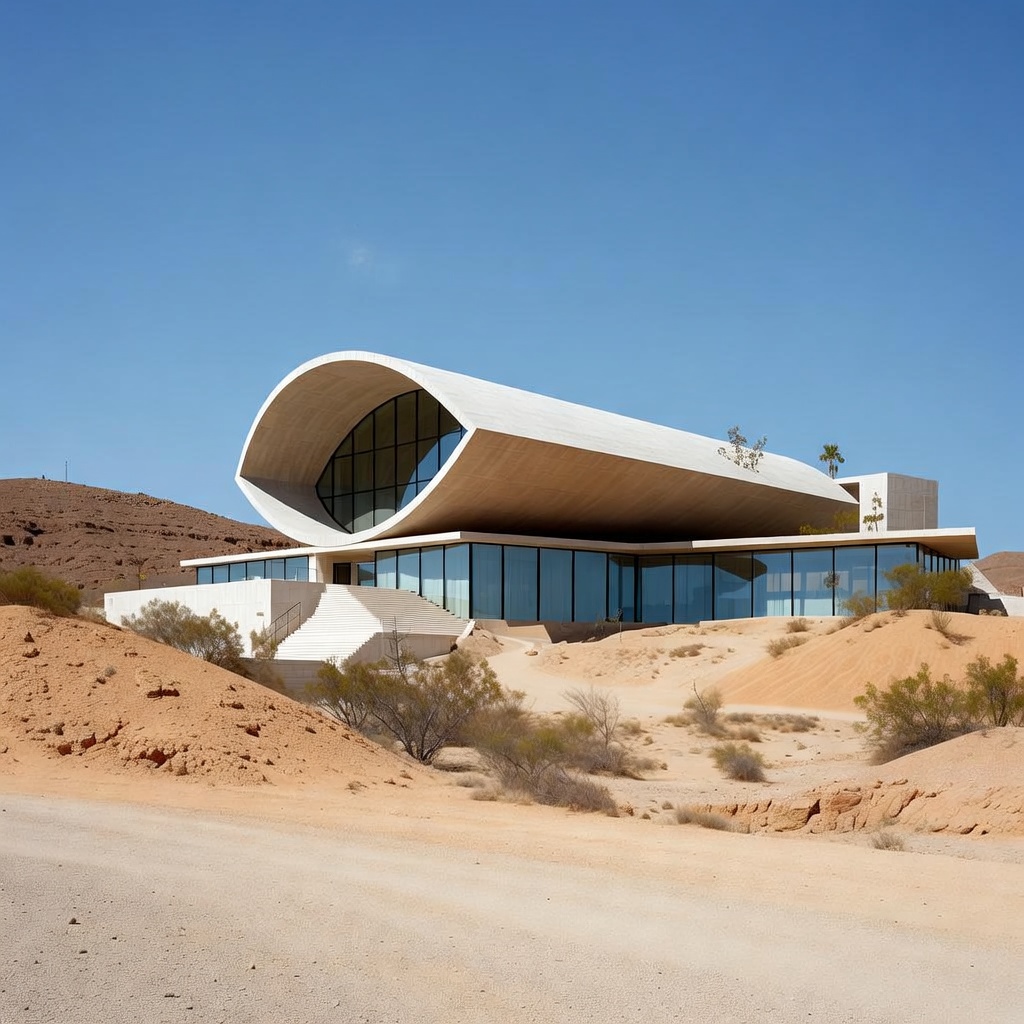
Nestled amid the sun-baked sands and jagged mountains of the American Southwest, desert modernism emerges as a bold architectural rebellion against the harsh environment it inhabits. Born in the mid-20th century, this style isn’t just about sleek lines and glass walls—it’s a philosophical embrace of the desert’s raw power, transforming brutal landscapes into livable poetry. Imagine homes that sip sunlight like fine wine, blending human ingenuity with nature’s unforgiving palette. Pioneered by visionaries like Richard Neutra, Albert Frey, and William Krisel, desert modernism proves that paradise can thrive where lesser designs wither.
At its core, desert modernism channels the International Style’s minimalism but adapts it for the arid wilds. Think flat roofs, expansive glass facades, and cantilevered overhangs that shield interiors from the relentless sun. Materials are chosen with desert wisdom: concrete blocks for thermal mass, keeping cool by day and warm by night; reflective metals and shaded courtyards to fend off 120°F scorchers. Neutra’s 1946 Kaufmann Desert House in Palm Springs epitomizes this ethos. Perched like a spaceship on stilts, its glass walls dissolve boundaries between inside and out, inviting the Coachella Valley’s mountains into the living room. Yet, butterfly roofs and deep eaves ensure the glare stays outside, where it belongs.
Palm Springs became the movement’s epicenter in the 1950s and ’60s, fueled by Hollywood stars fleeing L.A.’s smog for midcentury glamour. Krisel’s “Alexander” tract homes democratized the style, offering affordable elegance with kidney-shaped pools and breezeways that funneled hot air away. Frey’s own hillside residence, with its aluminum panels shimmering like a mirage, nods to his European roots—think Le Corbusier meets Joshua trees. These weren’t mere houses; they were machines for desert living, prioritizing airflow, natural light, and views that framed the wild beyond.
What makes desert modernism enduringly engaging is its sustainability avant la lettre. Long before “green building” buzzwords, these designs harnessed passive cooling: strategic site placement for shade, cross-ventilation via clerestory windows, and earth-toned exteriors that camouflage into the terrain. Today, amid climate crises, they’re models of resilience—energy-efficient without solar panels or smart tech.
Revival is underway. Preservation groups like the Palm Springs Modern Committee fight demolition, while architects like Marmol Radziner restore icons with modern twists, adding insulation and low-E glass. New builds echo the style in places like Joshua Tree, blending retro cool with off-grid living.
Desert modernism isn’t frozen in amber; it’s a living dialogue between humans and the arid sublime. Visit Palm Springs’ Modernism Week, tour a Neutra gem, or simply drive through Rancho Mirage at dusk, when shadows play across concrete curves. You’ll feel it: in a world of excess, this architecture whispers efficiency, beauty, and harmony with the land that birthed it. It’s not just design—it’s survival, styled to perfection.
Comments are closed