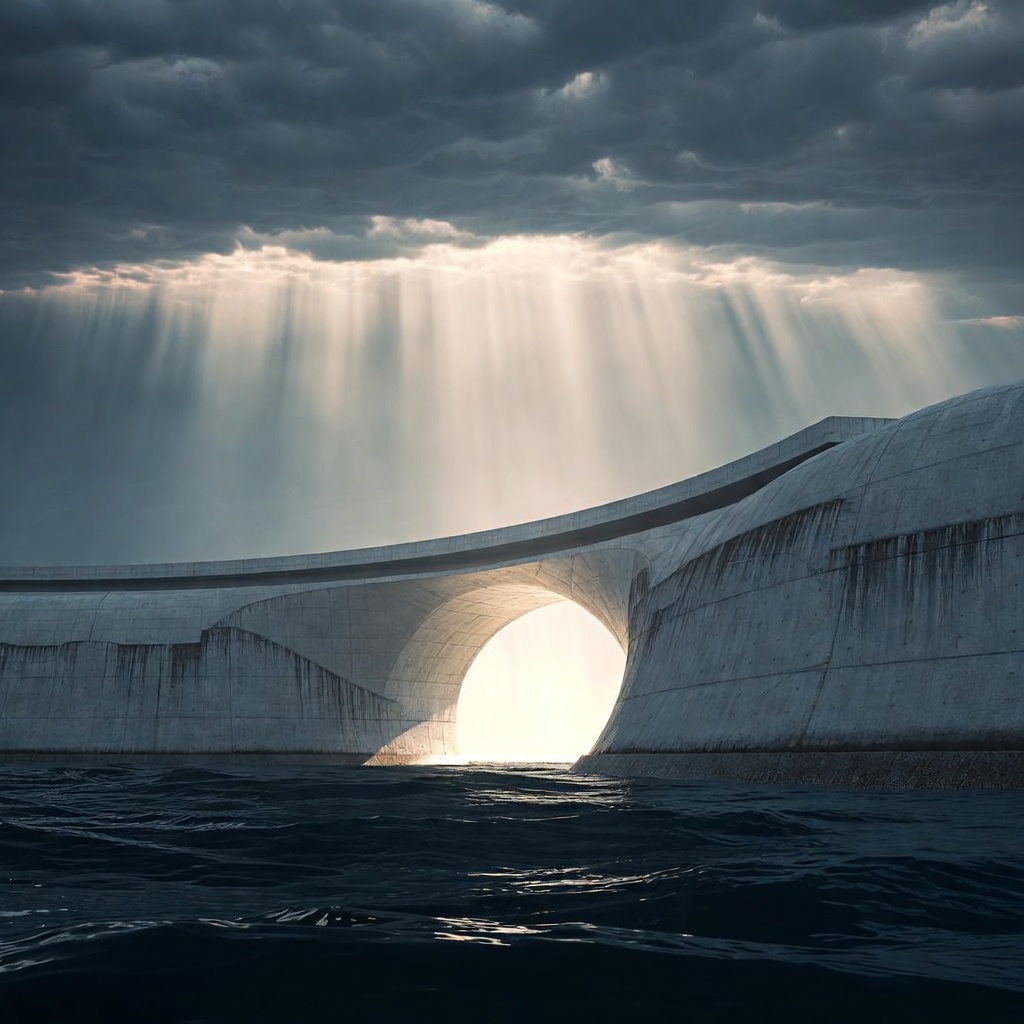
Imagine waking up to a panoramic view of coral reefs teeming with neon fish, sunlight filtering through turquoise waters like liquid gold. No, this isn’t a sci-fi dream—it’s the promise of underwater habitats, where engineers are pioneering the next frontier of human living. From Jules Verne’s visions in *20,000 Leagues Under the Sea* to real-world prototypes, underwater habitat engineering blends cutting-edge tech, biology, and sheer audacity to make ocean depths our new neighborhood.
At its core, these habitats are self-contained ecosystems designed to withstand crushing pressures—up to 100 times atmospheric at 1,000 meters deep. The key challenge? Pressure. Steel hulls alone won’t cut it; modern designs use transparent acrylic domes, like those in the Aquarius Reef Base off Florida’s coast, the world’s only operational undersea lab. Engineers employ finite element analysis (FEA) software to model stress points, ensuring a millimeter-thick acrylic viewport holds back the ocean’s fury. Materials science shines here: composites like carbon fiber-reinforced polymers offer strength-to-weight ratios far superior to traditional metals, slashing construction costs and deployment times.
Life support systems are the habitat’s beating heart. Closed-loop recycling mimics NASA’s tech for space stations—CO2 scrubbers convert exhaled breath into oxygen via electrolysis of seawater, while hydroponic farms grow fresh veggies under LED lights tuned to mimic sunlight spectra. Waste? Processed into fertilizer or methane for power. Energy comes from renewables: tidal currents spin underwater turbines, and microbial fuel cells harness bacteria to generate electricity from organic matter. The SEALAB projects of the 1960s proved humans could thrive at 200 feet for weeks, but today’s engineers aim for permanence, integrating AI for real-time monitoring of pH, salinity, and biofouling—those pesky barnacles that could spell doom.
Why build underwater? Science, for one: habitats enable uninterrupted deep-sea research on climate change, marine biodiversity, and novel pharmaceuticals from ocean microbes. Tourism beckons too—picture luxury “Poseidon Resorts” for elite divers. And strategically? Military outposts or disaster-resilient cities amid rising seas. Projects like DEEP’s planned 2035 habitat off Curaçao target 100 residents at 200 meters, using 3D-printed modules assembled by ROVs (remotely operated vehicles) to bypass human risk.
Challenges persist: corrosion from saltwater demands sacrificial anodes and epoxy coatings, while psychological isolation requires circadian lighting and virtual reality windows to the surface world. Cost is dropping, though—from SEALAB’s millions to modular designs under $10 million per unit, thanks to offshore oil rig tech repurposed for peace.
As climate pressures mount and land dwindles, underwater habitats aren’t just engineering marvels—they’re survival blueprints. Engineers are turning the abyss into abode, proving that with ingenuity, we’ll not just explore the deep, but live there. Dive in; the future’s wetter than you think.
Comments are closed