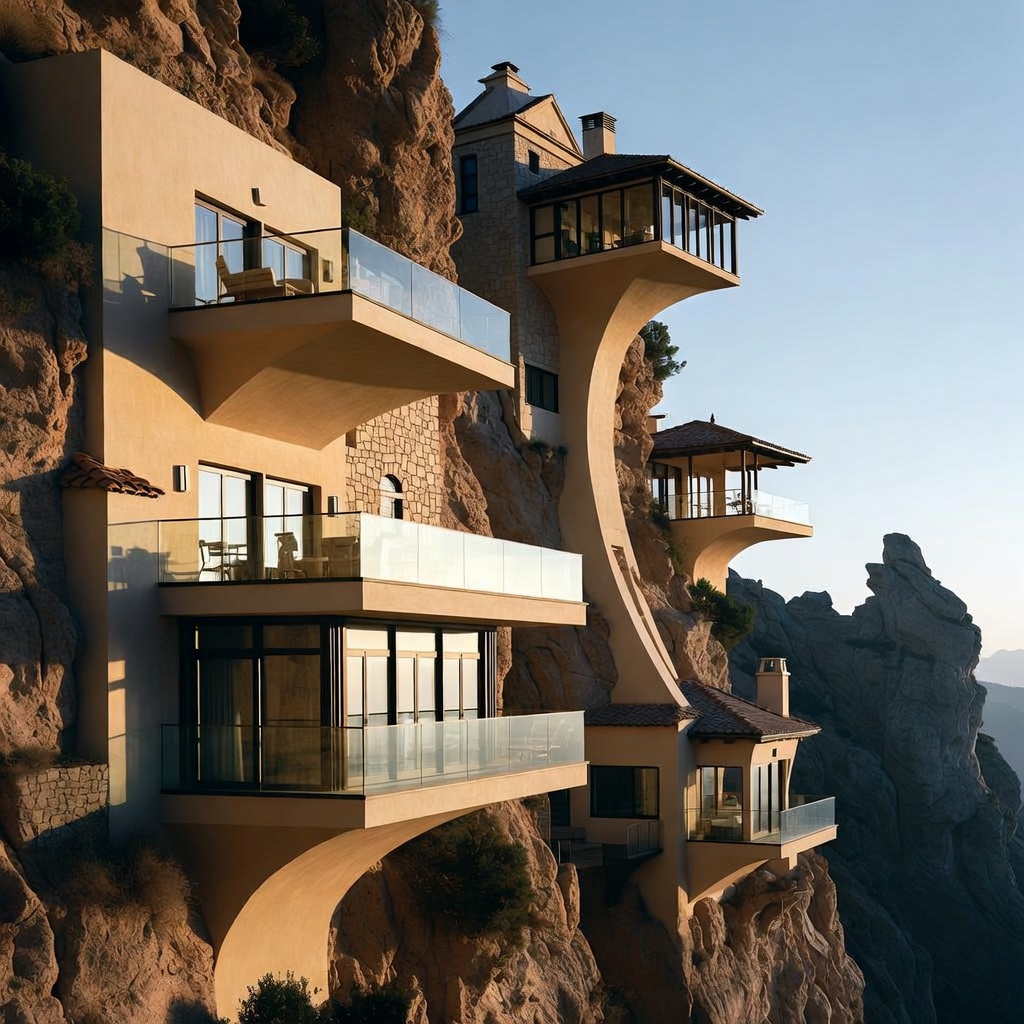
Imagine waking up to a sunrise painting the ocean horizon, your bedroom balcony mere inches from a sheer drop-off thousands of feet below. No, this isn’t a scene from an extreme adventure flick—it’s everyday life for residents of the world’s most audacious cliffside hanging homes. Perched precariously on vertiginous precipices, these architectural marvels blend human ingenuity with nature’s raw drama, turning impossible locations into luxurious sanctuaries. From the rugged coasts of California to the dramatic fjords of Norway, cliff-hanging homes challenge our sense of security while captivating our sense of wonder.
One of the most iconic examples is the Henderson House in Malibu, California, designed by John Lautner in 1961. Cantilevered over a 100-foot cliff above the Pacific, this modernist masterpiece uses reinforced concrete slabs that jut out like diving boards, supported by slender steel beams anchored deep into the rock. The design isn’t just showy; it’s a lesson in structural poetry. Lautner’s “organic architecture” philosophy ensures the house flows with its site, with floor-to-ceiling glass walls framing endless ocean views and minimizing visual barriers between inside and out. Residents report a thrilling sense of suspension, as if floating amid the waves, though earthquakes occasionally remind them of the site’s seismic risks.
Venturing abroad, the Cliff Palace in Peru’s Sacred Valley takes precarious living to ancient heights—literally. Carved into the cliffs by the Pre-Inca culture around 1200 AD, this isn’t a single home but a complex of over 200 hanging structures accessed by sheer ladders. Using stone masonry and wooden beams slotted into the rock face, the builders created multi-level dwellings that withstood centuries of Andean weather. Today, modern interpretations echo this legacy, like the Cliffside Villas in Greece’s Santorini, where whitewashed cubic homes cascade down volcanic calderas. These utilize post-tensioned concrete and steel cables to hug the cliffs, offering private infinity pools that merge with the Aegean Sea below.
But what makes these homes feasible? Engineering is the unsung hero. Modern cliffside builds employ geotechnical surveys to assess rock stability, followed by micropiles—long, slender steel rods drilled deep into bedrock for unyielding support. Cantilever designs distribute weight strategically, with counterweights hidden in the cliff face. Sustainability is key too: solar panels, rainwater harvesting, and natural ventilation reduce environmental impact. In Norway’s Geirangerfjord, the Trolltunga-inspired homes use smart materials like aerogel insulation to combat harsh winds, proving that extreme locations demand extreme innovation.
Of course, life on the edge isn’t without perils. Accessibility via winding roads or cable cars tests patience, maintenance battles erosion and wildlife, and insurance premiums soar. Yet, owners rave about the unparalleled privacy and adrenaline-fueled vistas. As climate change heightens coastal erosion risks, these homes also spotlight resilient design’s future role.
Cliffside hanging homes aren’t for the faint-hearted, but they redefine “home sweet home.” They invite us to embrace the thrill of the drop, proving that sometimes, the best views come with a little vertigo. Whether ancient rock-hewn retreats or cutting-edge cantilevers, they stand as testaments to humanity’s daring dance with gravity. Ready to pack your bags for the edge?
Comments are closed