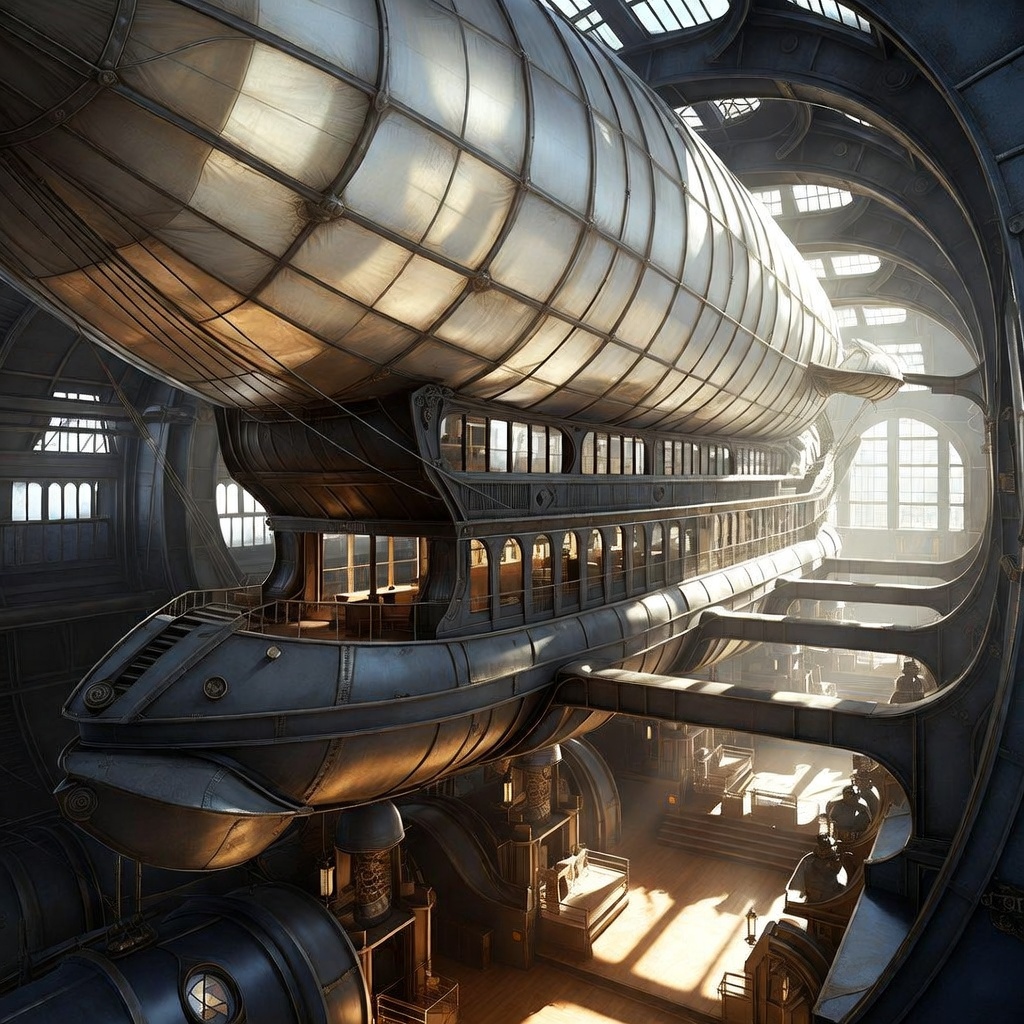
Imagine drifting silently above the clouds in a colossal vessel that marries the grace of a whale with the ingenuity of a skyscraper. Airships, those majestic behemoths of early 20th-century aviation, are staging a comeback—not as nostalgic relics, but as canvases for revolutionary architecture. Forget the rigid Zeppelins of yore; today’s airship concepts are pushing boundaries, blending aerodynamics, sustainability, and human-centric design into floating utopias. Let’s soar into the key concepts reshaping this skyborne frontier.
At the heart of modern airship architecture lies the envelope—the massive, gas-filled skin that provides lift. Traditional designs relied on hydrogen or helium in inflexible frames, but innovators like Lockheed Martin’s Hybrid Airship employ hybrid lift: a mix of buoyancy and aerodynamic wings. This allows for sleeker, more stable hulls resembling elongated teardrops. Architects are experimenting with “morphing envelopes” using smart materials like electroactive polymers that shift shape in response to wind or temperature, optimizing lift and fuel efficiency mid-flight. Picture a hull that billows like a living lung, reducing drag by up to 30%—a concept prototyped by Europe’s Airbus Zephyr program.
Structural integrity demands lightweight yet robust frameworks. Carbon fiber trusses and tensegrity systems—those elegant networks of struts and cables in compression and tension—form the skeleton. Buckminster Fuller’s geodesic domes inspire curved, self-supporting girders that distribute stress evenly, allowing interiors vast and unobstructed. The HAV Airlander 10, for instance, boasts a 92-meter hull with modular bays for cargo or passengers, its architecture scalable from freight haulers to luxury liners.
Interiors are where airship architecture truly dazzles, transforming rigid tubes into habitable worlds. Biophilic design reigns supreme: vast atriums with hydroponic gardens, floor-to-ceiling panoramic windows, and curved walls mimicking natural forms to combat claustrophobia. Concepts from firms like Norman Foster envision “sky hotels” with zero-gravity lounges, where furniture adapts via magnetic anchors, and communal spaces foster serendipitous encounters. Sustainability drives it all—solar skins generate power, rainwater harvesting sustains onboard farms, and closed-loop systems recycle air and waste, making these vessels carbon-neutral nomads.
Propulsion and control introduce dynamic architecture. Distributed electric thrusters, powered by fuel cells, enable hover-capability and precise maneuvering, turning airships into aerial cranes for remote construction. Vertical architecture emerges here: multi-deck layouts with elevators zipping between observation decks, labs, and hangars for drone deployment.
Challenges persist—helium scarcity, weather resilience, regulatory hurdles—but solutions abound. variable buoyancy tanks using water ballast allow rapid altitude shifts, while AI-driven predictive modeling navigates storms. Airships promise greener logistics, disaster relief, and even stratospheric data centers, floating at 20km altitudes.
As climate pressures mount and urban skies congestion grows, airship architecture heralds a paradigm shift: from ground-bound sprawl to ethereal elevation. These aren’t just vehicles; they’re airborne cities, proving that the sky’s the limit for bold design. Buckle up—the golden age of airships is lifting off.
(Word count: 452)
Comments are closed