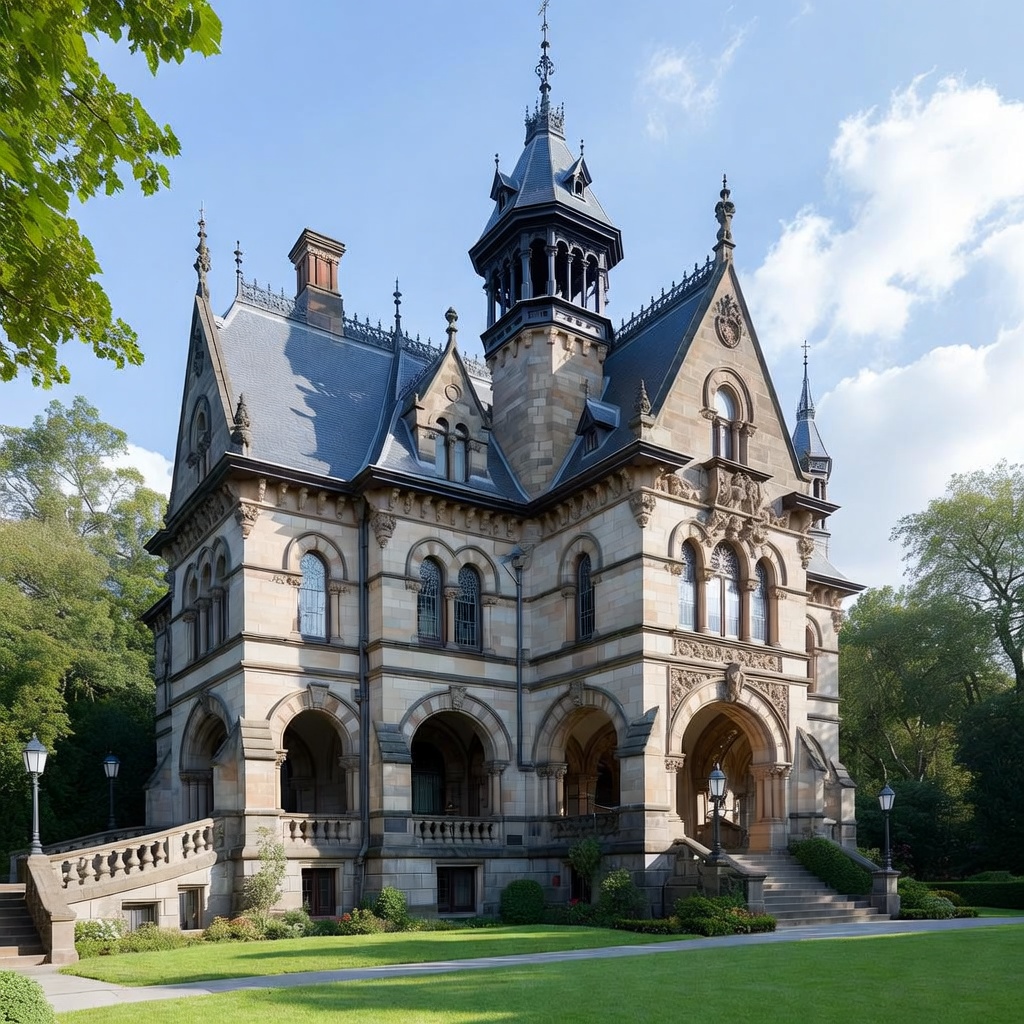
Step into a room where velvet drapes clash gloriously with floral wallpaper, brass gas lamps flicker beside ornate mirrors, and every surface groans under the weight of intricate carvings and jewel-toned trinkets. This isn’t a dusty museum exhibit—it’s the triumphant return of Victorian eclectic revivals, a design movement blending the opulent chaos of the 19th century with today’s bold, personality-driven aesthetics. Far from the minimalist whites dominating mid-century modern, this style revels in abundance, inviting us to rediscover the drama of Victoriana through a contemporary lens.
To understand its allure, we must rewind to the Victorian era (1837-1901), Queen Victoria’s reign over an industrial powerhouse Britain. Rapid urbanization and technological leaps—like gas lighting and mass-produced goods—fueled a design explosion. Architects and tastemakers rejected sterile neoclassicism for eclecticism, cherry-picking motifs from Gothic, Renaissance, Rococo, and even exotic Oriental influences. Think Charles Eastlake’s reformist furniture with geometric inlays or William Morris’s Arts and Crafts rebellion against machine-made mediocrity, emphasizing handcrafted textiles and natural forms. Public buildings like London’s Natural History Museum embodied this: pointed arches, terracotta tiles, and sculptural excess screaming “progress with panache.” It was an age of empire and innovation, where homes became showcases of status and sentimentality—stuffed peacocks, anyone?
Fast-forward to today, and Victorian eclectic is roaring back, not as pastiche but as playful reinvention. Modern examples abound on Instagram and Pinterest, where influencers layer reproduction corbels with mid-century lamps or pair taxidermy with neon signs for “dark academia” vibes. Brands like Anthropologie peddle velvet settees and brass étagères, while high-end designers such as Kelly Wearstler infuse hotel lobbies (think the Viceroy chain) with tufted headboards, marble hearths, and wallpapered ceilings. In residential spaces, millennials and Gen Z are gut-renovating bungalows into jewel boxes: emerald damask walls against herringbone floors, or a salvaged Victorian credenza as a bar cart stocked with artisanal gin. TikTok tutorials on “Victoriancore” rack up millions of views, teaching DIY fringe lamps and macramé chandeliers.
Why does this matter now? In our algorithm-driven, swipe-left world of sameness, Victorian eclectic revivals offer rebellion through richness. It counters fast furniture’s disposability, championing sustainability via upcycled antiques and quality craftsmanship—echoing Morris’s ethos amid climate anxiety. Psychologically, its layers foster storytelling: a fainting couch holds family lore, a gilded mirror reflects resilience. Amid economic flux, it democratizes luxury; thrift stores brim with bargains waiting for revival. Ultimately, it reminds us that beauty thrives in complexity, urging us to curate lives as vividly as our spaces. So, dust off that antimacassar and embrace the excess—Victorian eclectic isn’t just back; it’s the antidote to bland.
Comments are closed