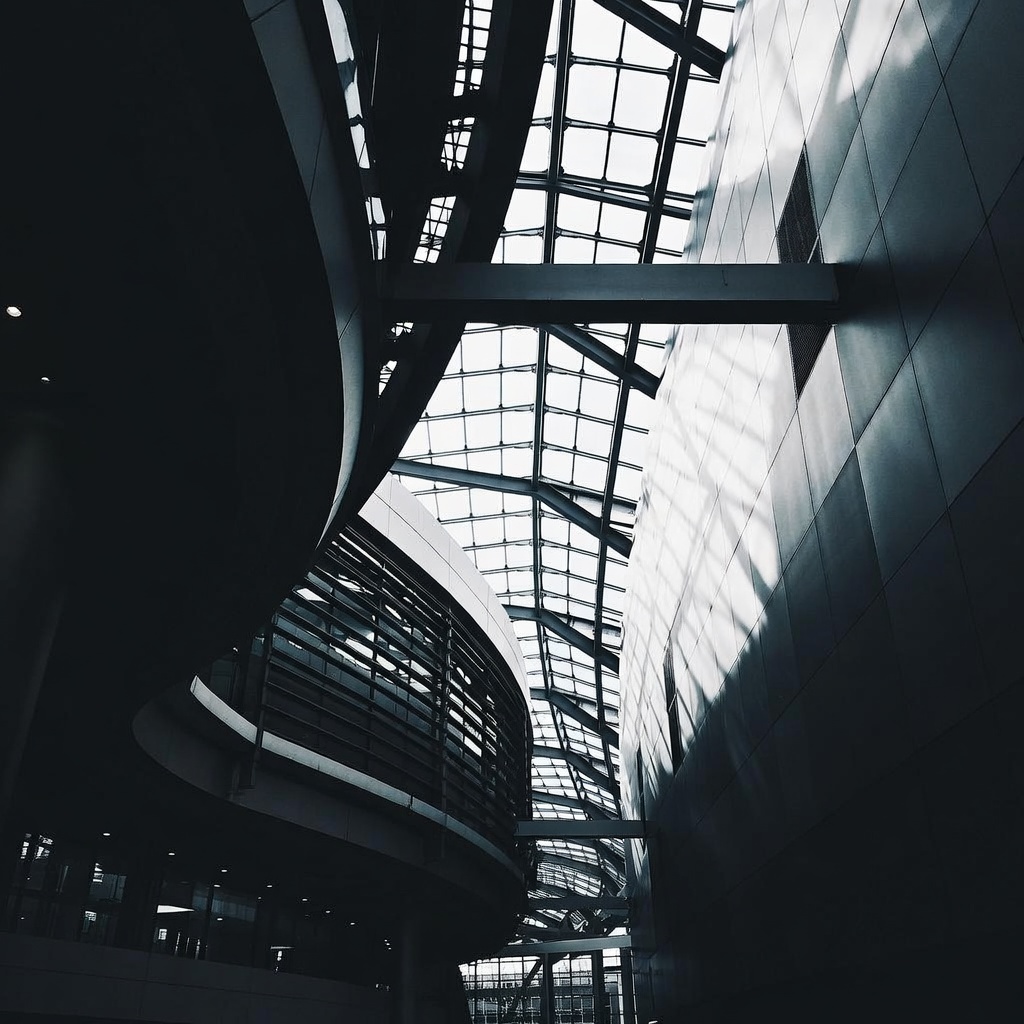
In the world of architecture, few names evoke the thrill of futuristic precision like Norman Foster. The British architect, knighted and Pritzker Prize-winner, has redefined urban landscapes through high-tech expression—a style that celebrates technology not as a gimmick, but as poetry in motion. Imagine buildings that look like giant Meccano sets: exposed steel frames, gleaming glass envelopes, and intricate mechanical systems worn proudly on their sleeves. Foster’s high-tech isn’t cold minimalism; it’s a dynamic dialogue between form, function, and innovation, turning structures into living machines.
High-tech architecture burst onto the scene in the 1970s, a rebellious offspring of modernism amid the oil crises and space race fervor. Pioneers like Foster, along with Richard Rogers and Renzo Piano, drew from engineering marvels like airship hangars and oil rigs. Their manifesto? Expose the guts. No more hiding pipes, ducts, or supports behind faux facades. Foster’s breakthrough came with the Sainsbury Centre for Visual Arts in Norwich (1978), his first major solo project. Here, the “servicing pods”—modular units housing HVAC, wiring, and plumbing—stand like colorful sentinels along the facade, allowing endless reconfiguration inside. It was radical: a building that evolves, much like the art it houses.
Fast-forward to Foster’s crowning glories, and the drama intensifies. The Gherkin in London (2004), officially 30 St Mary Axe, is a high-tech icon. Its bulging, helical glass skin optimizes airflow through 42 acres of atriums, slashing energy use by 50% compared to similar towers. Those diagonal braces aren’t just aesthetic; they form a diagrid exoskeleton, reducing steel by a third while creating spiraling public spaces that swirl visitors skyward. Then there’s the Hearst Tower in New York (2006), where Foster grafted a crystalline, triangulated spire atop a 1920s base, merging old bones with high-tech muscle—its floor plates cantilevered daringly, embodying efficiency in a skyline of excess.
Apple Park in Cupertino (2017) takes this ethos to planetary scale. Dubbed the “spaceship,” its 2.8 million-square-foot ring generates 100% renewable energy via 17 megawatts of solar panels. Exposed structural rhythms and vast curved glazing flood interiors with light, fostering collaboration in a campus that’s as much ecosystem as office.
Why does Foster’s high-tech matter today? In an era of climate catastrophe and rapid urbanization, it screams sustainability without sermons. His buildings don’t just stand; they perform—harnessing passive ventilation, smart facades, and recycled materials to cut carbon footprints. The HSBC Tower in Hong Kong (1985) pioneered atria for natural cooling in the tropics, a blueprint for net-zero futures. Amid cookie-cutter glass boxes, Foster’s work insists architecture must adapt intelligently, prioritizing human well-being and planetary health.
Foster’s legacy? It’s a clarion call: technology can be beautiful, buildings can breathe, and cities can thrive sustainably. As we hurtle toward denser megacities, his high-tech expression isn’t nostalgia—it’s the blueprint for tomorrow’s habitable world. Dive into one, and you’ll feel the pulse of progress.
Comments are closed