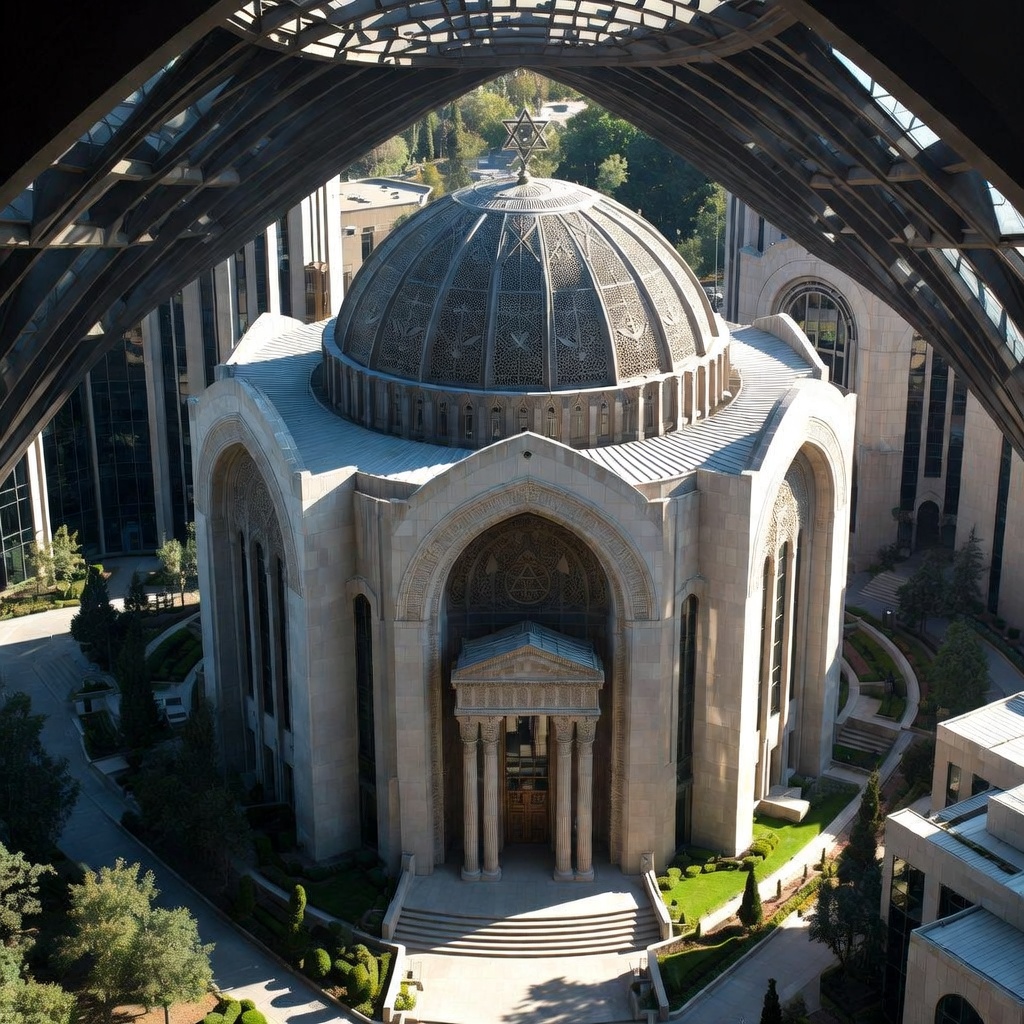
In the heart of bustling cities and serene suburbs, synagogues stand as vibrant testaments to Jewish resilience and innovation. Gone are the days of rigid Gothic Revival arches mimicking European cathedrals; today’s synagogue designs blend ancient symbolism with cutting-edge architecture, creating spaces that pulse with spiritual energy and communal purpose. This fusion isn’t just aesthetic—it’s a deliberate response to a world demanding flexibility, inclusivity, and sustainability.
Historically, synagogue architecture evolved alongside Jewish diaspora experiences. In medieval Europe, cramped shtiebels (small prayer rooms) hid communities from persecution, emphasizing humility over grandeur. The 19th century brought opulent Moorish Revival styles, like the Leopoldstädter Tempel in Vienna (1858), with horseshoe arches and intricate tilework echoing Sephardic influences. These designs asserted Jewish pride amid emancipation. Post-Holocaust, mid-20th-century synagogues, such as Eric Mendelsohn’s Park Synagogue in Cleveland (1953), adopted modernist concrete forms—raw, unadorned, symbolizing rebirth from ashes.
Contemporary designs build on this legacy while addressing modern realities. A hallmark is multifunctional spaces. Take the Congregation Beth Israel in Houston (2011, Lake|Flato Architects), where movable walls transform a sanctuary into a social hall, accommodating everything from Shabbat services to hybrid Zoom minyans. This adaptability surged post-COVID, prioritizing health with high ceilings, natural ventilation, and biophilic elements like living walls that filter air and evoke the Garden of Eden.
Sustainability drives innovation too. The Silesian Synagogue in Chorzów, Poland (2018, OP Architekten), Poland’s first new synagogue since the Holocaust, features a lightweight timber ark and solar panels, harmonizing with its post-industrial site. Light plays a starring role universally: Daniel Libeskind’s spiraling Jerusalem Skyline design (ongoing) channels ethereal glow through fractured glass, mirroring the shards of broken tablets on Sinai. Bimah (altar) placements shift centrally, fostering intimacy—no more distant rabbi on high.
Iconic modern examples dazzle. Zaha Hadid’s planned Genesis Prize Foundation headquarters in Jerusalem integrates fluid, parametric curves symbolizing the Hebrew letter aleph (unity). In the U.S., Mack Scogin Merrill Elam Architects’ Temple Tiferet Israel in Columbus, Ohio (2014), deploys translucent ETFE panels for a glowing, weightless canopy, blending tradition with sci-fi futurism. These spaces honor the eternal—Ner Tamid (eternal light), mechitzot (dividers) for Orthodox gender separation—while welcoming diverse practices, from egalitarian services to sensory rooms for neurodiverse worshippers.
Why does this matter today? Synagogues aren’t museums; they’re living hubs combating assimilation. In an era of declining affiliation, innovative design draws millennials and Gen Z with Instagram-worthy aesthetics and practical perks like co-working nooks. They foster community amid rising antisemitism, offering secure yet open architectures—think subtle bollards and welcoming plazas. Architecturally, they challenge the notion that sacred spaces must be somber, proving Judaism’s adaptability thrives in bold forms.
As we approach 5785, synagogue design reflects a people who rebuild without forgetting. These structures whisper: “Am Yisrael Chai”—the Jewish people live, not in stone alone, but in spaces that inspire the next generation to pray, gather, and dream.
Comments are closed