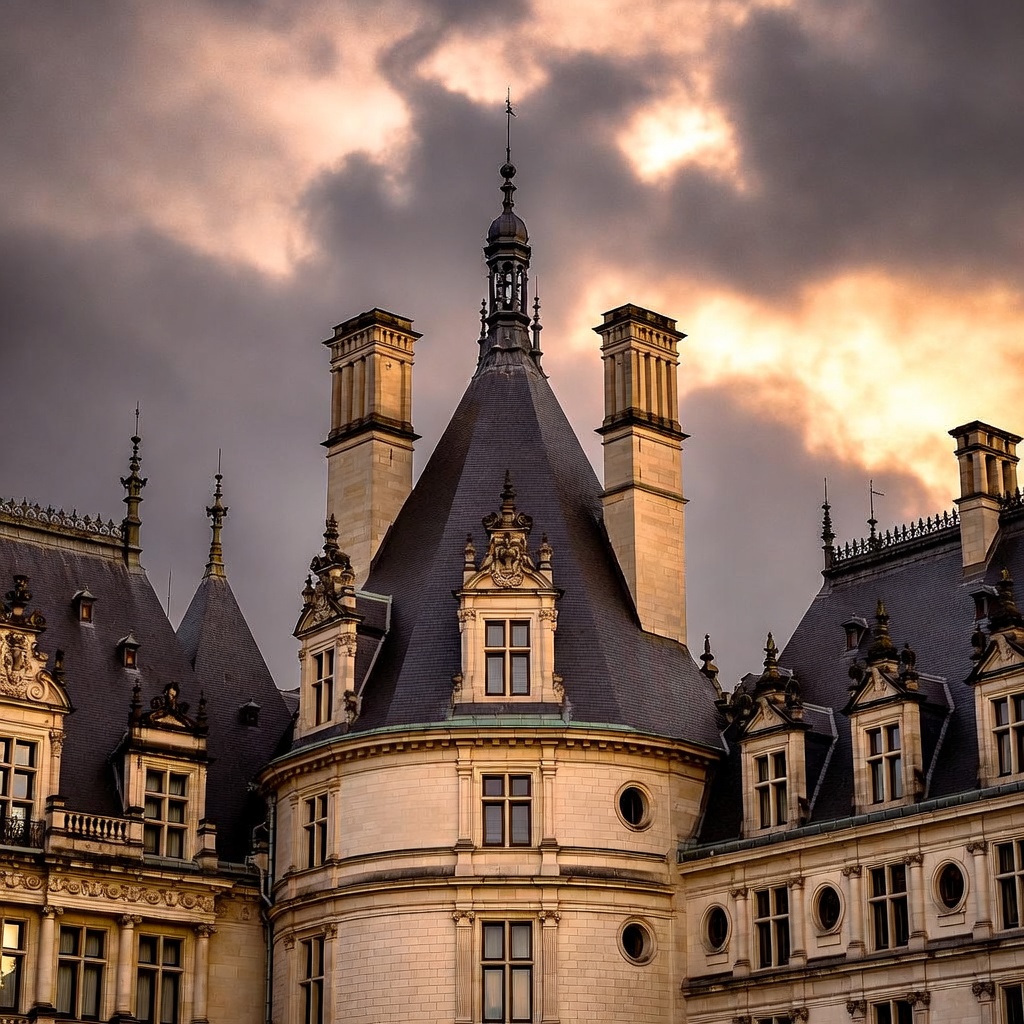
Imagine a skyline pierced by slender turrets and mansard roofs that sweep upward like the folds of a Renaissance gown. This is the magic of Chateauesque architecture, a style that transplants the opulent châteaux of France’s Loire Valley to distant shores. At its heart lies the chateauesque roof—a masterpiece of form and fantasy that defines the genre.
Key features make these roofs instantly recognizable. The hallmark is the steeply pitched mansard roof, named after French architect François Mansart, though perfected in the Chateauesque revival. These roofs feature two slopes on each side: a near-vertical lower section for maximum attic space, topped by a gentler curve. dormer windows punctuate the surface, often elaborately framed with pediments or scrollwork, allowing light into upper stories while adding rhythmic ornamentation. Turrets and conical spires crown corners, evoking medieval fairy tales, while slate tiles—typically in intricate patterns of fishscales or diamonds—provide a shimmering, waterproof skin. Chimney stacks rise like minarets, and ornate cresting along ridges completes the silhouette. The result? A roofline that’s not just functional but a sculptural crown, defying gravity with playful asymmetry.
Historically, Chateauesque emerged in the 19th century amid the Gothic Revival and Romanticism’s love for the past. Popularized in France by architects like Eugène Viollet-le-Duc, who restored real châteaux like Pierrefonds, it crossed the Atlantic via American millionaires seeking European prestige. Richard Morris Hunt brought it to Gilded Age America, designing masterpieces like Newport’s The Breakers (1895) for the Vanderbilt family. Its roofs mimicked Chambord or Chenonceau, blending French Renaissance with Victorian excess. In Canada, it’s the national style for public buildings, thanks to Thomas Fuller’s Château Frontenac in Quebec City (1893), whose towering roofs dominate the skyline.
Today, chateauesque roofs endure in modern contexts, blending heritage with innovation. Historic restorations, like those at Biltmore Estate in Asheville, North Carolina, preserve original slate with sustainable replacements. New builds adapt the style: luxury resorts in Napa Valley or private estates in the Hudson Valley sport mansards clad in composite materials mimicking slate, paired with energy-efficient insulation. Even urban infill projects nod to it—think high-end condos with turreted penthouses.
Why does it matter now? In an era of flat, minimalist roofs, chateauesque offers vertical drama and human scale, countering glass-box monotony. It symbolizes aspiration and storytelling—roofs that whisper of nobility and adventure. Practically, steep pitches shed snow and rain superbly, ideal for variable climates. Culturally, they foster place-making, turning buildings into landmarks that spark wonder. As we rethink architecture amid climate challenges, these roofs remind us: beauty and utility can coexist, crowning our world with timeless elegance. Next time you spot a turreted tower, pause—it’s a portal to history’s grandest dreams.
Comments are closed