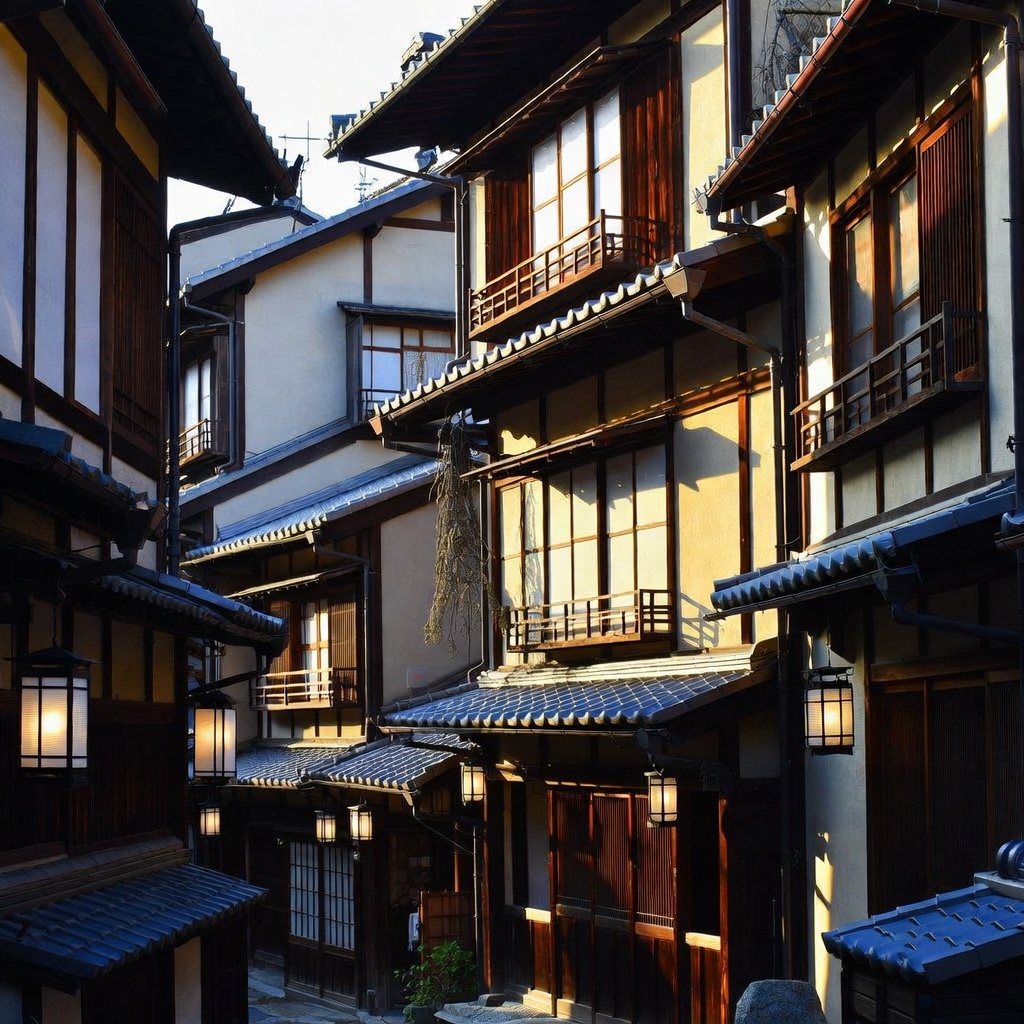
Nestled in the narrow, lantern-lit alleys of Kyoto and Nara, Japanese machiya townhouses stand as living relics of a bygone era, their wooden facades whispering tales of merchants, artisans, and everyday life from centuries past. These narrow, deep urban dwellings—often just 5-6 meters wide but stretching 20 meters or more back from the street—were the backbone of Japan’s Edo-period (1603-1868) cities. Picture a bustling merchant quarter: the street-facing lattice windows, called “mujiko,” allowed shop owners to display wares while preserving privacy, blending commerce with residence in a single, elongated structure.
At their core, machiya embody masterful adaptation to urban constraints and natural harmony. The ground floor typically housed the family business—a teahouse, sake brewery, or kimono shop—with living quarters above and a private garden at the rear. Key features include the sturdy kigumi wooden framework, joined without nails for earthquake resistance, a nod to Japan’s seismic reality. Sliding shoji screens diffuse soft light, creating serene interiors that blur boundaries between rooms. High, open-beam ceilings in the “machi-ya” (townhouse) style evoke vastness despite modest footprints, while engawa verandas invite breezes and outdoor connection. Earthen floors in kitchens and storehouses provided cool storage, and intricate carpentry details—like curved roof eaves warding off rain—showcase artisanal pride.
Historically, machiya proliferated during the Edo period as samurai and merchants filled thriving castle towns. Post-Meiji Restoration (1868), Western influences brought concrete and steel, dooming many to decay or demolition by the mid-20th century. World War II bombings razed thousands more. Yet, in recent decades, a renaissance blooms. Kyoto alone boasts over 45,000 surviving machiya, many reborn as modern machiya cafes, boutique hotels, and galleries. Take Gion’s historic district, where renovated machiya like those in the Machiya Residence Inn project fuse original tatami mats and irori hearths with sleek amenities—think Wi-Fi amid centuries-old timber.
Why do machiya matter today? In an age of cookie-cutter apartments and environmental strain, they offer blueprints for sustainable living. Their passive cooling via cross-ventilation slashes energy use, aligning with Japan’s push for carbon-neutral cities. Culturally, they preserve intangible heritage: the creak of floorboards underfoot, the scent of aged hinoki cypress. Globally, machiya inspire architects—from Tokyo’s adaptive reuse projects to eco-villages in Europe—proving narrow lots needn’t mean cramped souls. As urbanization accelerates, these humble abodes remind us that true luxury lies in simplicity, resilience, and roots that run deep. Step into a machiya, and you’re not just visiting history—you’re feeling the pulse of a philosophy that values space, light, and legacy over excess. In Kyoto’s shadowed lanes, the machiya endures, inviting us to rethink home.
Comments are closed