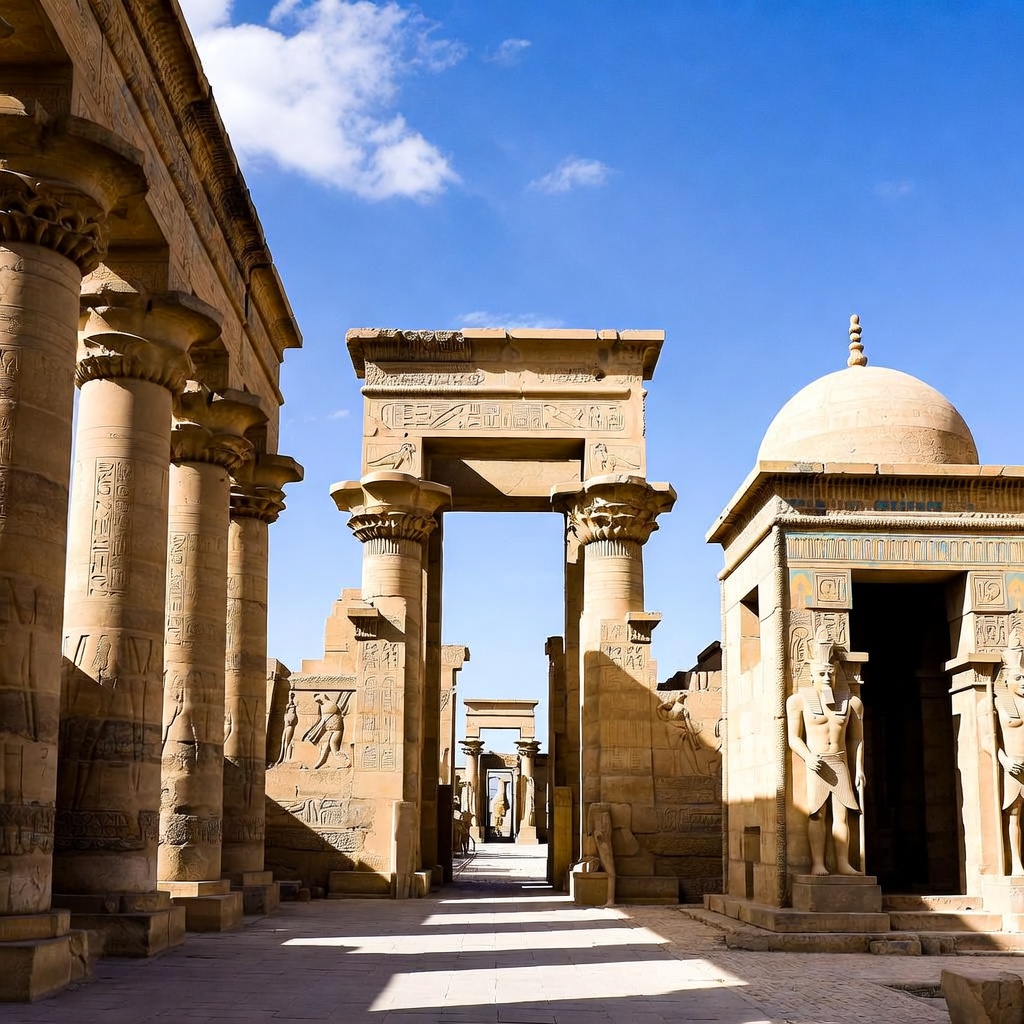
In the shadow of Paris’s Eiffel Tower, a colossal pink granite structure defies the city’s skyline, its obelisks and sphinxes whispering secrets from 3,000 years ago. This is the Temple de la Gloire du Monde, a cornerstone of the Egyptian Revival movement that swept Europe and America in the 19th century. Far from mere architectural whimsy, these temples fused pharaonic grandeur with Enlightenment ideals, creating spaces that still captivate us today.
The Egyptian Revival emerged during the Napoleonic era, ignited by the 1798 French campaign in Egypt. Vivant Denon’s illustrated “Description de l’Égypte” flooded Europe with images of Luxor’s hypostyle halls and Karnak’s towering pylons. Architects seized on these motifs—lotus capitals, cavetto cornices, and hieroglyphic friezes—not just for exotic flair but as symbols of eternity and mystery. Granite obelisks, evoking Heliopolis, became urban totems; sphinxes guarded doorways like silent sentinels.
Key features defined these structures: bold, battered walls mimicking Nile Valley temples, recessed niches for colossal statues, and cavernous interiors lit by clerestory windows to mimic divine light piercing sacred enclosures. Symmetry reigned, with pylons framing entrances and hypostyle halls supported by bundled papyrus columns. Materials mattered too—polychrome granites from Aswan quarries were imported, their rosy hues amplifying the aura of antiquity. Freemasons adored them, seeing in Egyptian rites parallels to their own mysteries; Rosicrucians and Theosophists layered on occult symbolism.
Modern examples abound, blending homage with innovation. Paris’s temple, designed by Franz Hartmuth in 1867, stands as a Masonic masterpiece, its facade rivaling Abu Simbel. In the U.S., the 1938 Salt Lake Temple annex by the Mormons incorporates Egyptian motifs amid Gothic spires, reflecting Joseph Smith’s fascination with ancient scriptures. Washington’s George Washington Masonic National Memorial (1922-1932) crowns its apex with a 100-foot obelisk, enclosing halls adorned with pharaonic reliefs. Even Hollywood joined in: Grauman’s Egyptian Theatre (1922) in Los Angeles draped its auditorium in hieroglyphs, premiering “The Robin Hood of El Dorado” amid faux Nile palms.
Why do these revivals matter now? In an era of fleeting digital aesthetics, they anchor us to timeless permanence. Egyptian temples symbolized cosmic order—maat—amid chaos, a blueprint for resilience. Today’s architects draw from them for sustainable designs; biomimicry in lotus-inspired columns optimizes light and airflow. Culturally, they bridge eras: amid global fascination with “Ancient Aliens” theories and Beyoncé’s pyramid visuals, these structures remind us that revival isn’t nostalgia but reinvention. They challenge us to build legacies that outlast trends, much like the pyramids enduring sandstorms.
Visiting one feels like time travel—standing beneath a cavetto cornice, you sense the weight of millennia. Whether Masonic lodge or cinema palace, Egyptian Revival temples prove the past isn’t buried; it’s resurrected in stone, inviting us to etch our own hieroglyphs on eternity.
Comments are closed